
Why Your Oven Should Get the Help of a Professional Oven Cleaner Every Year
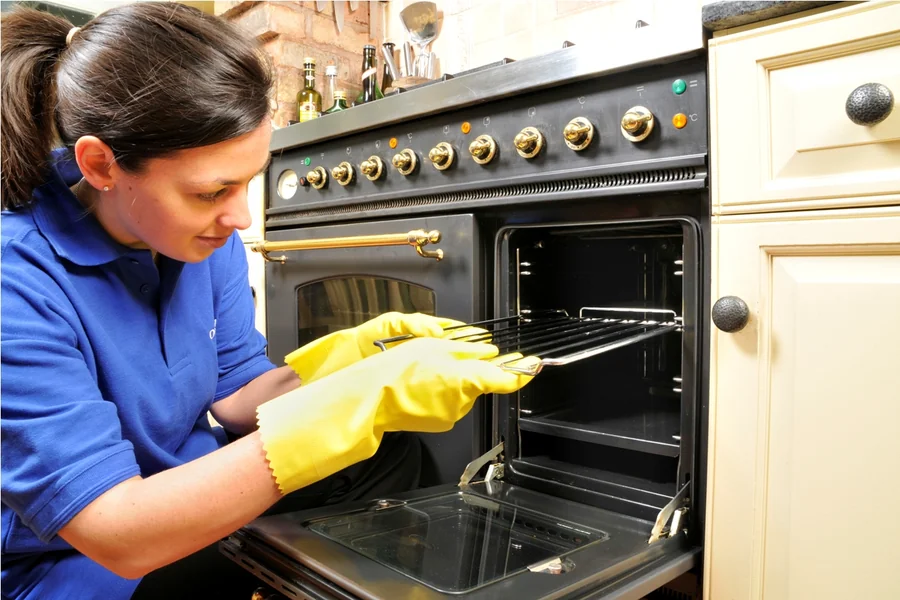
Most people clean their oven when it becomes impossible to ignore. The smoke, the smell during preheat, the visible char that makes cooking feel slightly grimly. At that point it’s already been overdue for months. The annual professional oven cleaner visit is the approach that prevents the situation from reaching that stage, and there are practical reasons behind the recommendation that go beyond simply keeping a cleaner kitchen.
This isn’t a lecture about hygiene standards. It’s an explanation of what actually happens inside an oven over time, why domestic cleaning products have limits, and why professional cleaning at regular intervals makes the appliance last longer, work better, and cost less to run.
What Builds Up Inside an Oven Over Time
Cooking produces residue. Grease vapour rises during cooking, circulates in the oven cavity, and deposits on surfaces. Spillages from dishes cook onto the oven floor, sides, and heating elements. Basting liquids and meat juices accumulate on racks and in the base. Over time, these residues carbonise, building up into hard layers that don’t respond well to standard cleaning methods and that become progressively harder to remove the longer they’re left.
The carbonised layer is the main problem. It’s not simply dirty; it’s chemically transformed by repeated heating cycles into a material that’s genuinely difficult to dissolve with typical supermarket oven cleaners. Many domestic products work adequately on fresh grease but struggle with heavily baked-on carbon, either failing to remove it fully or requiring levels of scrubbing that risk damaging the oven surfaces.
Maintaining a pristine kitchen environment often begins with the appliance that anchors most of our culinary activities. While surface-level wiping helps, the intricate internal components often require a deeper level of care to prevent carbonized food particles from tainting future meals. Many homeowners find that consulting with Franklin Appliance Repair Pros provides clarity on how technical integrity impacts overall kitchen hygiene and appliance efficiency. Beyond simple aesthetics, a thoroughly sanitized heating chamber ensures that airflow remains unobstructed and heat distribution stays consistent. This preventative approach minimizes the risk of sudden mechanical failures during busy holiday seasons. Ultimately, a balanced routine of daily vigilance and periodic expert intervention keeps the heart of the home operating safely and reliably.
There’s also the element of concealment. The most significant residue accumulation in many ovens is in places that routine cleaning doesn’t reach: under the floor panel if the oven has a removable base, behind the door seal, on the inner face of the door glass, and around the heating elements themselves. These areas are where the grease collects and carbonises without being noticed, and they’re where the smoke and smell during cooking originates from.
What a Professional Oven Cleaner Actually Does
The difference between professional oven cleaning and doing it yourself isn’t primarily about the cleaning products, though those differ meaningfully. It’s about the process and the access.
A professional oven cleaner typically removes the oven door completely, dissembling it to clean the inner glass pane that’s almost impossible to access without taking the door apart. This is where significant grease build-up hides, and it’s what causes the browning and opacity that accumulates on what appears to be a two-layer door but is often a three or four-pane construction. Most domestic cleaning attempts miss this entirely because the access issue isn’t obvious.
The oven racks, trays, and shelving are cleaned separately, usually in a purpose-built dip tank with a proprietary solution that removes baked-on carbon without the abrasive scrubbing that can damage the rack coating. This produces a more complete result than oven rack cleaning done in a domestic sink with off-the-shelf products.
The oven cavity is cleaned with professional-grade products that have a different formulation from supermarket alternatives, applied at appropriate dwell times and removed thoroughly to prevent residue that could affect food during subsequent use. The interior surfaces, including the roof, sides, and floor, are cleaned to a standard that restores reflectivity and removes the insulating carbon layer that accumulated on them.
The door seals are inspected and cleaned, which matters for both hygiene and efficiency. A compromised or heavily dirty door seal affects the oven’s ability to maintain temperature and can become a source of ongoing contamination.
Why Regular Professional Cleaning Extends Appliance Life
An oven with a significant carbon build-up is a less efficient appliance than a clean one, and the inefficiency has consequences beyond longer cooking times.
The carbon layer on oven surfaces absorbs and retains heat rather than reflecting it back into the cooking space. The oven compensates by running hotter or for longer to reach and maintain the set temperature, which puts additional load on the heating elements and the thermostat over time. Elements that consistently run at higher loads than necessary fail sooner. Thermostats that are working harder than they should develop inaccuracies. These are failure modes that regular cleaning reduces.
The baked-on carbon on elements themselves is a more direct issue. When carbon accumulates on electric heating elements, it can cause hot spots and uneven heat distribution that affects both cooking results and element longevity. In gas ovens, blocked or contaminated burners affect combustion efficiency and can create performance issues that develop gradually and aren’t always attributed to the cleanliness of the appliance.
For a quality oven, the cost of professional cleaning once a year is a fraction of the cost of a service call to replace elements or repair a thermostat, and considerably less than the cost of premature appliance replacement. For mid-to-high-value ranges and built-in ovens, the economics of regular maintenance cleaning are fairly straightforward.
The Food Safety Dimension
Professional oven cleaning has food safety relevance that domestic cleaning often doesn’t fully address.
Rancid grease residue in a domestic oven isn’t just an aesthetic issue. When food is cooked in an oven with significant grease build-up, the residue continues to heat and smoke, and those combustion products can migrate to the food being cooked. The intensity of this effect depends on the severity of the build-up and the cooking temperature, but it’s a genuine food quality and safety consideration rather than a hypothetical one.
For households with members who are immunocompromised, pregnant, or dealing with health conditions that make food hygiene particularly important, the professional cleaning standard becomes more relevant. A domestic clean that leaves carbonised residue on surfaces the food is cooked near hasn’t fully addressed the food safety aspect of oven maintenance.
Professional oven cleaners use food-safe products and rinse thoroughly to ensure no chemical residue remains in the cooking environment. The products used and the rinsing process differ from many domestic oven cleaning products, which is part of what professional cleaning provides beyond the cleaning outcome itself.
How Often Is Once a Year, Actually
The annual recommendation is a general guide for a regularly used domestic oven in an average household. The actual appropriate interval depends on how heavily the oven is used and what it’s used for.
An oven used daily for full family cooking, particularly for roasting and high-temperature cooking that generates significant splatter, may benefit from professional cleaning every six to eight months rather than annually. An oven used primarily for lighter cooking, a couple of times a week for relatively contained dishes, might extend to eighteen months between professional cleans without significant build-up.
The practical indicator is the state of the oven interior rather than a fixed calendar interval. If smoke is present during preheat, if there’s visible carbon build-up on the surfaces, or if cooking smells are carrying the acrid note of carbonised grease rather than the clean smell of heated food, these are signs that the cleaning interval has been exceeded for that particular oven and usage pattern.
Between professional visits, maintaining the oven with regular domestic cleaning after use, particularly after roasting or anything likely to produce significant splatter, reduces the rate of build-up and makes each professional clean faster and more straightforward. The domestic cleaning doesn’t replace the professional visit; it extends the interval between visits.
Finding a Professional Oven Cleaner Worth Using
The professional oven cleaning market ranges from sole traders working locally to franchise operations with standardised processes. Quality varies considerably and the price range doesn’t reliably track quality.
The practical indicators of a professional worth using are fairly consistent. They should be willing to describe their process in detail: what they remove, what products they use, whether they’re food-safe, how they handle the door glass, what the oven will look like when they’ve finished. A cleaner who can answer these questions specifically and confidently is one who has a genuine process rather than a surface-level cleaning operation.
Insurance matters for anyone working in your home. Public liability insurance is standard for any professional trade, and a oven cleaner who can confirm their insurance cover without hesitation is operating properly as a business. One who’s vague about it or doesn’t carry it is a risk you don’t need to take.
Reviews from people with similar oven types and usage patterns to yours are more useful than general star ratings. The quality of oven cleaning can vary by appliance type, and someone with experience and positive results on a range similar to yours is a better indicator of what your experience will be than aggregate reviews across many different jobs.
The cost of professional oven cleaning is modest relative to the benefits. An appliance that works properly, lasts longer, and isn’t introducing combustion residue into the cooking environment is worth the annual maintenance investment.