
The Complete Black Angus Coulotte Steak Buying Guide: Grades, Marbling, and What to Look for at the Counter
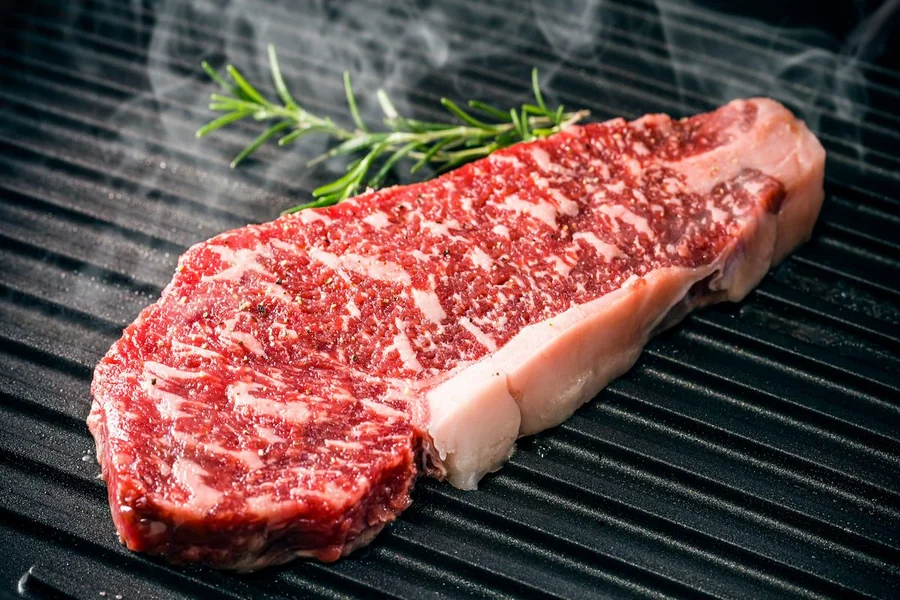
Sourcing beef for a restaurant, butcher counter, or high-volume catering operation involves more than simply placing an order and receiving product. The decisions made upstream — at the point of selection — determine what lands on the plate, how consistently it performs during cooking, and whether customers return. For buyers who work with premium cuts, the coulotte steak presents a specific set of considerations that are easy to overlook when relying on brand name alone.
The coulotte, cut from the top sirloin cap, has grown steadily in presence on menus and in specialty retail over the past decade. Its triangular shape, defined fat cap, and relatively accessible price point compared to ribeye or strip have made it appealing to operators trying to balance quality with margin. When that cut comes from Black Angus cattle, the breed’s genetic characteristics introduce additional factors that affect how the beef grades, how it eats, and how reliably it performs across batches. Understanding those factors before purchasing is not optional — it is the basis of consistent quality control.
What Black Angus Actually Means in a Commercial Context
Black Angus is a breed designation, not a quality guarantee on its own. The term refers to cattle descended from the Aberdeen Angus breed, originating in Scotland, which are genetically predisposed to deposit intramuscular fat at higher rates than many other common breeds. This tendency toward marbling is the primary reason the breed has become dominant in premium beef programs across North America. However, the designation alone does not tell a buyer everything they need to know about the beef they are receiving.
A well-developed Black Angus Coulotte Steak guide will clarify the distinction between generic Black Angus labeling and certified programs that hold producers to breed verification, quality floor requirements, and specific grade minimums. Certified Angus Beef, for instance, maintains documented specifications that go beyond breed identification and include marbling score thresholds, maturity requirements, and restrictions on carcass defects. Buyers who treat all Black Angus product as equivalent are making a category error that shows up in inconsistency at service.
Breed Verification and What It Covers
The value of breed verification lies not in the marketing it enables, but in what it signals about genetic consistency. Black Angus cattle enrolled in verified programs are traceable through breed documentation, which means the characteristics associated with the breed — particularly the capacity for intramuscular fat deposition — are more reliably present batch to batch. For a buyer sourcing coulotte regularly, that consistency matters because the cut’s cooking behavior is directly tied to its fat content and distribution. A batch that comes in under-marbled cooks differently, finishes differently, and produces a noticeably different eating experience than the batch before it.
Verification does not mean every animal performs identically, but it does narrow the range of variation. Buyers who work only with certified programs are effectively tightening the tolerance on that variation. For volume operations where line cooks rely on consistent cook times and doneness cues, tighter variation in raw product translates to fewer errors in execution.
The Difference Between Breed and Program Certification
Breed certification confirms the animal’s genetic origin. Program certification goes further, establishing quality thresholds that must be met for product to carry the program label. Not all Black Angus beef participates in a certified program, and not all programs carry the same standards. Some are producer-developed with internal oversight. Others are administered by third parties with public documentation. Buyers who want predictability should ask suppliers which program the product is enrolled in and request documentation if it matters to their business.
Grading Systems and Their Relevance to Coulotte
The USDA beef grading system, overseen by the Agricultural Marketing Service, assigns quality grades based primarily on marbling and maturity. The system uses visual assessment of the ribeye muscle at a defined point in the carcass to estimate intramuscular fat distribution across the whole animal. The grades most relevant to retail and foodservice buyers are Prime, Choice, and Select, with Prime representing the highest level of marbling and Select representing the minimum acceptable for most quality-focused applications.
For coulotte specifically, the grading context matters because the cut comes from the sirloin region, which does not marble as heavily as the rib section where grading is assessed. This means a carcass graded Choice may still produce coulotte with noticeable variation in marbling appearance compared to what that grade implies at the ribeye. Buyers who purchase coulotte expecting ribeye-level marbling at a Choice grade will consistently be disappointed. The more useful frame is to understand what Choice and Prime grades look like specifically in sirloin cap cuts, not across the whole beef category.
Prime Grade Coulotte and Its Practical Implications
Prime grade product represents a small share of total beef production, and that scarcity is reflected in price. For the coulotte specifically, Prime grading indicates that the parent carcass showed exceptional marbling throughout. In the sirloin cap, this often appears as more evenly distributed fat threads within the muscle, rather than the highly visible marbling streaks more common in rib and loin cuts. The practical effect at cooking is a more forgiving product — one that retains moisture under higher heat, develops better flavor through the Maillard reaction, and carries seasoning more effectively.
For operations serving the cut as a featured item at a premium price, Prime grade provides the product quality needed to justify that positioning. For operations using it as a secondary or rotating feature, upper Choice often delivers sufficient quality at meaningfully lower cost.
Choice Grade and Where It Fits
Choice grade spans a range — lower Choice sits near the threshold of Select, while upper Choice approaches Prime in some characteristics. Buyers sourcing coulotte for regular rotation without extreme price sensitivity should specify upper Choice rather than simply Choice, as the distinction is meaningful in practice even if it appears minor on a specification sheet. Suppliers familiar with high-volume foodservice accounts understand this distinction and can pull accordingly, though it typically requires an explicit conversation rather than a default assumption.
Reading the Cut at the Counter
Visual assessment at the point of purchase is the most direct quality control tool available to a buyer who handles the product before it enters their operation. The coulotte has a distinctive profile — a defined triangular muscle with a fat cap on one side that ranges from thin to substantial depending on how it was trimmed. That fat cap is not cosmetic. It protects the muscle during dry-heat cooking, renders into the meat, and contributes significantly to flavor. A coulotte that has been over-trimmed before sale has already lost part of its value proposition.
Fat Cap Integrity and Trim Standards
Trim standards vary by supplier and by product line. Some operations receive coulotte with a uniform fat cap that has been trimmed to a consistent thickness. Others receive product where trimming is inconsistent or excessive. The fat cap should be intact enough to cover the majority of the top surface and show no gray or oxidized edges, which indicate the product sat for too long or was trimmed too early after processing. When evaluating a new supplier or a new product line, requesting a sample before committing to volume allows the buyer to assess trim standard before that variable is built into their kitchen expectations.
Color, Texture, and Surface Indicators
Fresh coulotte cut from well-handled beef will show a consistent cherry-red color across the lean face of the muscle. Surface discoloration ranging toward brown or gray at the edges is a sign of oxidation, which may indicate age or improper packaging rather than spoilage necessarily, but both affect eating quality. The texture of the lean face should be firm and slightly moist without being wet or tacky. Wet texture can indicate water retention from certain processing methods, while tacky or slick surfaces may signal handling issues. The grain of the muscle should be visible and run in a clear direction — relevant not just for quality assessment but for determining the correct slicing angle for service.
Sourcing Consistency Over Time
Single-purchase quality evaluation tells a buyer less than they think. A more reliable read on a supplier comes from tracking product performance across multiple orders over time. Buyers who document what they receive — grade, trim condition, color, and cooking yield — across several deliveries have an objective basis for supplier conversations that goes beyond subjective impression. This kind of tracking does not require complex systems. A simple log that records delivery date, product grade, and any notable quality deviation is enough to identify patterns.
Coulotte’s growing presence in foodservice and specialty retail means more suppliers now carry it as a standard SKU rather than a special-order item. That availability is useful, but it also means more variation in sourcing quality across the supply chain. As the cut becomes more common, the discipline of verifying what you are receiving rather than assuming consistency becomes more important, not less.
Conclusion
Buying black angus coulotte steak well is fundamentally a discipline of knowing what you are asking for, asking the right questions of your supplier, and verifying what you receive against your own standards. The breed’s characteristics create a favorable foundation — a genetic predisposition toward the marbling and fat distribution that makes the coulotte eat well — but breed alone does not guarantee consistent results. Grade, program certification, trim standard, and sourcing relationship each play a role in determining whether the product performs as expected when it reaches the heat.
For buyers who treat beef sourcing as a variable they actively manage rather than a background logistics function, the coulotte represents a cut with genuine potential. Its performance is predictable when the input variables are controlled. Those controls begin at the buying decision, before the product ever enters the kitchen. According to the USDA Agricultural Marketing Service, grade standards for beef are voluntary, meaning the responsibility for specifying and verifying product quality ultimately rests with the buyer, not the grading system itself. That responsibility, taken seriously, is what separates operations that deliver consistency from those that manage constant variation.