
How Does CNC Machining Enhance Rapid Prototyping and Product Development?
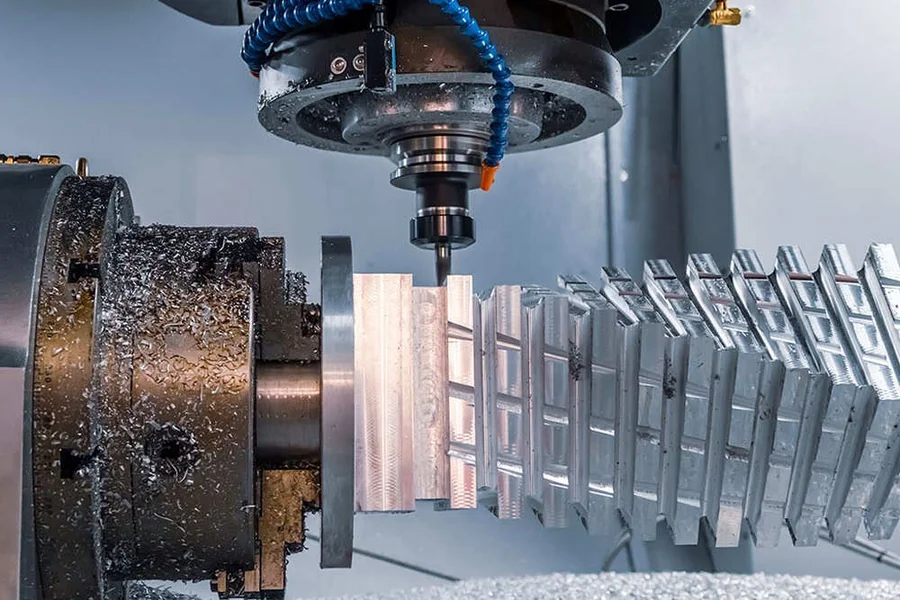
Rapid prototyping and product development demand speed, precision, and flexibility to turn design concepts into functional models. Computer Numerical Control (CNC) machining has become a vital tool for manufacturers seeking to reduce development cycles and improve product accuracy. By automating cutting, drilling, and shaping processes, CNC machining allows for consistent replication of complex parts without manual error. Designers and engineers can quickly iterate on prototypes, test performance, and refine specifications before committing to large-scale production. The ability to work with diverse materials and achieve tight tolerances helps bring innovative ideas from the drawing board to physical models more efficiently than traditional manufacturing methods.
Streamlining the Prototyping Process
-
Faster and More Accurate Prototypes
CNC machining enhances prototyping by combining speed with high precision. Designers can provide digital models that the CNC machine follows exactly, reducing the risk of human error. Complex geometries, intricate features, and tight tolerances that would take hours or days to achieve manually can now be produced consistently in a fraction of the time. Multiple iterations of a prototype can be manufactured quickly, allowing teams to test, evaluate, and refine product concepts efficiently. This rapid turnaround accelerates the design feedback loop, enabling engineers and product managers to make informed decisions more quickly. Services like https://gqmachining.com/locations/cnc-machining-new-york/ offer CNC capabilities that support tight deadlines and high-accuracy prototypes, providing companies with the agility needed to adapt designs and respond to emerging market needs without compromising quality or material integrity.
-
Consistency Across Multiple Iterations
CNC machining ensures that each prototype is identical to its digital design, which is critical for comparing performance across iterations. Manual methods can introduce variability, making it difficult to determine whether changes in a prototype’s performance are due to design modifications or manufacturing inconsistencies. With CNC, each piece is produced with the same dimensions, material removal patterns, and surface finishes, which allows developers to test and evaluate multiple units reliably. This consistency is especially important when prototyping components for assemblies, where precise fit and alignment are required. High repeatability enables teams to focus on functionality, ergonomics, and durability rather than adjusting for production deviations. The reliability of CNC-produced prototypes also helps communicate design intent clearly to stakeholders and supports smoother transitions to full-scale manufacturing.
-
Flexibility With Complex Materials
One advantage of CNC machining in rapid prototyping is its ability to work with a wide range of materials, from plastics and composites to metals such as aluminum, steel, and titanium. Each material has unique characteristics that affect machining parameters, such as cutting speed, feed rate, and cooling requirements. CNC machines are programmed to accommodate these variables, allowing designers to experiment with different materials without compromising precision or surface quality. Testing prototypes in the intended production material helps evaluate strength, weight, thermal performance, and finish before final production. This flexibility also supports hybrid assemblies in which multiple materials are combined to achieve functional performance. By providing material versatility, CNC machining gives product teams the freedom to explore alternative solutions and optimize designs effectively.
-
Integration With Digital Design Tools
CNC machining integrates seamlessly with computer-aided design (CAD) and computer-aided manufacturing (CAM) software, streamlining the workflow from concept to prototype. Digital models can be directly translated into machining instructions, minimizing the need for manual interpretation and reducing the risk of errors. Adjustments to the design can be implemented quickly in the CAD file and sent to the machine for immediate production, allowing rapid iteration without retooling or creating new molds. This digital integration also enables the simulation of machining paths, the detection of potential collisions, and the optimization of cutting strategies before material is removed. The ability to connect design files directly to manufacturing equipment accelerates development timelines and ensures that prototypes accurately reflect the intended geometry.
-
Reducing Costs and Material Waste
Traditional prototyping methods can be costly due to labor-intensive processes, long setup times, and material waste. CNC machining optimizes cutting paths and utilizes raw materials efficiently, minimizing scrap and reducing overall production costs. By producing precise prototypes that match digital models, the need for repeated adjustments or manual corrections is reduced. Faster cycle times also lower labor expenses, and the ability to generate multiple iterations without new tooling allows teams to test designs economically. Reduced material waste and improved efficiency support sustainability goals while keeping development budgets manageable. The combination of speed, accuracy, and resource efficiency makes CNC machining a cost-effective approach for creating functional prototypes in both low- and high-volume product development cycles.
-
Facilitating Functional Testing
Functional testing is critical in product development, and CNC machining allows for the production of prototypes that meet the dimensional and structural requirements of final products. Engineers can assess load-bearing capacity, mechanical interactions, thermal behavior, and ergonomics using prototypes that closely replicate production parts. Accurate machining ensures that holes, threads, and mating surfaces align correctly, which is essential for assemblies or moving components. This fidelity allows teams to identify issues early, refine designs, and validate performance before committing to expensive tooling or full-scale manufacturing. By providing realistic prototypes, CNC machining enhances the ability to make informed engineering decisions, improve product reliability, and reduce costly redesigns.
-
Supporting Iterative Development
Rapid prototyping is inherently iterative, requiring multiple design cycles to refine and optimize a product. CNC machining supports this iterative process by enabling quick, precise production of successive prototypes. Teams can evaluate design changes, test functional improvements, and implement feedback without long lead times or high costs. The high reproducibility of CNC parts ensures that performance differences are due to intentional design modifications rather than manufacturing inconsistencies. This allows designers and engineers to focus on innovation, functionality, and usability, rather than troubleshooting production errors. Iterative prototyping with CNC machines accelerates development timelines and improves the likelihood of successful product launches.
CNC machining enhances rapid prototyping and product development by providing precise, consistent, and flexible manufacturing capabilities. It allows designers to produce accurate prototypes, test multiple iterations, experiment with diverse materials, and efficiently validate functional performance. Integration with CAD/CAM software streamlines the workflow, while optimized material use reduces waste and cost. CNC machining supports repeatable quality across iterations, enabling engineers to focus on design refinement and performance evaluation. By combining speed, accuracy, and adaptability, CNC machining ensures that prototypes are both reliable and representative of final production products. This approach accelerates innovation, reduces development risks, and improves outcomes for new product initiatives.