
Transforming Your Home’s Exterior with Custom Garage Doors
Popular Materials and Custom Garage Door Designs
Your home's exterior is the first impression it makes, and a custom garage door can truly transform its curb appeal. Beyond aesthetics, choosing the right garage door involves important decisions about functionality and long-term value. We understand that selecting the perfect system, from unique materials to the reliable opener, can feel overwhelming. A critical consideration for many homeowners is the belt drive vs chain drive cost comparison for their garage door openers, especially when investing in custom designs. We aim to clarify these choices, ensuring your beautiful new door operates efficiently and quietly for years to come.
In this guide, we'll delve into custom garage doors, exploring popular materials like natural wood and modern steel that can elevate your home's architecture. We'll also examine how to match the right opener to heavy custom doors, considering crucial factors like drive mechanism selection and power requirements. Understanding the nuances of options like belt drive versus chain drive is key, as these choices significantly impact noise, maintenance, and overall cost-effectiveness. We will cover essential architectural elements, finish options, and what to expect regarding upfront investment and long-term value, helping you make an informed decision for your home.
The journey to a truly transformed home exterior often begins with the selection of the right materials for your custom garage door. The choice between natural wood, steel, or composite designs significantly influences not only the aesthetic appeal but also the door's durability, insulation properties, and overall maintenance requirements. Each material offers distinct advantages, allowing homeowners to achieve a specific look and performance level that complements their home's unique architectural style.
Natural Wood and Glass Custom Garage Door Designs
Natural wood garage doors exude a timeless elegance and warmth that can instantly elevate the curb appeal of any home. Materials like natural cedar are highly sought after for their rich grain patterns and inherent beauty. These doors can be crafted in various styles, from rustic to contemporary, often featuring classic designs such as carriage house doors that evoke a sense of traditional craftsmanship. The integration of glass elements, such as tempered glass panels, further enhances their visual appeal, allowing natural light into the garage space while adding a sophisticated touch. For those seeking privacy, options like obscure glazing can provide light without sacrificing seclusion.
Beyond their aesthetic charm, custom wood doors can also be engineered for performance. When properly constructed and installed, they offer excellent thermal insulation, contributing to energy efficiency within the garage and potentially the adjacent living spaces. Effective weather sealing is crucial to protect the wood from the elements, preventing warping, rot, and other forms of degradation. Various timber finishes are available, from clear coats that highlight the wood's natural beauty to stains that deepen its tone or paint that matches existing exterior elements. Regular maintenance, including re-sealing or re-staining, helps preserve their beauty and extends their lifespan, ensuring they remain a stunning focal point for years to come.
Modern Steel and Composite Custom Garage Door Designs
For homeowners seeking a blend of modern aesthetics, robust durability, and lower maintenance, steel and composite garage door designs present compelling alternatives. Galvanized steel doors, often featuring multiple layers, offer exceptional strength and security. They can be customized with various finishes and textures, including faux woodgrain overlays that mimic the look of natural timber without the associated upkeep. Composite doors, constructed from a blend of recycled wood fibers and polymer resins, provide another excellent option for achieving diverse designs, including intricate patterns and smooth, contemporary surfaces.
These modern materials boast several practical advantages. Their inherent corrosion resistance makes them ideal for various climates, standing up well against humidity and harsh weather conditions. Many steel and composite doors are designed to withstand significant wind load, an important consideration in areas prone to strong winds. Their exterior durability ensures they maintain their appearance with minimal intervention, resisting dents, cracks, and fading more effectively than some other materials. Furthermore, steel and composite doors are often engineered with advanced insulation technologies, contributing significantly to a home's energy efficiency. This can lead to reduced heating and cooling costs, making them a smart long-term investment. The versatility in design allows for sleek, minimalist looks or more elaborate, textured finishes, ensuring a perfect match for any modern or traditional home.
Matching Garage Door Openers to Heavy Custom Doors
Once the perfect custom garage door has been selected, the next critical step is choosing an opener that can reliably and efficiently operate it. This decision becomes even more significant when dealing with heavy custom doors, such as those made from solid wood or incorporating large glass panels. The drive mechanism of the opener is paramount, directly impacting performance, noise levels, maintenance requirements, and overall lifespan.
Drive Mechanism Selection for Custom Systems
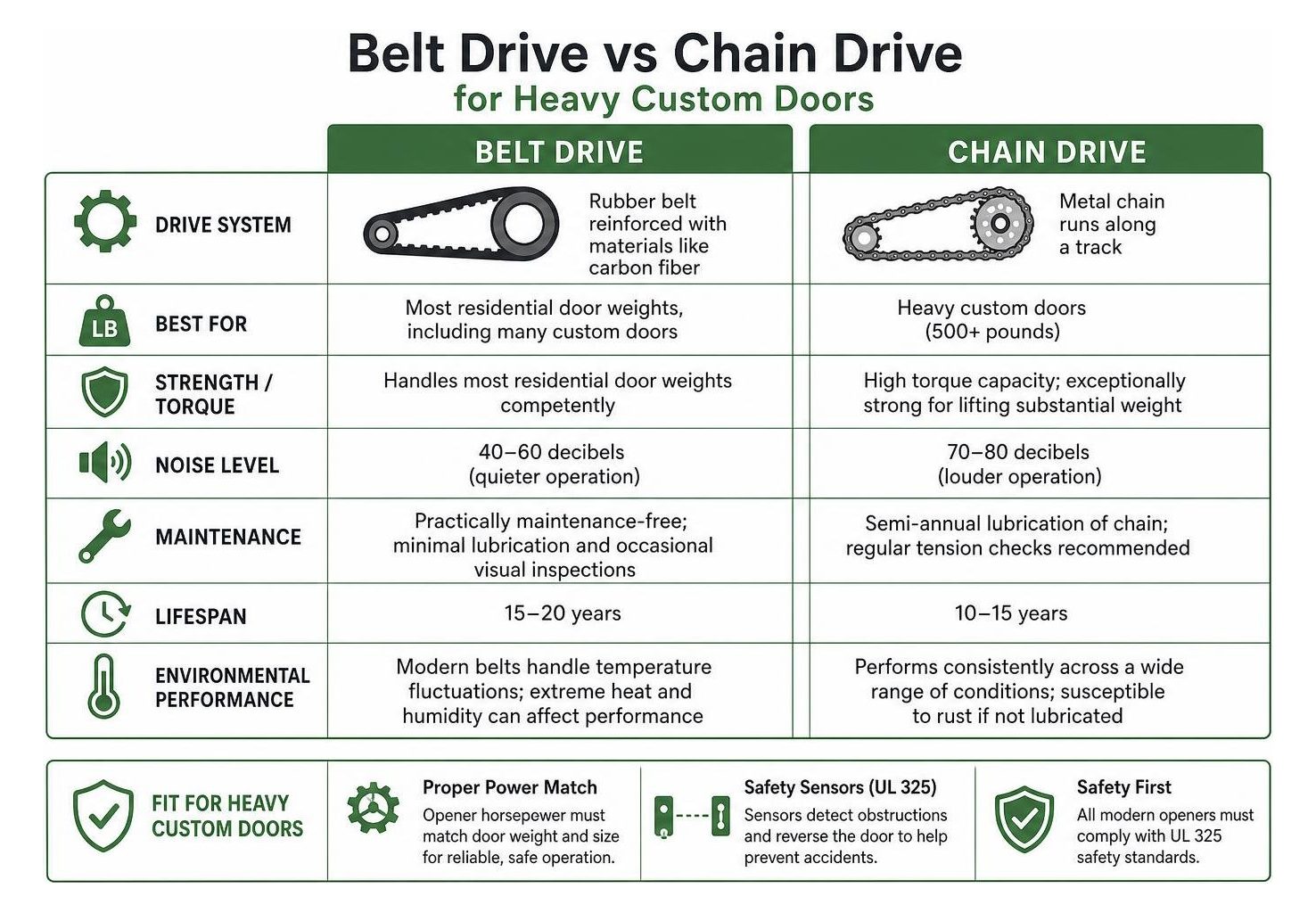
When considering garage door openers for custom systems, the primary choice typically boils down to a chain drive or a belt drive. Each system employs a different method to move the garage door along its tracks. A chain drive utilizes a metal chain that runs along a track, pulling or pushing the door open and closed. In contrast, a belt drive operates with a durable rubber belt, often reinforced with materials like carbon fiber, that performs the same function.
For heavy custom doors, such as large wooden or glass designs that can weigh over 500 pounds, chain drives have historically been the workhorse. Their robust metal construction provides a high torque capacity, making them exceptionally strong and reliable for lifting substantial weight. This inherent strength ensures consistent operation, even with the most demanding custom doors. However, chain drives are known for being louder in operation, with typical noise levels ranging from 70-80 decibels, which can be noticeable, especially in attached garages or homes with living spaces above the garage.
Belt drives, on the other hand, are celebrated for their significantly quieter operation, often registering between 40-60 decibels. This substantial noise reduction makes them an attractive option for homes where minimizing sound is a priority. While traditionally considered suitable for lighter doors, advancements in technology mean that modern belt drives can competently handle most residential door weights, including many custom designs. The rubber belt also offers smoother operation, absorbing vibrations more effectively than a metal chain.
From a maintenance perspective, chain drives typically require more attention. Industry best practices suggest semi-annual lubrication of the chain to prevent rust, reduce friction, and ensure smooth operation. Regular tension checks are also advisable. Neglecting these maintenance tasks can lead to premature wear and failure. Belt drives, conversely, are often described as practically maintenance-free, requiring minimal lubrication and only occasional visual inspections for wear or tension adjustments. This difference in maintenance needs can influence the long-term cost of ownership.
Regarding lifespan, both systems are designed for durability. Industry data suggests that chain drives typically have a lifespan of 10 to 15 years, while belt drives often boast a longer expected lifespan, ranging from 15 to 20 years. This extended durability for belt drives can contribute to their long-term value, despite a generally higher upfront purchase price. For a deeper dive into the financial aspects of these opener types, especially for custom garage doors and repairs, you might find our detailed analysis particularly helpful.
Environmental factors can also play a role. While modern belts are designed to withstand temperature fluctuations, extreme heat and humidity can sometimes affect their performance, potentially leading to slippage in rare cases. Chain drives, due to their mechanical engagement, tend to perform consistently across a wider range of environmental conditions, though they are susceptible to rust if not properly lubricated in humid environments. The optimal choice depends on balancing the need for power, quiet operation, and long-term maintenance preferences against the specific demands of your custom door.
Power and Automation Requirements
Beyond the drive mechanism, the power and automation capabilities of a garage door opener are crucial for heavy custom doors. The horsepower rating of the opener must be appropriately matched to the door's weight and size to ensure reliable and safe operation. Attempting to operate a heavy door with an underpowered opener can lead to premature motor wear, inconsistent performance, and potential safety hazards. Consulting with a professional is essential to determine the precise horsepower needed for your specific custom door.
Safety is paramount, and all modern garage door openers must comply with UL 325 safety standards. This includes essential features like safety sensors, which project an invisible beam across the garage door opening. If this beam is broken while the door is closing, the door will automatically reverse, preventing accidents involving people, pets, or objects. These sensors are non-negotiable for any installation, custom or otherwise.
Modern openers also offer a range of convenience and smart home integration features. A battery backup system ensures your garage door remains operational during power outages, a particularly valuable feature for homes where the garage is the primary entry point. Smart home integration allows homeowners to control and monitor their garage door remotely via a smartphone app, voice commands through virtual assistants like Alexa, or integration with broader home automation systems. Both belt and chain drive systems are fully compatible with these smart technologies, so your choice of drive type will not limit your ability to integrate your garage door into your connected home ecosystem. Additionally, features like vibration dampening, often more pronounced in belt drive systems, contribute to a smoother and quieter overall operation, enhancing the user experience.
Key Architectural Elements of Custom Doors
The true artistry of custom garage doors lies not just in their primary materials and operational efficiency but also in the meticulous attention to architectural details. These elements are what transform a functional entry point into a significant design statement, ensuring the garage door harmonizes with, and even enhances, the overall aesthetic of your home's exterior.
Decorative Accents and Glass Placement
Decorative accents are the jewelry of a custom garage door, offering endless possibilities for personalization. Window inserts, for instance, can be designed in various patterns and shapes, from traditional grilles to modern geometric configurations. The choice of glass is also critical; beyond tempered glass, options like obscure glazing provide privacy while still allowing natural light to filter through, creating an inviting glow without revealing the garage's interior.
Hardware selections further define the door's character. Elements such as clavos hardware, which are decorative nail heads, or elegant iron handles and hinges, can evoke a specific architectural style, whether it's a rustic farmhouse, a Mediterranean villa, or a sleek contemporary abode. For enhanced durability and a cohesive look, these metal accents can be treated with powder coating, which offers a resilient finish in a wide array of colors. Thoughtful placement of these accents, combined with the strategic positioning of glass panels, can create visual balance and architectural interest, making the garage door a true focal point.
Finish Options and Exterior Harmony
The final finish applied to a custom garage door is paramount in achieving exterior harmony. For natural wood doors, custom paint matching allows the garage door to seamlessly blend with existing trim or accent colors on the home's facade. Alternatively, various stain saturation levels can be applied to wood, enhancing its natural grain while providing a desired depth of color, from light and airy to rich and deep tones.
For steel and composite doors, a vast spectrum of finishes is available, including durable paint options and textured coatings that mimic other materials. The goal is always color harmony, ensuring that the garage door's finish complements the home's siding, roofing, and landscaping. Careful trim coordination—matching or contrasting the door's trim with other architectural elements—further contributes to a polished and cohesive look. When all these elements are considered together, the custom garage door achieves true architectural cohesion, becoming an integral and beautiful part of your home's overall design narrative.
Cost Considerations and Long-Term Value
Investing in a custom garage door and its accompanying opener involves more than just the initial purchase price. A comprehensive understanding of the total cost of ownership, encompassing upfront investment, ongoing maintenance, and potential lifespan, is crucial for making a financially sound decision that delivers long-term value.
Upfront Investment and Maintenance Lifecycle
The upfront investment for a custom garage door system includes several components. This begins with the initial fabrication cost of the door itself, which can vary significantly based on materials, design complexity, and size. Following fabrication, professional installation is a critical expense. While it might be tempting to consider a DIY approach, the complexity and safety requirements of garage door installation, especially for heavy custom doors, make professional service highly recommended. Industry data indicates that average garage door opener installation can range significantly, and chain drives might offer a slightly lower installation cost compared to belt drives in some scenarios, though the difference is often marginal.
When comparing the openers, belt drives typically represent a higher upfront purchase price than chain drives. Research suggests that belt drive openers are generally more expensive than their chain drive counterparts. However, this initial cost difference is often offset by the long-term maintenance lifecycle. Chain drives require more frequent and consistent maintenance, primarily semi-annual lubrication and periodic tension checks, to ensure their 10-15 year lifespan. These tasks, while not overly expensive individually, accumulate over time. Belt drives, conversely, are known for their minimal maintenance requirements, often needing only occasional visual inspections and no lubrication, contributing to a lower maintenance cost over their longer 15-20 year lifespan.
Environmental factors can also influence maintenance costs and lifespan. In very humid or hot climates, chain drives, if not consistently lubricated, can be prone to rust, potentially leading to increased repair needs. While modern belt drives are robust, some extreme conditions might theoretically affect their material properties over many years.
Considering total cost of ownership (TCO) over a 10-15 year period, belt drives can become more cost-effective despite their higher initial price. The savings from reduced maintenance and a potentially longer operational life often outweigh the upfront difference. Repair costs also factor in; while chains are generally cheaper to replace and their parts more readily available, belt repairs, though less frequent, can sometimes involve higher component costs. The decision often hinges on whether a homeowner prioritizes a lower initial outlay or lower long-term maintenance and quieter operation.
Long-term ROI
Beyond the operational costs, a custom garage door significantly contributes to the long-term return on investment (ROI) of your home. A beautifully designed and well-functioning custom door dramatically enhances curb appeal, which is a key factor in property valuation. According to real estate experts, exterior upgrades, particularly garage door replacements, consistently rank among the home improvements with the highest ROI. This means that a substantial portion of your investment can be recouped when you sell your home.
The durability of the custom door and its opener system also plays a role in ROI. A durable performance, ensured by quality materials and a reliable opener, means fewer costly repairs or replacements down the line. Climate durability is particularly important; a door designed to withstand local weather conditions will maintain its appearance and functionality for longer, preserving its aesthetic and structural integrity. By carefully considering the lifecycle expenses—from initial purchase and installation to ongoing maintenance and energy efficiency benefits—homeowners can make an informed decision that enhances their home's beauty, functionality, and overall market value for many years to come.
Frequently Asked Questions about Custom Garage Doors
Navigating custom garage doors can bring up several questions. Here, we address some of the most common inquiries to help you make confident decisions for your home.
How do custom garage doors impact property resale value?
Custom garage doors can significantly enhance your property's resale value. They are a prominent feature of your home's exterior, directly contributing to its curb appeal. A well-designed, high-quality custom garage door can make a strong first impression on potential buyers, suggesting a well-maintained and thoughtfully upgraded home. This improved aesthetic can lead to a higher home appraisal and a stronger return on investment (ROI) compared to many other home renovations. Industry reports frequently highlight garage door replacement as one of the top home improvement projects for ROI, often recouping a substantial percentage of the initial cost upon resale. It's an investment that not only elevates your daily living experience but also pays dividends when it's time to sell.
Which opener drive type is recommended for heavy custom wood doors?
For heavy custom wood doors, which can be quite substantial in weight, a chain drive opener is often recommended due to its superior lifting capacity and robust nature. The metal chain mechanism is designed to handle high torque loads, providing the raw power needed to consistently and reliably move heavier doors. While modern belt drives have advanced significantly, chain drives still hold an edge for the heaviest applications. To ensure optimal performance and safety for such doors, it's also crucial to have reinforced tracks and a motor power rating that is appropriately matched to the door's specific weight. Consulting with a professional garage door specialist can help determine the exact requirements for your unique heavy custom door.
How often do custom garage doors require maintenance?
To ensure the longevity and optimal performance of your custom garage door and its opener, annual inspection is highly recommended. During this inspection, professionals can check for proper weatherstrip sealing, lubricate moving parts, and ensure track alignment. For chain drive openers, specific maintenance, such as semi-annual lubrication, is essential to prevent rust and ensure smooth operation. Belt drives, while requiring less frequent attention, still benefit from periodic visual inspections to check for wear or proper tension. Proactive maintenance helps identify potential issues before they become major problems, extending the life of your entire system and preserving your investment.
Conclusion
Transforming your home's exterior with a custom garage door is an investment that pays dividends in both aesthetics and functionality. By carefully considering popular materials, matching the right opener to your heavy custom door, and paying attention to key architectural elements, you can achieve a truly stunning and durable performance. The decision between a belt drive and a chain drive opener, while seemingly minor, holds significant implications for noise, maintenance, and long-term cost-effectiveness. Making an informed choice ensures your custom garage door not only enhances your home's curb appeal and contributes to its custom architecture but also provides reliable, efficient operation for years to come, truly completing your property's transformation.