
Best Bunk Beds for Toddlers: What to Consider Before Buying?
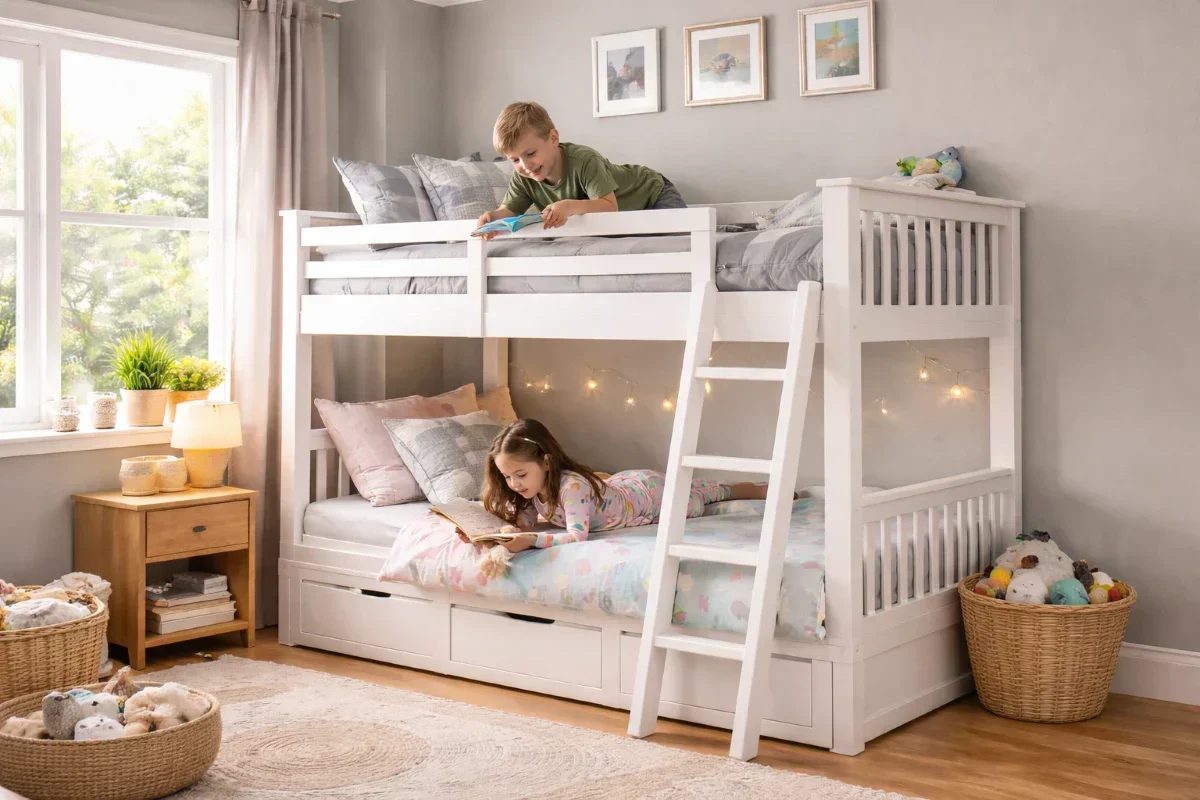
Bunk beds look like an obvious solution for two kids in one room until you start actually researching them and realize how much variation there is in what "safe" and "well-made" actually mean in practice.
Getting the right one matters more than most parents expect before they've lived with the wrong one for six months.
What the Best Bunk Beds for Toddlers Should Look Like
A solid frame is where it all starts. A toddler bunk bed that shifts or creaks under a moving child is a problem that surfaces fast in daily use, and no amount of good design compensates for a frame that isn't genuinely sturdy. Ladder steps need to be wide enough and spaced well for small feet, because a child who uses them twice a day every day will find every flaw in the design. Top bunk rails have to actually contain a sleeping child, not just satisfy a checkbox. Wood quality and finishing matter throughout because small hands and knees find every rough patch. Height between levels needs enough clearance for the bottom sleeper to sit up without hitting their head, and both sleeping surfaces should be sized for a mattress that provides proper support and comfort rather than simply fitting the frame.
What to Check Before Buying
Bed size affects everything downstream, so starting there makes sense. A bed that's too large for the room leaves no floor space for daily life; one that's too small for the child becomes uncomfortable faster than expected. Level height determines how much clearance exists between the two sleeping surfaces and how much room the top bunk user has before hitting the ceiling – both matter more than they seem on a spec sheet. Mattress dimensions need to match the frame exactly so there are no gaps a small child can get caught in. The ages of both children help determine which bunk level is appropriate for each child and whether the ladder is actually manageable for the younger one using it daily. Access to the top bunk deserves real attention since a ladder that works for a seven-year-old might genuinely not be safe for a four-year-old making the same climb every morning and night. Room footprint determines whether the bed fits without the space becoming impossible to move around in once it's assembled.
BusyWood Bunk Beds
BusyWood builds bunk beds from natural wood with construction built to withstand daily use by two children. Solid frames, properly finished surfaces throughout, ladder steps sized and spaced for children rather than adults, and rails on the top bunk that do their job properly. The range covers different configurations so finding a fit for the room size and the ages of both children doesn't involve settling for something that only mostly works. For families who've spent enough time researching to know that the difference between a good bunk bed and a frustrating one lives in the construction details, this is a brand worth looking at before making a final decision.
A good bunk bed earns its place by being genuinely usable every day, not just once assembled. Safety, construction quality, the right size for the room and the children – these are what separate a purchase that works from one that creates ongoing friction. Getting the ladder right for the younger child, making sure the top bunk rail height actually keeps them in place during sleep, and checking that both mattress levels are genuinely comfortable rather than just technically functional – all of that matters before the design conversation even starts. Aesthetics follow naturally when the practical side is already sorted, and that order of priorities is what most parents wish they'd applied from the start.