
DOT Weigh Stations on I-80: What Drivers Actually Get Checked For
The I-80 corridor is perhaps the most demanding stretch of highway in America, transforming a routine trip into a continuous exercise in accountability for drivers.
As a vital artery for freight from New Jersey to California, this route subjects truckers to a mix of challenges: highly variable weather, steep mountain passes, vast agricultural landscapes, and some of the nation’s most stringently regulated truck routes.
The DOT weigh station locations are an intrinsic element of that tightly controlled environment.
Weight Enforcement: The Initial Crucial Determinant
The number one factor any I-80 weigh station inspector looks for first is adherence to all weight regulations. Everything else falls by the wayside until weight is assessed.
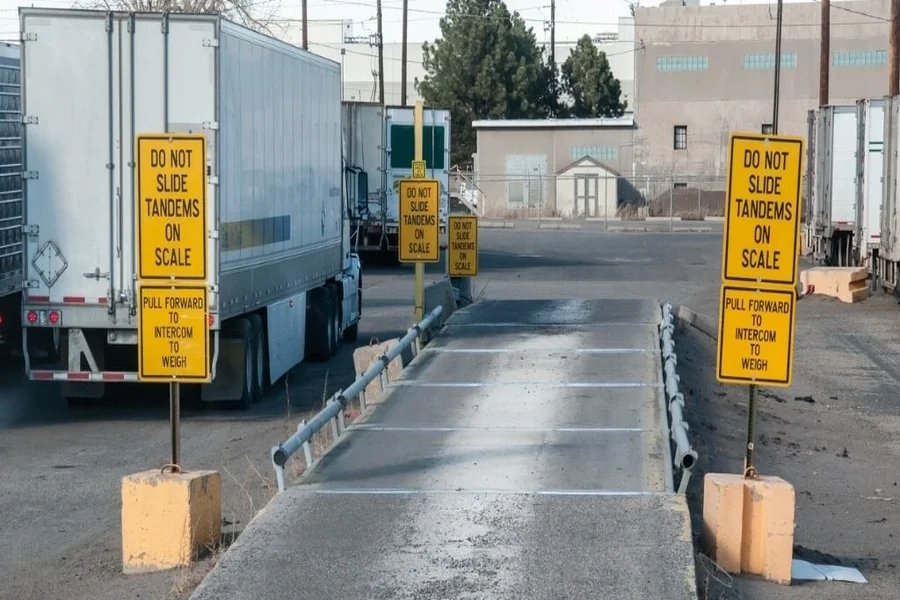
A moving weigh station uses in-ground sensors installed into the roadway to take approximate measurements of the load and axles while the truck is still in transit, and at highway speed. The point is to intercept overloaded or improperly distributed trucks before they enter the station.
The intent here is not simply to identify overweight trucks. They can also identify loads that have an uneven weight distribution, which is capable of harming the roadway, or that might even prove detrimental to the overall stability of the vehicle at highway speed.
Upon arrival at the station itself, the officer checks for the following three criteria:
– Does the gross vehicle weight meet the maximum load limit, which is typically 80,000 lbs for interstate trucking, and is based on many varying state regulations?
– Is the weight distributed evenly among the axles as per the federal bridge formula guidelines?
– Is the load distributed within the vehicle in a way that is unlikely to compromise its stability?
Although the weight may technically fall under the federally required load limits, the vehicle may be refused permission to continue if any individual axle or its associated load surpasses the allowed threshold or is unevenly distributed. This is by far one of the most frequent reasons for an immediate traffic stop, despite the gross vehicle weight being compliant with state mandates.
If a weight issue is detected at the station, law enforcement measures are enforced immediately. The driver could be required to shift the weight, reduce the weight of the load, or pay the relevant fees before being allowed to proceed with their journey.
On a vital thoroughfare such as the I-80, where logistics are interlinked across state lines, even a short delay can have cascading effects down the entire chain.
Full Vehicle Inspection Under Actual Roadway Conditions
When a vehicle is flagged for a more in-depth inspection, law enforcement officers follow a rigid inspection procedure based on the guidelines outlined by the CVSA, focusing entirely on whether the vehicle is safe to operate under the realities of continuous driving and traffic flow on a major interstate.
The entire focus is on practical safety. Brakes are the priority here as they are the most critical component when a vehicle needs to stop or slow down with a significant load.
They check for air leaks in the lines, verify brake pressure levels are adequate, and inspect for excessive wear on components. Brake failure is also one of the more frequent issues triggering immediate orders to remove vehicles from service until it is repaired.
Tires are another key aspect. They are carefully inspected for any cracks, bubbles, or signs of uneven wear; their ability to withstand high temperatures under pressure from an entire load is a vital component of their structural integrity, especially with the average highway speeds present on the I-80. A blowout from a damaged tire while moving at highway speeds would obviously prove catastrophic.
The steering and suspension are inspected to ensure that the vehicle can maintain directional control when the weight of the vehicle is in constant motion, and especially when driving conditions require quick maneuvering. Worn components in the steering or suspension can result in a complete loss of control when load and I-80 road conditions are varied.
All exterior lights are checked to ensure proper functionality, as this is an absolutely crucial part of their job when operating within heavy traffic and in a wide variety of visual conditions. Even a dim brake light can prove hazardous in a stop-and-go traffic scenario.
The fifth wheel on a tractor and kingpin on a trailer are also inspected as part of the system that attaches the two, ensuring they are properly secured, well-lubricated, and in good working order.
These areas are meticulously examined by officers with a full understanding of how critical component wear and potential mechanical failure can be at highway speeds when operating over long distances.
Paperwork and Compliance: Instant Showstoppers
Mechanical issues aside, documentation compliance can be an immediate deal-breaker.
During weigh station stops on I-80, all required paperwork is verified for legal compliance. This can include driver’s licenses, operating authority, and whether all registered parts are accurately reflecting each other.
The weigh station also checks all tax and permit compliance. This may include IFTA fuel reporting as well as any specialized load permits that are required due to the nature of the cargo being hauled.
The officer’s primary electronic resource when checking on load-related compliance is the ELog, a system used by most carriers to track a driver’s Hours of Service, which is a regulated measure for how long any individual driver is legally allowed to be behind the wheel.
Common errors in an ELog include all of the following:
– Total hours driven in the past several days are outside the regulatory limits,
– Mandatory off-duty periods are being skipped,
– Logged hours do not coincide with actual miles driven (as determined through a GPS-based ELD),
– Gaps in the driver’s duty status log.
Errors in Hours of Service are heavily enforced because driver fatigue is seen as an epidemic when considering the frequency of crashes on a commercial level. It is important to realize that a driver could have a completely mechanically compliant vehicle, yet be removed from service for log violations alone.
Why Trucks Are Chosen: A System Focused on Identifying Risk
The selection process is definitely not based on a random number draw. Everything is based on a structured analysis of risk.
The following are all the aspects that factor into determining which trucks receive a full inspection:
– Carrier CSA safety score from previous DOT inspections
– Inspector Selection System (ISS) score assigned by the state DOT
– Detection of potential issues through automated roadside inspections
– Simple visual assessment of visible safety defects by the officer on duty
– Random inspection percentage set for each state to ensure the element of chance is still present
Carriers that maintain a high compliance level generally fly through with no issues whatsoever, while carriers with consistent safety violations tend to be directed into inspection sites more frequently than average, as this seems to be the statistically higher risk location at that particular time.
Why Does I-80 Draw Heavier Inspection Rates?
The reason I-80 has so much scrutiny from the DOT, unlike a typical interstate highway, is simple: it serves as a massive, national freight conduit.
It links the country’s primary shipping points together while also traversing numerous different transportation authority jurisdictions, and each jurisdiction has its own particular interests.
The eastern portion of the I-80 generally receives heavier enforcement due to the sheer density of its infrastructure and population centers, as well as the often-tight roadway conditions compared to the western segments.
The central segment receives a large majority of its focus due to the high volumes of freight that are moved through it, and is therefore concerned primarily with axle load and overall distribution of weight within the vehicle.
Weather is also a primary factor in determining inspection levels. Poor conditions are usually accompanied by increased inspection rates in order to help to manage and control those specific risk elements and to keep hazardous vehicles from entering roadways that are difficult to manage under those adverse conditions.
This usually leads to a concurrent increase in the level of roadside scrutiny when freight traffic slows down on I-80, as inspection windows become readily available to law enforcement.
The Truth of I-80 Inspection
Experienced drivers recognize that weigh stations on I-80 have defined parameters they are judged against. A successful completion of an inspection typically depends on a successful rating in the three separate categories previously mentioned: mechanical, documentation, and load compliance.
After the truck stops within the designated inspection lanes at a DOT station, the only thing left is to go through the predetermined and sequential steps to measure the vehicle’s compliance with state and federal guidelines.