
Expanding Broadband Coverage: Emerging U.S. Regions Becoming Internet Hotspots
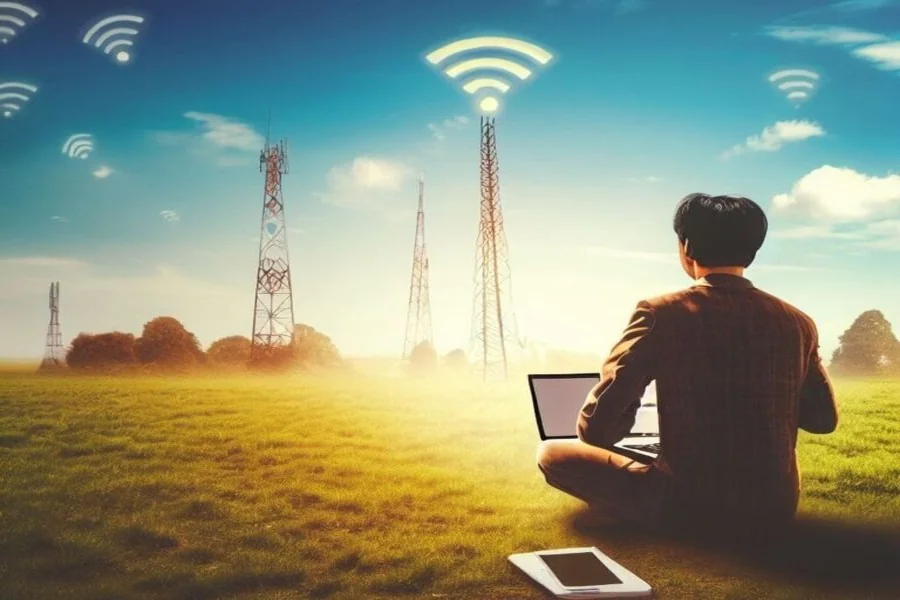
Internet connectivity is still a distant dream for many living in America, particularly those in rural areas, for reasons such as lower population and income, and geographical barriers, to name a few.
Both of the factors shared above make setting up the required infrastructure more difficult and less rewarding for Internet Service Providers (ISPs), contributing to the already huge digital divide in America.
On the bright side, multiple alternative initiatives to expand broadband coverage and access are being taken, aiming to turn rural, Appalachian, and areas in Texas into internet hotspots.
Let’s explore a few of these efforts ahead.
Broadband Equity Access and Deployment Program (BEAD)
BEAD is a program launched by the Infrastructure Investment and Jobs Act to provide funding for broadband infrastructure development, planning, and adoption initiatives across many underserved and underdeveloped areas.
The program is the largest investment to boost broadband services yet, with a total budget of over $42 billion. Currently, many states are in the qualifying phase for the program, and it is expected to roll out somewhere in the next few years.
ReConnect Program
The ReConnect Program is an initiative launched by the USDA (United States Department of Agriculture) that aims to bridge the digital divide by making high-speed broadband available in rural areas. The program does this by offering funds such as loans or grants for the construction, improvement, or acquisition of broadband infrastructure.
The program is targeted towards corporations, Limited Liability Partnerships (LLPs), and other legal entities, but not individuals or general partnerships.
For an area to become eligible, it must fall into the rural or remote area category and have at least 90% of households lacking the ideal broadband speeds, which are less than 25 Mbps (Megabits per second) download and 3 Mbps upload.
WOW! Awarded $2.39 Million Grant by the ADECA to Expand its Footprint
WOW! is one of America’s leading broadband internet providers that offers cable and fiber internet in some areas.
The provider is currently available in 6 states, which are:
- Alabama
- Florida
- Georgia
- Michigan
- South Carolina
- Tennessee
If you’re in any of these states, I’d definitely recommend looking into WOW! Internet plans because, personally, even though I live in Alabama, my experience with them has been great, both in terms of speed and reliability.
These qualities may be the reason behind the provider being awarded $2.39 million by the Alabama Department of Economic and Community Affairs to grow its operations nationwide.
We may soon see the provider setting up a mix of cable and fiber internet in many more areas across the country, provided that natural landscapes don’t serve as a barrier.
Lifeline Program
The Lifeline Program was launched by the Federal Communications Commission (FCC) in 1985, aiming to help low-income households, especially those in tribal areas, easily and cost-effectively access internet connectivity.
Eligible consumers can enjoy a monthly discount of up to $9.25, which can go up to $34.25 for those living in tribal areas, and as of 2025, there are over 8.6 million Americans enrolled in the program.
Your eligibility is assessed based on two main factors, which are your income and whether you’re participating in other government benefit programs.
Some of these programs include the following:
- Bureau of Indian Affairs General Assistance
- Food Distribution Program on Tribal Lands
- Federal Public Housing Assistance
- Supplemental Nutrition Assistance Program (SNAP)
- Head Start Tribal Program
- Medicaid, Supplemental Security Income
- Tribally Administered Temporary Assistance for Needy Families
- Veterans Pension & Survivors Pension Benefit
In case you’re receiving benefits from any of the above-mentioned government programs, you automatically qualify.
However, in case you’re not, your household income needs to be at the same level or 135% lower than the Federal Poverty Guidelines dictate. The only catch is that one person per household can enroll in the program.
The application process is also rather simple, because you can apply either through mail, online, or an internet company. You may be asked to provide your full name, date of birth, the last 4 digits of your SSN (Social Security Number) or TIN (Tribal Identification Number), as well as your address.
Once you qualify, you will have to sign up for a service in your area that provides the Lifeline discount. You also have the option to ask your current company to apply the discount to a service you’re currently using.
Launch of 5G Home Internet Services
5G is the next level of cellular wireless technology, and its network is constantly growing.
This network is also being used to provide fast and reliable broadband connectivity in many areas across America with faster speeds and bandwidth, along with lower latency. Currently, there are two major players in this space, T-Mobile and Verizon, both of which you might have heard of.
Both these mobile giants offer 5G home internet in the form of a fixed wireless connection, which uses radio waves instead of cables to connect a fixed location, such as your home or business, to the internet.
Since it mostly uses an existing infrastructure and does not require installing physical equipment like cables, it can be used to provide seamless internet connectivity in remote areas as well.
Digital Divide – A Drastic Situation We May Soon Overcome
Despite being one of the most tech-friendly countries, the digital divide continues to impact numerous Americans living in rural areas, limiting their ability to work remotely or launch their businesses. However, continued efforts to provide broadband access to such areas can gradually help reduce and maybe even overcome this disparity in the near future.