
How do Air Conditioning Contractors Adapt to Inverter-Based AC Systems Today?
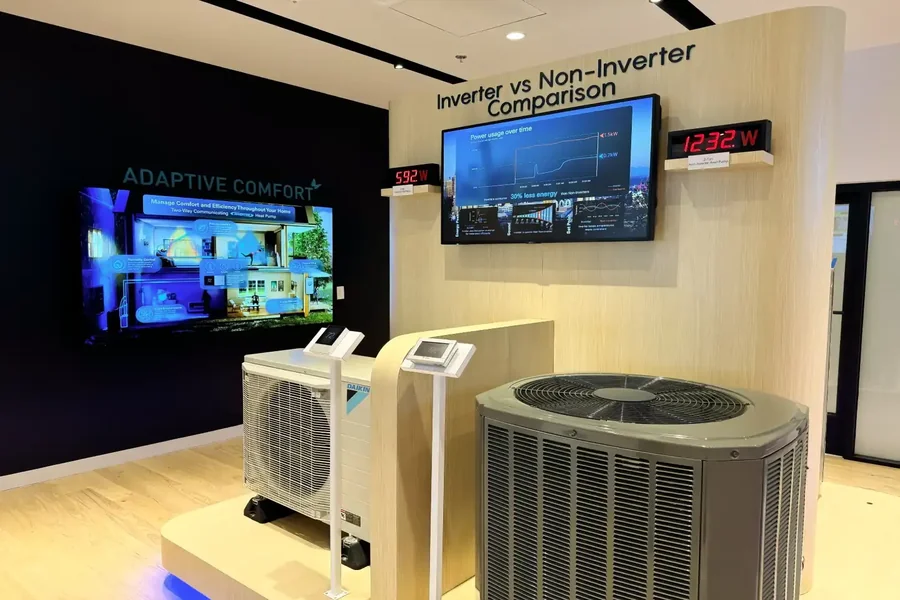
Inverter-based AC systems change the daily work of air conditioning contractors, as the equipment behaves less like a simple on/off machine and more like a continuously adjusting comfort platform. Traditional systems generally run at a fixed capacity until the thermostat is satisfied, then shut off, repeating this cycle throughout the day. Inverter-driven systems vary compressor speed and often fan speed to match real load, which can result in longer run times at lower power, steadier indoor temperatures, and different humidity-control patterns. This shift affects how contractors size systems, set airflow, interpret refrigerant readings, and explain normal operation to homeowners. It also changes troubleshooting, since many issues show up as performance drift, ramping limits, or control-related fault codes rather than a complete breakdown. Adapting well requires updated measurement habits, stronger commissioning routines, and clear customer education so the technology delivers comfort and efficiency without confusion.
New diagnostics for variable output
-
Sizing practices evolve beyond old rules.
Contractors adapting to inverter systems start with sizing because modulation does not eliminate the risks of oversizing or undersizing. An oversized inverter system may operate at very low output and still satisfy the thermostat quickly, reducing moisture removal and creating a space that feels cool but clammy during humid periods. An undersized system may spend too much time at high speed, increasing noise and energy use and leaving little margin during heat waves. Proper load calculations become more important, and contractors pay closer attention to window exposure, insulation levels, and infiltration, since inverter systems can mirror small load changes that fixed systems would mask with short cycles. Duct evaluation also becomes part of sizing conversations. Inverter equipment can deliver a wide range of airflow demands depending on operating mode, but a restrictive duct system will limit that flexibility. Contractors check return sizing, filter type, and static pressure early so the new inverter system can modulate as intended rather than being forced into a narrow operating band. This approach turns sizing into a system design exercise rather than a quick swap based on the old unit tonnage.
Modern cooling technology increasingly relies on inverter-driven compressors that require technicians to master sophisticated electronics and variable-frequency drives. While the industry focus often highlights these high-efficiency cooling advancements, consistent maintenance protocols for heating systems remain equally vital for ensuring year-round residential comfort. Local homeowners often seek a professional Furnace repair service in Goodfield to verify that their existing heating equipment integrates seamlessly with newer smart thermostats and zoning sensors. This comprehensive approach to home climate systems prevents minor calibration issues from escalating into significant mechanical failures during seasonal transitions. Maintaining technical proficiency across both heating and cooling platforms allows modern contractors to provide more reliable and energy-efficient solutions.
-
Commissioning becomes a disciplined workflow.
With inverter-driven equipment, commissioning is not optional because sensors, controls, and communication wiring influence how the system ramps and protects itself. Contractors verify thermostat compatibility, confirm indoor and outdoor unit pairing, and check the polarity and routing of communication wiring to avoid intermittent signal issues. Airflow commissioning is performed using static pressure measurements and blower configuration so the coil operates within a stable range across low and high speeds. Refrigerant verification also changes. Instead of expecting one steady pressure profile, contractors confirm charge and performance using manufacturer procedures and watch behavior as the compressor ramps. They observe how superheat and subcooling respond at different loads and confirm that the system can maintain stable suction and discharge conditions without hunting. Installation details outside the refrigerant circuit also matter because inverter systems often run longer, making condensate management critical. In mixed-trade situations, a contractor may coordinate drain routing and safety overflow protection with Leak Detection in Oceanside, CA service partners when a property has a complex plumbing layout, since hidden moisture issues can trigger shutdowns or cause damage that is blamed on the AC. Commissioning ends with documented settings and baseline readings, creating a reference point for future service.
-
Diagnostics shifts toward patterns and data
Troubleshooting inverter systems requires a different mindset because many faults are protective responses rather than hard failures. Contractors learn to read error codes, fault histories, and operational data such as compressor frequency, target capacity, and sensor temperatures. A system that cools weakly may be intentionally limiting output due to high head pressure from a dirty outdoor coil, restricted airflow, or a marginal fan motor. Instead of unthinkingly replacing parts, technicians verify airflow, coil cleanliness, and electrical supply stability, then evaluate whether the control board is receiving accurate sensor signals. Power quality is increasingly important because inverter drives are sensitive to voltage dips, loose neutrals, and surge events. Contractors may recommend surge protection and verify grounding and bonding, as electrical noise can cause nuisance communication faults. They also look at thermostat settings and system mode behavior, since aggressive schedules or frequent setpoint changes can cause repeated ramping that appears to be instability. The focus is on identifying the condition that triggers the protective logic, then correcting the root cause so the inverter can return to smooth modulation.
Inverter-based AC systems have revolutionized the HVAC industry, demanding contractors to continuously update their skills and knowledge. As these systems become more prevalent, the need for specialized training grows, ensuring technicians can efficiently handle installations and repairs. This shift not only enhances energy efficiency but also requires a deeper understanding of variable speed technology. For homeowners seeking reliable service, it’s crucial to choose contractors who are well-versed in these advancements. To ensure your system is in expert hands, click for service and connect with professionals who prioritize both innovation and customer satisfaction. Embracing these changes, contractors are better equipped to provide solutions that align with modern energy standards, ultimately benefiting both the environment and consumers.
-
Airflow, humidity, and comfort tuning become central.
Inverter systems can deliver steady comfort when airflow and humidity control are tuned correctly. Contractors often adjust blower profiles to balance temperature stability with moisture removal, since too much airflow can reduce latent capacity and leave the home feeling sticky. They also carefully consider continuous fan operation. While constant circulation can reduce hot and cold pockets, it can also re-evaporate moisture from the coil in some setups, raising indoor humidity. A better approach may be scheduled circulation or low-speed fan modes that support mixing without undermining dehumidification. Duct leakage and return restrictions become more visible with inverter systems because they run longer and respond to small load changes. A return leak pulling hot attic air can cause the system to ramp up unnecessarily. At the same time, a restrictive filter can increase static pressure and reduce airflow at low speeds. Contractors may recommend duct sealing, return upgrades, and balancing dampers to ensure the system delivers even comfort across rooms. They also use room-by-room temperature checks and sometimes remote sensors to align control with how the home is actually used, especially in multi-story layouts where stratification can confuse a single thermostat.
As homeowners increasingly prioritize energy conservation, modern HVAC technicians are shifting their focus toward variable-speed technology. Unlike the binary operation of older models, these sophisticated systems require a deeper understanding of electronic control boards and specialized sensors. Professional teams like TCS AC & Heating are essential for ensuring that these units are configured properly to maximize their high-efficiency ratings. This shift in the industry means that specialized technical knowledge is no longer optional but a requirement for maintaining long-term system reliability. By mastering these nuances, contractors can help clients avoid the energy spikes associated with frequent cycling, resulting in a more consistent and comfortable indoor environment regardless of external temperature fluctuations.
Air conditioning contractors adapt to inverter-based AC systems by changing how they size, commission, diagnose, and maintain equipment that modulates continuously rather than cycling in a simple on-off pattern. Load calculations, duct evaluation, and airflow setup become more important because modulation depends on stable air delivery and correct control logic. Diagnostics shifts toward reading operational data, fault histories, and protective limits, while attention to power quality, communication wiring, and sensor accuracy becomes routine. Comfort tuning focuses on balancing airflow and humidity, supported by duct sealing and thoughtful thermostat settings that avoid constant chasing. With stronger training, better tools, and clearer homeowner education, contractors can deliver stable comfort and reliable performance from inverter systems across changing seasons.