
How do Air Conditioning Contractors Identify Airflow Losses Before Replacing Equipment?
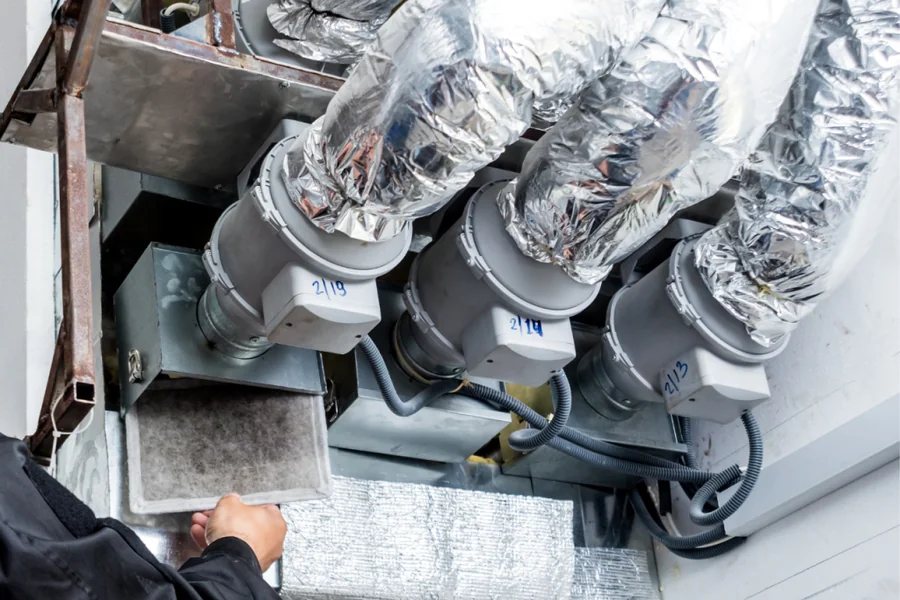
Before replacing an air conditioner, airflow should be verified, as many comfort complaints attributed to old equipment are actually caused by air delivery problems. A new unit cannot perform properly if the return path is restrictive, the ducts leak into the attic, or the indoor coil is starved for air due to high static pressure. Airflow losses can make cooling feel weak, cause humidity problems, increase noise, and shorten equipment life, even when the refrigerant circuit and compressor are functioning properly. Contractors identify airflow losses by combining symptom patterns with measurements that reveal where resistance and leakage are occurring. When airflow is corrected before replacement, the new system is easier to size accurately and less likely to create uneven rooms or short cycling after installation.
Where airflow goes missing
-
What Contractors Look For Before Using Instruments
A service call often starts with observation because airflow losses leave repeatable clues. Contractors listen for loud return rush, whistling at registers, and blower strain sounds that suggest high resistance. They look at filter type, filter fit, and whether the filter is bowing, which can indicate high velocity or a restrictive rack. They also check supply temperatures and how rooms behave with doors open versus closed, since return-pathway problems often occur when doors close and airflow to that room drops. Visual inspection of ducts can reveal crushed flex runs, disconnected joints, sagging sections that trap air, and long runs with tight bends that add friction. They check return grille size and location, because undersized returns can choke airflow even if the equipment is sized correctly. They also look at the indoor coil area for signs of dust bypass, such as dirt lines or matted fins, which can reduce airflow and heat transfer. These early checks help them determine whether the likely loss is due to restriction, leakage, or distribution imbalance.
In addition to these methods, contractors often employ advanced diagnostic tools to ensure comprehensive assessments. Thermal imaging cameras, for instance, can detect temperature variations that indicate airflow issues, while digital manometers measure pressure differences across the system. These tools, combined with a contractor’s expertise, provide a detailed picture of the system’s health. By addressing these issues early, homeowners can avoid costly repairs and improve energy efficiency. For those interested in learning more about how these technologies are applied in real-world scenarios, you can explore further insights and case studies. Read more to discover how professionals tackle these challenges and enhance system performance.
-
Static Pressure, Airflow Targets, and Finding the Restriction Point
The most direct way to identify airflow losses is to measure static pressure across the system while it is operating. Contractors use a manometer to measure the return and supply pressures, then combine them to calculate the total external static pressure. If the total is high, airflow is usually restricted somewhere, and the next step is to isolate where the pressure drop is occurring. They may measure pressure before and after the filter to see if the filter setup is causing a large drop. They may measure before and after the evaporator coil to determine whether the coil is dirty or the cabinet design is restrictive. They also compare the measured static pressure to blower performance data to estimate whether the system is delivering the airflow needed for the tonnage and the coil. During planning conversations, some teams coordinate documentation and scheduling through the Cleburne Office so readings and corrective steps are recorded before equipment decisions are finalized. This measurement-based approach reduces guesswork by showing whether the system is struggling to move air and which component is creating the biggest bottleneck.
Accurate diagnostics often involve a blend of visual inspections and advanced pressure testing to pinpoint where conditioned air is escaping the system. While many homeowners suspect the mechanical unit itself is failing, a professional HVAC contractor can often determine that the root cause lies within a poorly sealed plenum or undersized return ducts. These invisible inefficiencies force blowers to work harder, leading to higher energy costs and premature component wear. By addressing these distribution flaws through systematic testing, specialists ensure that the entire environment remains comfortable while simultaneously reducing the mechanical load on the compressor and fan motors.
-
Duct Leakage, Room Balance, and Why New Units Still Feel Weak
Even with normal static pressure, airflow can be lost through leakage and poor distribution. Contractors look for supply leaks that dump conditioned air into an attic or crawlspace and for return leaks that pull hot, dusty air into the system. Leakage can be confirmed through visual inspection, air movement tests, or pressure tests that evaluate duct integrity. Room-by-room balance is another layer. If a trunk is sized poorly or branch runs are too long, some rooms can be starved while others get too much air. Contractors may check airflow at registers and compare it across the home to see if the distribution matches the layout. They also evaluate return pathways from bedrooms, since closed doors can trap air and reduce supply flow unless there is a return grille, transfer grille, or undercut that provides a path back. When these issues are not addressed, a new air conditioner can feel weak because the cooled air is not reaching the spaces that need it. Worse, homeowners may lower the thermostat to compensate, which increases runtime and wear and tear. Identifying leakage and imbalance before replacement helps ensure the new system delivers comfort evenly, rather than simply producing cold air that never reaches where people live.
Accurate airflow diagnosis often requires a sophisticated understanding of how temperature differentials and pressure drops interact within a sealed system. Beyond basic visual checks, technicians must evaluate the thermodynamic properties of the air to ensure the cooling coils are operating at peak efficiency. Mastery of Refrigeration Engineering principles allows contractors to distinguish between a simple mechanical blockage and a more complex issue involving thermal load imbalances. By utilizing precision instruments such as manometers and anemometers, professionals can map out the entire air distribution network to identify specific points of failure. This systematic approach prevents the premature replacement of expensive equipment when the root cause is actually localized duct leakage or poor system calibration.
Identifying why a system struggles to push air requires more than just checking the thermostat settings or superficial inspections. Technicians often look for subtle indicators, such as excessive dust around registers or unusual whistling sounds, which point to internal restrictions. If you notice these signs, searching for qualified ac repair near me can connect you with professionals who use specialized tools like manometers to measure total external static pressure. These precise measurements reveal if the resistance is coming from a clogged evaporator coil or a poorly designed duct network. Addressing these hidden airflow losses ensures the entire HVAC system operates within its design specifications, ultimately preventing premature component failure and maintaining a balanced environment throughout every room in your home.
How Airflow Fixes Prevent Repeat Problems
Air conditioning contractors identify airflow losses before replacing equipment by pairing visual clues with measurements that reveal restriction, leakage, and distribution imbalance. Static pressure testing helps pinpoint whether the filter, coil, or duct system is choking airflow. In contrast, duct inspection and airflow comparisons reveal where conditioned air is escaping or failing to reach certain rooms. Addressing these airflow issues first supports accurate sizing, steadier humidity control, quieter operation, and fewer comfort complaints after installation. When airflow is verified and corrected, replacing equipment becomes a final step rather than a guess, and the new system is more likely to perform as intended.