
What are the specifics of transporting a piano over long distances?
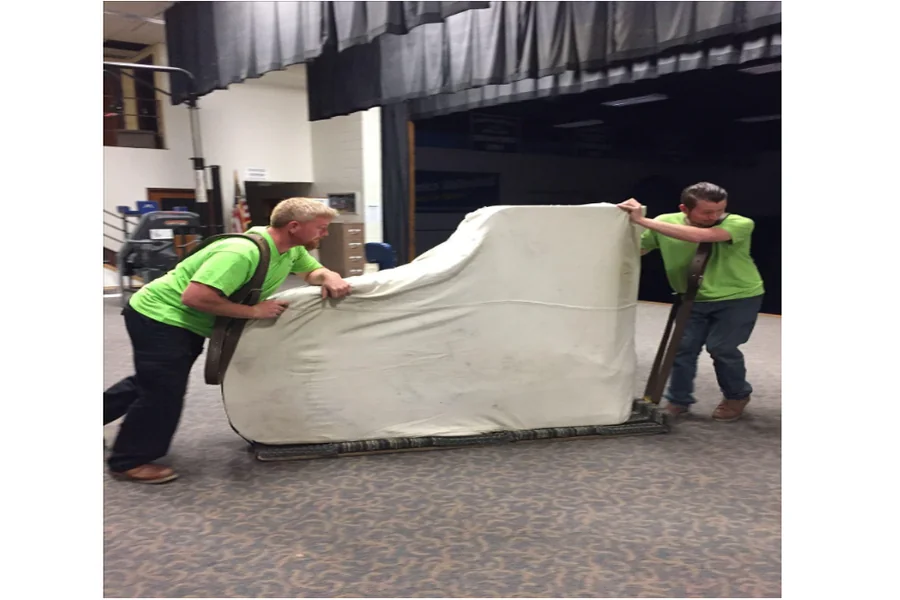
Moving a piano across town is one thing. Transporting it over 500 miles or more is an entirely different challenge. Pianos are not ordinary furniture. They are precision instruments containing thousands of moving parts, delicate felt hammers, cast iron plates, and soundboards made of resonant spruce. Over a short local move, the risks are relatively low. The piano is on the truck for an hour or less, vibration is minimal, and climate changes are negligible.
However, long-distance transport introduces three major threats:
- Extended vibration that loosens action parts and tuning pins
- Temperature swings that crack soundboards and weaken glue joints
- Humidity shifts that warp wooden components and rust strings
A cross-country journey lasting several days exposes the piano to continuous road shock. Unlike a sofa or a table, a piano cannot simply be strapped to a wall and forgotten. Every bump, every hard brake, and every change in weather leaves a mark on the instrument.
Professional movers understand that long-distance piano relocation requires a completely different approach. Air-ride suspension trucks, climate-controlled cargo spaces, and specialized bracing techniques are not optional — they are essential.
Why Preparation Is More Critical for Long Hauls
Preparation for a long-distance piano move begins weeks before loading day. This is not the time for shortcuts.
First, the piano should be inspected by a qualified technician. Loose screws, worn hammers, or minor cracks in the soundboard may not cause problems during local moves, but over hundreds of miles, these small issues become major failures.
Second, the piano must be cleaned inside and out. Dust, coins, or broken pencil tips inside the action can shift during transit and jam moving parts.
The preparation checklist includes:
- Professional tuning and regulation check before the move
- Locking the keyboard lid or securing keys with soft straps
- Removing all detachable parts (legs, lyre, music rack on grand pianos)
- Labeling and photographing every removed component
- Measuring doorways and hallways at the destination
If you are planning a long-distance relocation and need expert handling, searching for a piano moving company near me before booking a national carrier helps you find local specialists who know how to prepare instruments for extended journeys.
Proper preparation also includes documenting the piano’s existing condition. Take detailed photos of the finish, the soundboard, and the action. This protects both you and the mover in case of damage claims.
The Right Equipment for Cross-Country Piano Transport
Standard moving trucks destroy pianos over long distances. That is not an exaggeration — it is a fact. Most rental trucks use leaf-spring suspension. These systems transmit road vibration directly to the cargo. For a piano, that means thousands of micro-shocks per mile. After 500 miles, screws loosen. After 1,000 miles, hammers shift out of alignment.
Professional long-distance piano movers use air-ride suspension trucks. These vehicles reduce vibration by up to 70 percent. The difference is immediately noticeable.
Beyond suspension, climate control is critical. Pianos are comfortable in the same conditions as humans: 60-70°F and 40-50 percent humidity. Crossing mountain passes or desert regions exposes the piano to extremes that cause permanent damage.
Key equipment specifications for safe long-distance transport:
- Air-ride suspension system
- Climate-controlled cargo area with real-time monitoring
- Heavy-duty ratchet straps with E-track anchoring
- Plywood skid boards for grand pianos
- Hydraulic piano trucks for loading and unloading
Inside the truck, the piano must be positioned away from the rear door. The rear of the truck experiences the most temperature fluctuation. Grand pianos are tilted onto skid boards and bolted to the floor. Upright pianos face the front of the truck with padded blocks on all sides.
When researching options, many owners prefer to look for a piano moving service near me that owns this specialized equipment rather than renting generic trucks. Local specialists with the right gear consistently deliver better results.
Environmental Threats During Extended Transit
Temperature and humidity are silent killers for pianos on long journeys.
Consider a move from a dry climate to a humid coastal region. The piano starts in 30 percent humidity. Three days later, it arrived in 80 percent humidity. The wooden soundboard absorbs moisture rapidly and expands. This expansion creates pressure against the cast iron plate, often resulting in a cracked soundboard — a repair that can cost thousands of dollars.
The opposite scenario is equally dangerous. Moving from a humid area to a dry climate causes wood to shrink. Tuning pins become loose, keys click, and glue joints fail.
Professional movers use several strategies to combat environmental threats:
- Wireless humidity sensors placed inside the piano’s case
- Climate-controlled trucks that maintain stable conditions
- Humidity stabilization pouches (similar to guitar case humidifiers)
- Scheduling loading and unloading during mild weather windows
Even with these precautions, the piano needs time to acclimate after arrival. Do not unwrap it immediately. Leave the padding and plastic wrap in place for 24 to 72 hours. This slow transition allows the wood to adjust gradually, reducing the risk of sudden cracks or warping.
Another overlooked threat is direct sunlight. If a truck door is opened on a sunny day, ultraviolet rays can heat the piano’s finish unevenly. Lacquer can bubble or craze. Experienced movers use reflective tarps and plan loading times for early morning or evening.
Loading, Securing, and Unloading Protocols
The physical handling of a piano for a long-distance move follows strict rules.
For grand pianos, the process begins with wrapping. A soft cotton blanket goes directly against the finish. Over that, a layer of polyethylene foam. Then a heavy-duty moving blanket. The legs are removed and packed in foam-lined cases. Each screw and washer goes into a labeled bag.
The piano is then tilted onto a skid board using a hydraulic piano truck. Straps are applied at specific angles — crossing from treble to bass — to distribute pressure evenly. The skid board is bolted to the truck floor.
For upright pianos, the approach differs:
- The piano remains vertical but wrapped in multiple layers
- It is secured to a heavy-duty piano dolly with ratchet straps
- The dolly is locked with wheel chocks and additional straps
- The back of the piano (the strongest part) faces the front of the truck
- Plywood barriers prevent contact with other cargo
Unloading requires equal care. Ramps must have a gentle slope — no more than 15 degrees. Steeper ramps risk the piano sliding uncontrollably. Once inside the destination, the piano is placed in its designated spot but left wrapped for the acclimation period.
Never rush to unpack a piano after a long move. Patience prevents damage.
Common Risks of Long-Distance Piano Transport
Experienced movers know exactly what can go wrong on a long haul. Here are the most frequent issues and how professionals prevent them:
- Vibration loosening action parts – Movers use vibration-dampening pads under the piano and reduce tire pressure slightly to absorb road shock.
- Finish scratching from blanket debris – Professionals use virgin, debris-free blankets and apply a sacrificial plastic film directly to the finish.
- Strap stretching during transit – Ratchet straps are re-tensioned at every rest stop because nylon stretches over time.
- Humidity damage to the soundboard – Wireless sensors alert the driver if conditions leave the safe range, allowing immediate adjustments.
- Lost or damaged removed parts – Legs, lyres, and music racks are packed in custom foam cases with photographed inventory tags.
Insurance is another critical consideration. Standard moving policies often exclude piano damage, considering it “inherent vice” — a weakness natural to the instrument. You must verify that your mover offers piano-specific cargo insurance.
Post-Delivery Care and Final Recommendations
After the piano arrives, the acclimation period is non-negotiable. Leave the piano wrapped for at least 24 hours. For moves crossing major climate zones, extend this to 72 hours.
Once unwrapped, perform a gentle inspection:
- Check the finish for new scratches or dents
- Look at the soundboard through the strings for cracks
- Test each key slowly — do not play forcefully
- Check that pedals operate smoothly
The piano will be out of tune. That is normal. Do not call a tuner immediately. Schedule tuning for two to four weeks after arrival. This waiting period allows the instrument to fully settle into its new environment.
For grand pianos, check leg stability after 48 hours. The piano’s weight compresses felt washers, so a second tightening is often needed.
Summary of Key Specifics
For a successful long-distance piano move, remember these essentials:
- Use only air-ride suspension trucks with climate control
- Complete a professional inspection and service before moving
- Remove and pack all legs, pedals, and detachable parts individually
- Apply multiple protective layers including plastic film and blankets
- Re-tension all straps during the journey, not just at the start
- Monitor temperature and humidity with wireless sensors
- Allow 24-72 hours of acclimation before unwrapping
- Wait two to four weeks before the first tuning at the destination
- Verify piano-specific insurance coverage before loading
- Document the piano’s condition with dated photographs