
Why Most Subsea Actuator Specs Miss the Mark — And the Pressure Control Standard US Engineers Should Demand
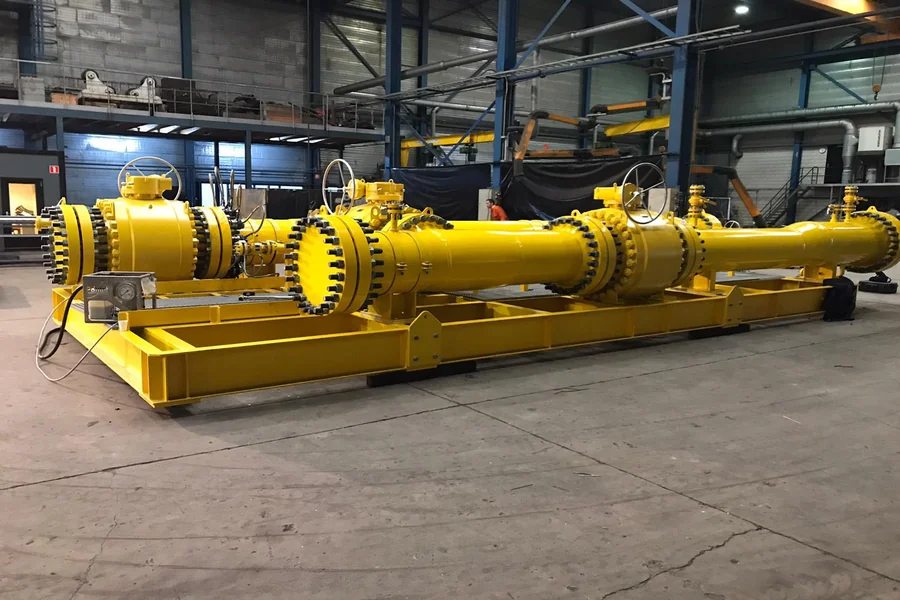
When a subsea actuator fails in service, the immediate conversation tends to focus on the component itself — the seal that gave out, the torque rating that proved insufficient, the material that corroded faster than anticipated. But experienced engineers know the failure usually started earlier, in the specification stage, when the pressure control requirements were either underestimated, poorly defined, or borrowed from a previous project without adequate review.
Subsea actuator projects across the US Gulf of Mexico, Pacific offshore zones, and deepwater development programs continue to face reliability issues that trace back to this same gap. The specifications look complete on paper. The components pass standard testing. But once deployed, the system behaves differently than expected — because the pressure control logic underpinning the design was built on assumptions rather than operational reality.
This is not a minor technical problem. Actuator failures in subsea environments carry significant consequences: unplanned shutdowns, intervention costs, safety reviews, and timeline disruptions that ripple through entire development programs. The discipline of getting pressure control right from the outset is one of the most important and consistently undervalued aspects of subsea engineering.
The Gap Between Spec Documents and Real Operating Conditions
Pressure control in subsea actuator systems is not simply a matter of selecting components rated for the expected operating depth or fluid type. It involves understanding the full range of conditions the system will encounter across its service life — including transient pressure events, temperature cycling effects, pressure differentials during actuation, and the behavior of hydraulic or electro-hydraulic circuits under real field loads. When that understanding is shallow, specifications tend to reflect ideal conditions rather than the spectrum of conditions that actually occur during installation, commissioning, and long-term operation.
The work done by subsea pressure controls ltd reflects a discipline that many US engineers are increasingly recognizing as foundational: pressure control should be engineered as a system, not selected as a feature. The distinction matters because a system approach considers how pressure behaves dynamically across components, interfaces, and operating phases, while a feature-selection approach tends to address static ratings that may not capture the complexity of real deployment.
Why Transient Events Are Routinely Underspecified
Transient pressure events — sudden spikes, pressure waves, or rapid differentials that occur during actuation cycles — are frequently absent from standard specification documents because they are difficult to predict with precision and because historical data from similar projects is not always accessible or transferable. Engineers may apply safety margins on top of steady-state operating pressure, but those margins are often derived from rules of thumb rather than analysis of the specific system’s dynamic behavior.
The consequence is that actuators designed and rated for a nominal operating pressure may be exposed to transient loads that exceed their rated range in ways that do not trigger immediate failure but cause incremental degradation over time. Seals begin to behave inconsistently. Internal components experience wear that would not occur under purely steady-state loading. By the time a failure occurs, it appears sudden when it was actually the cumulative result of conditions that the specification never accounted for.
The Role of Interface Conditions in Pressure Behavior
Subsea actuators do not operate in isolation. They are connected to control systems, umbilicals, hydraulic power units, and process pipework, each of which influences how pressure is delivered, maintained, and released at the actuator itself. When specifications are written without a clear understanding of these interface conditions, the actuator may be engineered correctly for its own rated parameters but incompatible with the pressure profile it receives in actual service.
This is particularly relevant in older field developments where new actuator systems are being integrated with existing infrastructure. The pressure delivery characteristics of an aging hydraulic system may not match the assumptions embedded in a new actuator’s specification, and the resulting mismatch can produce behavior that is difficult to diagnose without a detailed review of the full pressure control chain from power source to actuator.
How Industry Standards Have Shaped — and Sometimes Limited — Actuator Specifications
The subsea industry operates within a well-established framework of international standards that provide important baseline requirements for actuator design, testing, and qualification. Bodies such as the American Petroleum Institute, through documents like API standards for subsea equipment, have established guidance that reflects decades of operational learning. These standards are genuinely useful. They provide consistent language, minimum performance thresholds, and testing protocols that allow engineers across organizations to communicate about requirements without starting from first principles every time.
However, standards represent a floor, not a ceiling. They define the minimum acceptable performance for a class of equipment under a defined set of conditions. They do not define the optimal performance for a specific application, nor do they account for the particular combination of environmental, operational, and interface conditions that characterize any individual project.
When Standards Become a Substitute for Engineering Judgment
A pattern that recurs across subsea projects — particularly those managed under significant schedule or cost pressure — is the tendency to treat standard compliance as the primary goal of the specification process rather than as one input among several. When this happens, engineers may stop asking whether the standard requirements are actually sufficient for the specific application and instead focus on ensuring that all boxes are checked in the qualification documentation.
The problem is that standards are written to be broadly applicable across a wide range of scenarios. A pressure control requirement that is adequate for a shallow-water, stable-temperature application may be genuinely insufficient for a deepwater application with significant temperature variation, long umbilical runs, and complex actuation sequencing. The standard does not distinguish between these cases. The engineer must.
Qualification Testing and Its Limits
Qualification testing is an essential part of subsea actuator development, but testing is performed under controlled conditions that are necessarily different from field conditions. The pressure profiles used in qualification tests may not fully represent the transient events and interface-driven pressure variations that an actuator will experience in service. Components that pass qualification testing may still underperform in the field if the test conditions did not capture the relevant aspects of the operating environment.
This does not mean qualification testing is inadequate — it means it needs to be designed thoughtfully, with real operating conditions informing the test protocol rather than standard test procedures applied without modification. Engineers who have responsibility for specifying subsea actuator systems should understand what their qualification testing actually demonstrates and, just as importantly, what it does not.
What a Rigorous Pressure Control Approach Looks Like in Practice
Effective pressure control for subsea actuators begins before a component is selected. It starts with a detailed characterization of the operating environment — not just the design pressure and temperature, but the full range of conditions expected across the system’s service life, including startup and shutdown sequences, maintenance operations, emergency scenarios, and the potential for off-normal events.
The subsea pressure controls ltd approach to this work recognizes that pressure control is a continuous discipline, not a one-time specification activity. It encompasses the initial design, the testing and qualification phase, commissioning, and ongoing operational monitoring. Each of these phases can generate information that should inform the others, and systems that treat them as separate and disconnected activities tend to accumulate risk that is not identified until it becomes a problem.
Building Pressure Control Logic Into System Architecture
One of the more significant shifts in how leading subsea engineers think about pressure control is the move toward integrating pressure management logic into the broader system architecture from the earliest stages of design. Rather than specifying an actuator and then adding pressure control features as a secondary consideration, this approach makes pressure behavior a central design parameter that shapes component selection, interface design, control logic, and testing requirements.
The practical implication is that engineers who understand pressure control as a system discipline are better positioned to identify potential failure modes early, before they are embedded in a design that is difficult and expensive to change. They can also make more informed decisions about where to invest in additional robustness — which parts of the system carry the most pressure-related risk and therefore justify greater design attention or higher-specification components.
Operational Monitoring as a Pressure Management Tool
Once a subsea actuator system is in service, pressure behavior provides one of the most informative signals available for assessing system health. Pressure trends that deviate from expected patterns can indicate seal degradation, hydraulic circuit issues, changes in interface conditions, or early-stage component wear — all of which are more manageable when identified early than when allowed to develop to the point of failure.
Subsea pressure controls ltd as a discipline includes the use of operational data to inform ongoing system management. Engineers and operators who build pressure monitoring into their routine operational practice are, in effect, extending the useful life of their systems by catching developing issues before they require intervention. This is not a new idea, but it is unevenly applied across the industry.
What US Engineers Should Be Asking Before Finalizing Actuator Specifications
The questions that separate well-specified subsea actuator systems from poorly specified ones are not primarily technical in the narrow sense. They are questions about assumptions — about what has been assumed regarding operating conditions, interface behavior, transient events, and the relationship between qualification testing and real-world performance.
- Has the full range of pressure conditions across the system’s service life been characterized, including transient events and interface-driven variations, not just steady-state operating pressure?
- Do the qualification testing requirements reflect actual field conditions, or are they based on standard test protocols that may not capture the specific risks of this application?
- Have the interface conditions — hydraulic power unit characteristics, umbilical behavior, control system response times — been factored into the actuator specification?
- Is there a plan for monitoring pressure behavior in service, and is that plan connected to a process for acting on anomalies before they become failures?
- Are the engineers responsible for actuator specification drawing on operational data from comparable deployments, or are they working primarily from design calculations and standard compliance documentation?
These are not questions that can be answered by reviewing a datasheet or confirming that a component meets a published standard. They require engineering judgment, operational experience, and a willingness to interrogate the assumptions that underlie the specification rather than accepting them because they have worked before.
Closing: The Cost of Getting Pressure Control Wrong — and the Value of Getting It Right
Subsea actuator projects that experience pressure-related failures in service share a common characteristic: the conditions that caused the failure were present in the system before deployment, often identifiable in hindsight through the specification documents, testing records, or interface design decisions made early in the project. The failure was not random. It was the outcome of choices — or the absence of choices — made during the engineering process.
The inverse is also true. Subsea actuator systems that perform reliably across long service intervals, with minimal unplanned intervention, are almost always systems where pressure control was treated as a genuine engineering discipline from the outset. Where the full range of operating conditions was characterized. Where qualification testing was designed to reflect real-world demands. Where operational monitoring was planned and executed. Where the engineers responsible for the specification understood not just the nominal requirements but the behavior of the system as a whole.
For US engineers working in deepwater development, production, or maintenance programs, the standard to demand is not simply compliance with published specifications. It is a rigorous, system-level approach to pressure control that begins with honest characterization of operating conditions, runs through every phase of design and qualification, and continues into the operational life of the system. That standard is achievable. The projects that adopt it consistently outperform those that do not.