
5 U.S. Industries Where Computer Vision for Industrial Inspection Is Now Non-Negotiable
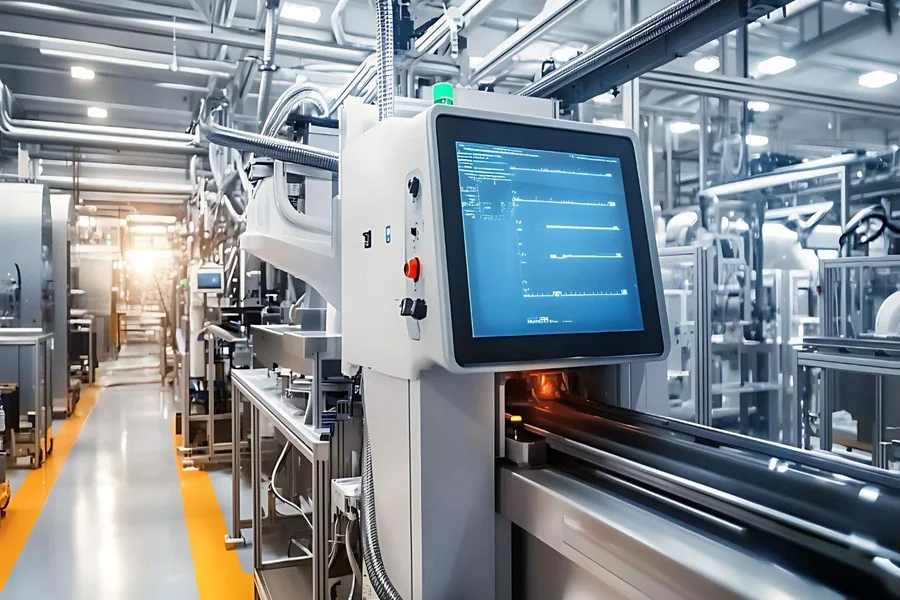
Across American manufacturing, processing, and infrastructure sectors, the tolerance for inspection errors has narrowed considerably. Regulatory pressure, customer expectations, and the financial consequences of product failures have all increased in parallel. At the same time, the workforce available to perform manual inspection work has not kept pace with operational scale. The result is a growing gap between what traditional quality control methods can reliably deliver and what modern production environments actually require.
Computer vision for industrial inspection has moved from an experimental technology into a standard operational tool in response to this gap. It is not simply about speed. It is about consistency — the ability to apply the same detection standard across every unit, every shift, without degradation in performance. For certain industries operating in the United States today, that consistency is no longer optional. It is a baseline requirement.
The five industries outlined here are not on the leading edge of technology adoption. They are industries where the cost of inspection failure — whether measured in liability, regulatory action, product recalls, or operational downtime — has made reliable automated inspection a practical necessity rather than a competitive advantage.
Why Certain Industries Have Reached a Threshold That Manual Inspection Cannot Meet
Manual inspection has always had inherent limitations: fatigue, variability between inspectors, difficulty detecting fine or intermittent defects, and the inability to operate continuously at production speeds without increasing headcount or creating bottlenecks. For many years, these limitations were manageable because production volumes were lower, product complexity was less demanding, or regulatory requirements were less precise. That situation has changed in a number of critical sectors.
Specialized providers offering computer vision for industrial inspection have built systems that address the consistency and throughput problems that manual methods cannot solve at scale. These systems use cameras, sensors, and image analysis software to detect surface defects, dimensional irregularities, assembly errors, and contamination — in real time, without interrupting production flow.
The threshold question is not whether a company prefers automation. It is whether the risk of inspection failure has grown large enough that manual methods create unacceptable operational exposure. In the five industries below, that threshold has already been crossed.
The Real Cost of Inspection Failure in High-Stakes Production
When an inspection failure results in a defective medical device reaching a patient, a structural component failing in the field, or contaminated food reaching consumers, the downstream consequences are not just financial. They involve regulatory investigations, potential litigation, reputational damage, and in some cases, direct harm. These outcomes are not hypothetical edge cases. They are documented events that have shaped current regulatory frameworks and procurement standards across multiple industries.
Automated inspection does not eliminate all defects. What it does is remove the variability that makes defect rates unpredictable and hard to control. When inspection performance is consistent, defect patterns become visible and actionable. When it is inconsistent, quality data becomes unreliable and process improvement is difficult.
Aerospace and Defense Manufacturing
Aerospace components are subject to some of the most demanding quality standards applied to any manufactured product. The combination of extreme operating environments, long service life requirements, and the direct consequences of component failure means that inspection protocols must be verifiable, repeatable, and comprehensive. The Federal Aviation Administration and the Department of Defense both maintain regulatory frameworks that require documented quality assurance processes tied directly to component acceptance.
Manual inspection in this environment faces a fundamental challenge: the complexity and volume of inspection points on modern aerospace assemblies exceed what human inspectors can reliably cover without process gaps. Surface cracks, coating inconsistencies, fastener torque verification, and dimensional tolerances on machined parts all require detection methods that do not depend on inspector attention remaining constant over a full shift.
Traceability Requirements Drive Automated Documentation
Beyond detection, aerospace inspection generates documentation requirements that are difficult to satisfy through manual processes alone. Every inspection outcome must be recorded, tied to the specific part or assembly, and retained for extended periods. Automated vision systems can generate inspection records at the point of detection, creating a data trail that supports both internal quality management and external audit requirements. This combination of detection and documentation in a single step reduces the administrative burden on quality teams while strengthening the reliability of records.
Food and Beverage Processing
Food safety in the United States is governed by a regulatory structure that has become considerably more demanding since the passage of the Food Safety Modernization Act, which shifted the regulatory emphasis from responding to contamination events toward preventing them. Under this framework, processors are expected to implement controls that actively reduce the risk of contamination rather than simply detecting problems after they occur.
Computer vision for industrial inspection fits directly into this preventive model. Vision systems can identify foreign material contamination, packaging defects, fill level irregularities, label errors, and seal failures at production line speeds. They operate in the wet, high-throughput environments common in food processing, and they do so without introducing additional contamination risk from human presence in sensitive production zones.
Label and Packaging Compliance as a Distinct Risk Category
Packaging and labeling errors represent a significant and often underestimated risk category in food production. Incorrect allergen declarations, missing lot codes, or mislabeled products can trigger Class I recalls — the most serious category under FDA classification. Vision systems that verify label content, placement, and completeness at line speed provide a layer of protection that manual sampling cannot reliably offer when production volumes are high. The consistency of automated inspection is particularly important here because a single labeling error that passes through can affect an entire production run.
Automotive and Tier Supplier Manufacturing
Automotive quality standards, particularly those associated with the IATF 16949 standard that governs automotive quality management systems, require manufacturers and their supply chain partners to demonstrate robust defect detection and prevention processes. As vehicle complexity has increased — driven by electrification, advanced driver assistance systems, and tighter emissions requirements — the number of inspection points across a vehicle’s assembly has grown substantially.
For tier suppliers, the pressure is compounded by just-in-time delivery requirements. A defective batch of components discovered late in the supply chain does not simply result in a quality hold. It can cause line stoppages at the assembly plant, which carry financial penalties and damage supplier relationships. Early, reliable inspection at the point of production is the most effective way to prevent that kind of downstream disruption.
Weld and Surface Inspection at Production Speeds
Weld quality and surface finish are two areas where vision-based inspection has become standard practice among leading automotive suppliers. Weld defects — incomplete fusion, porosity, incorrect geometry — are difficult to detect reliably through manual visual inspection, particularly on high-volume lines where parts move quickly and lighting conditions are not always ideal. Vision systems designed for this environment can evaluate weld quality against defined acceptance criteria consistently, without slowing the line, and flag anomalies for secondary review before parts advance in the assembly process.
Pharmaceutical and Medical Device Manufacturing
The FDA’s Current Good Manufacturing Practice regulations for pharmaceutical and medical device production establish clear expectations for inspection processes, including the requirement that inspection systems be validated and that their performance be documented. This regulatory context has made computer vision for industrial inspection not just operationally useful but procedurally necessary in many production environments.
Pharmaceutical inspection applications include tablet and capsule inspection for visual defects, container closure integrity verification, particulate detection in injectable products, and label verification. Medical device inspection extends to dimensional verification of implantable components, surface finish evaluation, and assembly completeness checks. In both cases, the inspection data generated by automated systems also supports the batch records that accompany every lot through the regulatory process.
Validation Requirements Shape System Design
One factor that distinguishes pharmaceutical and medical device inspection from other industrial applications is the formal validation requirement. Before an automated inspection system can be used in a regulated production environment, it must be validated to demonstrate that it performs consistently and within defined parameters. This process, described within guidelines maintained by organizations such as the U.S. Food and Drug Administration, requires documented testing, defined acceptance criteria, and ongoing performance monitoring. Suppliers who understand this requirement design their systems to support it, rather than treating it as an afterthought.
Electronics and Semiconductor Manufacturing
The miniaturization of electronic components has made manual inspection impractical in most electronics manufacturing contexts. Defects on printed circuit boards — solder bridges, missing components, incorrect placement, pad contamination — are often too small to detect reliably with the naked eye, and they may not produce immediate electrical failure, meaning they can pass functional testing only to fail later in the field.
Automated optical inspection has been a standard part of electronics manufacturing for years, but the application of more advanced computer vision for industrial inspection has extended detection capabilities further. Modern systems can handle the density and variety of defects found in advanced electronics manufacturing, including defects that previous-generation systems would have struggled to classify reliably. The semiconductor sector specifically faces inspection challenges at scale that no other approach can address.
Yield Implications and Process Feedback
In electronics manufacturing, inspection data does more than separate conforming from nonconforming product. It feeds back into the production process. Patterns in defect location, type, and frequency reveal equipment drift, material variation, or process parameter problems before they escalate into larger yield losses. This feedback loop — from inspection data to process adjustment — is one of the clearest illustrations of why automated inspection creates value beyond quality control alone. The data itself becomes a process management tool.
Where These Industries Point for the Rest of Manufacturing
The five industries described here did not adopt automated inspection because it was available. They adopted it because operational reality made it necessary. The combination of regulatory requirements, production complexity, volume, and the consequences of failure pushed them past the point where manual methods were sufficient.
Other sectors are approaching similar thresholds. Industries with increasing product complexity, tightening customer quality requirements, and workforce constraints are experiencing the same pressures that drove adoption in aerospace, food processing, automotive, pharmaceuticals, and electronics. The question for manufacturers in those sectors is not whether automated inspection is worth considering. It is how much operational exposure accumulates while the decision is deferred.
Inspection systems built around computer vision for industrial inspection have matured considerably in recent years. They are no longer custom, costly implementations accessible only to large manufacturers. They are increasingly standardized, deployable across a range of production environments, and supported by providers who understand the specific operational and regulatory demands of industrial production. For the industries already operating with these systems, the benefit is not innovation — it is reliability. And reliability, in industrial operations, is what makes everything else possible.