
8 Benefits of Lightweight Solar Panels for Businesses
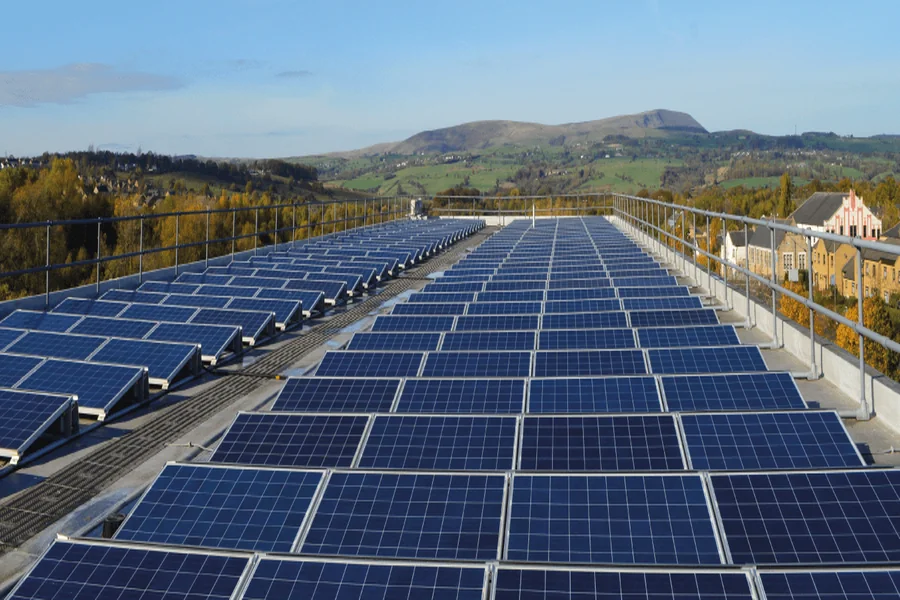
French businesses are getting absolutely hammered by a 45% spike in energy costs over the last few years. The most practical fix for older commercial buildings is installing lightweight solar panels. It bypasses strict structural weight limits, meets new French building regulations and slashes energy bills without requiring expensive roof reinforcements.
I remember walking through a massive logistics hub near Lyon recently. The owner was stressed out of his mind looking at his electricity bills. He wanted to generate his own power but his warehouse roof was built in the 1980s. It simply couldn’t handle the crushing weight of standard glass modules. This is a massive problem across France right now.
Almost 60% of our commercial building stock is older. You try putting 20 kilograms per square metre on an old fragile roof and you are asking for a structural disaster.
Bypassing structural weight limits
So here’s the tricky part about older industrial buildings. They were built to keep the rain out and maybe handle a bit of snow. They were never designed to hold thousands of heavy glass rectangles. Structural engineers usually take one look at these roofs and laugh.
Standard photovoltaic setups weigh anywhere from 15 to 25 kg per square metre. That requires serious steel reinforcement. But newer flexible options come in at around 3 to 5 kg per square metre. It is a massive difference.
You completely skip the need to tear off the roof and rebuild it. The modules literally stick or mount directly to the existing surface without adding dangerous load stress.
It operates as a massive advantage for older real estate.
Meeting strict French regulations
The regulatory pressure in France is getting incredibly intense. The government rolled out the Loi APER and the Décret tertiaire. These mandates require commercial properties to drastically cut their energy consumption by 40% by 2030.
If you own a warehouse or an office block you have to figure out how to comply. Fines are coming for those who ignore it. But again if your building cannot support heavy traditional systems you are stuck in a terrible position.
Thin-film modules give you a clear path to compliance. You get to check the boxes for the French Ministry of Ecological Transition without having to construct an entirely new facility. It takes the target off your back.
Slashing your installation expenses
Money always talks loudest in commercial real estate. When you look at a traditional solar quote a huge chunk of the cost is just getting the things onto the roof. You need massive cranes and heavy lifting equipment.
Then you have the reinforcement costs. I have seen quotes where structural upgrades cost well over €100,000 just to accomodate the heavy glass units. That destroys your return on investment instantly.
Because these new flexible modules are so light you don’t need any of that heavy machinery. Installation costs drop by 20 to 30 percent. You are looking at around €0.8 to €1.2 per watt installed instead of €1.5 or more.
You keep the upfront capital expenditure low which makes the CFO much happier.
Keeping energy efficiency high
There is a weird myth floating around that lighter means weaker. People assume that because the units are thin they must barely generate any “juice”. That might have been true ten years ago but the technology has completely changed.
Modern flexible modules use advanced crystalline silicon cells. They hit efficiency levels of 20 to 22 percent. That is exactly the same yield as the heavy traditional glass panels you see everywhere.
You get the exact same power output without the crippling bulk. The ADEME actually highlights this in their recent commercial guides. You don’t sacrifice performance just because you dropped the glass casing.
Cutting commercial energy bills
Let us look at the actual savings. Logistics hubs & factories consume a terrifying amount of electricity. Generating your own power on-site drastically reduces your reliance on the national grid.
Mid-sized logistics hubs in France are cutting their grid reliance by 40 to 60 percent. That translates to saving anywhere from €50,000 to €200,000 annually. It is pure profit added back to the bottom line.
When you produce your own energy you insulate your business from future price shocks. If global crises push energy prices up another 40 percent you will barely feel it.
It turns a massive financial liability into a predictable controlled expense.
Ensuring smooth business continuity
Shutting down a busy factory to rebuild a roof is a logistical nightmare. Every day of downtime costs thousands of euros in lost productivity. It is one of the main reasons managers delay green projects.
The installation process for lightweight systems is entirely non-intrusive. Workers do not need to tear into the building structure. They apply the modules using specialised adhesives or light ballasts.
Your forklifts keep moving and your shipping docks stay open. Operations continue exactly as normal while the energy upgrade happens quietly overhead.
Supporting local green manufacturing
Where your equipment comes from actually matters a lot now. Shipping heavy glass units all the way from Asia creates a massive carbon footprint. It kind of defeats the purpose of going green in the first place.
Choosing locally produced technology supports the French green economy. It cuts the embodied carbon of your project by half. Plus you avoid all the nightmare supply chain delays that happen when global shipping lanes get blocked.
It definetely makes the financial math work out much better.
Maximising durability and property value
Weather in France is getting more extreme and unpredictable.
Handling extreme impacts
We saw some brutal hailstorms recently that completely shattered traditional glass solar farms. Property owners were left with millions in damages. These lightweight alternatives are built tough. They flex instead of breaking.
Testing shows they can withstand 160 km/h winds and heavy hail impacts without shattering. There is no glass to break.
Adding this tech also upgrades your building’s energy performance rating. The DPE improves by one or two classes. Real estate data shows that Solar equipped commercial buildings sell for 5 to 10 percent more.
You transform a fragile unused roof into a highly profitable asset.
Final Thoughts
Decarbonising a business is rarely a simple straightforward task. There are always hidden costs and structural headaches that make you want to abandon the project entirely. I have seen too many good initiatives die in the planning phase because an old roof was deemed too weak.
But the technology has finally caught up to the problem. We no longer have to rely on heavy outdated materials that restrict our options. The shift towards lighter more adaptable energy systems feels like a genuine relief for property owners.
It makes financial sense and it removes the physical barriers that held us back for years. If you are sitting on an older commercial building you finally have a realistic way to generate your own power without tearing the place apart.