
WooCommerce Migration Is Not Just a Platform Switch. It Is a Business Decision
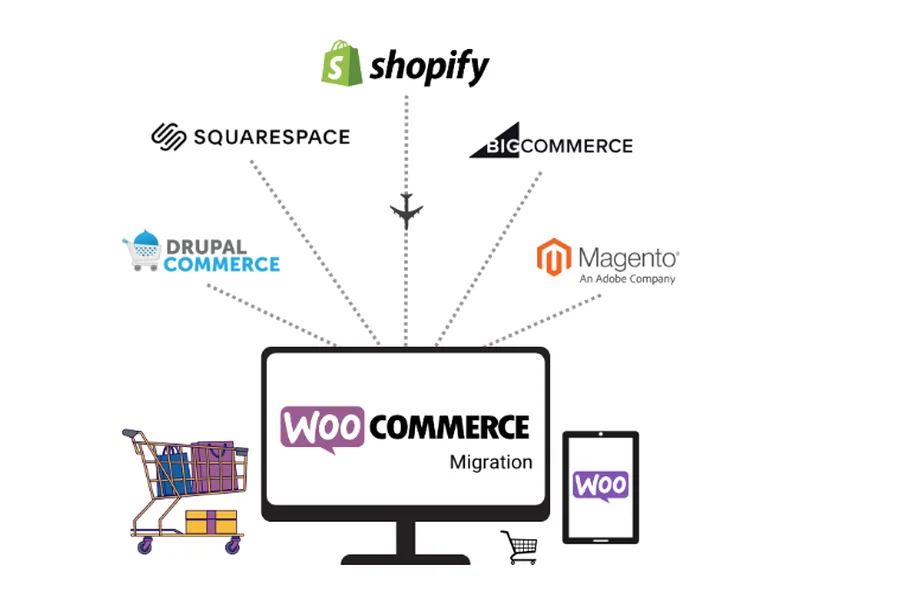
Many store owners think about migration only when things start breaking.
Maybe the current platform feels restrictive. Maybe transaction fees are getting annoying. Perhaps customizations are becoming more difficult and more expensive. Maybe the business has grown, but the store still feels stuck inside decisions made years ago.
That is usually when WooCommerce enters the conversation.
On the surface, it appears to be a simple move from one e-commerce platform to another. But a WooCommerce migration is rarely just a technical task. Done right, it is a chance to rebuild your store around how your business actually sells today.
That is what makes migration both exciting and risky.
WooCommerce gives you more flexibility, ownership, and control. But if the migration is rushed, you can also end up with broken URLs, missing data, damaged SEO, or a messy customer experience right when you need stability the most.
So the real question is not just “Should we migrate to WooCommerce?”
It is “How do we migrate in a way that protects what is working and improves what is not?”
A professional WooCommerce development company can help migrate your store seamlessly.
Why do businesses start looking at WooCommerce in the first place
Most migrations begin with friction.
A business may feel constrained by a hosted platform that was easy to get started with but difficult to scale. Features that once felt convenient begin to feel limiting. Design freedom becomes restricted. Integrations become awkward. Costs rise as the business adds more apps just to fill capability gaps.
Sometimes the problem is financial. Sometimes it is operational. Sometimes it is simply that the store no longer reflects the brand, the customer journey, or the team’s ambitions.
WooCommerce is attractive because it allows businesses to tailor the store to their needs rather than the platform’s guardrails.
That includes checkout flexibility, catalog structure, content control, SEO freedom, custom integrations, and the ability to create a storefront that does not look or behave like a template.
For brands seeking greater control over growth, that matters a lot.
Migration is often less about moving data and more about preserving momentum
This is the part many people underestimate.
When store owners think about migration, they often focus on obvious assets: products, categories, images, customers, and orders. Those are important, of course. But the harder part is preserving momentum.
Momentum means your rankings do not suddenly disappear. It means repeat customers can still log in and trust the new experience. It means internal teams are not scrambling to fix avoidable issues after launch. It means your paid traffic, email campaigns, and conversion paths still make sense when the new site goes live.
That is why a strong migration plan looks beyond import and export tasks. It pays attention to structure.
- Which pages are bringing in search traffic?
- Which categories are essential to navigation?
- Which product pages have backlinks or strong rankings?
- Which customer flows must remain familiar?
- Which plugins or platform behaviors need to be replaced carefully rather than quickly?
A migration that ignores these questions may technically complete, but it can still fail commercially.
What makes WooCommerce migration different from a basic redesign
A redesign changes the presentation.
A migration changes infrastructure.
That difference is important.
When you redesign a store, you are usually improving layout, visuals, messaging, or user flow on the same system. With migration, you are moving the business into a new operational environment. That affects how products are managed, how payments are processed, how taxes are handled, how shipping rules work, and how content connects to commerce.
So the project should never be treated as just a design refresh with product imports on the side. It needs planning across content, SEO, functionality, customer accounts, analytics, and post-launch testing.
This is why businesses often seek professional support when considering platform moves. A proper WooCommerce migration is not simply about making the new store look good. It is about ensuring the business continues to operate smoothly the day after launch.
The biggest migration mistake is assuming all platforms think the same way
They do not.
Each e-commerce platform has its own logic.
Products may be structured differently. Variants may behave differently. Discounts may be configured differently. URL formats may follow different patterns. Blog content may be separated from store content in one platform and deeply integrated in another.
That means migration is never just a one-click transfer, even when tools promise it. The data may move, but the logic often needs interpretation.
For example, what looked simple in the old store may require a more robust structure in WooCommerce. Product options may need different handling. Customer account behavior may need extra planning. Existing apps may need native replacements or custom integrations.
This is where migration projects go wrong when people assume “same content, new platform” is enough. A better mindset is this: migrate the business intent, not just the data. That means understanding why something exists before deciding how it should live in WooCommerce.
SEO is where migration success is often won or lost
Many businesses hesitate to migrate for fear of losing search traffic.
That fear is justified.
If URLs are changed carelessly, metadata disappears, structured content weakens, or redirects are missed, rankings can drop quickly. And when traffic falls after migration, it is not always easy to recover quickly.
However, this does not mean migration is harmful to SEO.
It means migration has to respect SEO from day one.
A good WooCommerce migration protects important URLs where possible. When URLs must change, it maps redirects properly. It carries over metadata, content relevance, internal linking, and crawlable structure. It preserves the category and product intent rather than flattening everything into a new theme or generic layout.
In many cases, migration can actually strengthen SEO because WooCommerce gives businesses more control over content architecture, optimization, and site performance.
But that upside only happens when SEO is part of the migration plan, not an afterthought.
WooCommerce works best when migration is used as a cleanup opportunity
One of the smartest things a business can do during migration is resist the urge to copy every old problem into the new system.
Not every outdated category needs to survive. Not every broken page deserves a place in the new store. Not every plugin-dependent workaround should be recreated. Migration is a rare moment when you get to step back and ask better questions.
- Is the catalog still organized in a way customers understand?
- Are the product descriptions helping people buy?
- Is the navigation too bloated?
- Are there duplicate pages doing nothing useful?
- Is the checkout flow carrying friction that has been tolerated for too long?
WooCommerce migration becomes much more valuable when it is treated as both a transfer and an improvement exercise. That is where the long-term benefit shows up.
The best WooCommerce migrations feel calm to the customer
Customers should not feel your internal complexity.
That is a useful rule for migration.
The smoother the experience feels after launch, the better the project usually was behind the scenes. Customers should still be able to browse, trust, buy, and return without second-guessing the store’s stability. That requires careful testing.
Products need to display properly. Filters need to work. Payment flows need to be reliable. Emails need to trigger correctly. Mobile behavior needs to feel polished. Order handling must be verified from checkout through fulfillment.
When these things are overlooked, migration stops feeling like progress and becomes disruptive. A successful WooCommerce store migration is one where customers primarily notice an improved, cleaner, and more trustworthy experience.
Final thought
WooCommerce migration is often framed as a technical move, but the better way to see it is as a business realignment.
It is a chance to move beyond platform limitations, improve ownership, strengthen SEO, create a better customer journey, and build a store that aligns with how your brand actually operates.
The move itself is important.
But the thinking behind the move matters even more.
Because the goal is not simply to land on WooCommerce.
The goal is to arrive there with your search visibility, customer trust, operational continuity, and growth potential intact.