
The Complete Guide to Driveway Paver Installation: Everything Homeowners Need to Know
Your driveway is one of the first things people notice about your home. It frames your house, sets the tone for your landscaping, and takes a beating from vehicles, weather, and daily use. If your current driveway is cracked, stained, or simply outdated, you may be thinking about replacing it. While poured concrete and asphalt are traditional options, more and more homeowners are turning to pavers—and for good reason.
A well-executed driveway paver installation transforms an ordinary entrance into a striking architectural feature that boosts curb appeal, adds real property value, and holds up beautifully for decades. But before you commit to the project, it pays to understand what’s involved: the materials, the design choices, the step-by-step process, and the costs. This guide walks you through it all so you can make an informed decision and get the driveway you’ve always wanted.
Why Choose Pavers Over Concrete or Asphalt?
Poured concrete and asphalt have one advantage: they’re relatively inexpensive upfront. But that’s where the advantages end. Both materials are prone to cracking under freeze-thaw cycles, settling, and developing unsightly stains that are nearly impossible to remove. When they fail, you’re looking at a full replacement — tearing out the old slab and starting over.
Pavers, by contrast, are individual units installed on a prepared base. That fundamental difference changes everything. Because pavers are laid with flexible joints, they can absorb movement from soil shifts and temperature changes without cracking. If a single paver gets damaged, you can lift it out and replace it—no demolition, no mess, no full redo. It’s a system designed to last, and it’s one of the main reasons driveway paver installation has become the preferred choice for homeowners who want a long-term solution rather than a temporary fix.
The Benefits of a Paver Driveway
Beyond durability, a paver driveway delivers a long list of practical and aesthetic advantages:
- Unmatched curb appeal. Pavers come in a staggering range of colors, shapes, textures, and laying patterns. Whether your home is modern, traditional, rustic, or Mediterranean, there’s a paver style that complements it perfectly. A thoughtfully designed paver driveway can make your entire property look more polished and intentional.
- Increased property value. Real estate professionals consistently note that hardscaping upgrades offer strong returns. A beautiful paver driveway signals to buyers that the home has been well cared for, and it’s often a deciding factor when homes are compared side by side.
- Superior drainage. This is a big one. Concrete and asphalt are impermeable, which means rainwater runs off and can pool, flood, or erode surrounding landscaping. Permeable pavers allow water to filter through the joints and into the ground below, reducing runoff, preventing puddles, and even helping with local stormwater management. That benefits your yard and your community.
- Low maintenance. Paver driveways don’t need to be sealed every year like asphalt, and they don’t stain as easily as concrete. Routine care is simple: sweep occasionally, rinse with a hose, and remove weeds from the joints if they appear. With minimal effort, your driveway will look great for years.
- Longevity. A properly installed paver driveway can easily last 25 to 50 years or more. Compare that to the typical lifespan of asphalt (15 to 20 years) or concrete (20 to 30 years, often less in harsh climates), and the long-term value becomes obvious.
Choosing the Right Paver Material
Not all pavers are created equal. The material you choose affects appearance, durability, slip resistance, and cost. Here are the most popular options:
- Concrete pavers are the most common choice. They’re affordable, incredibly strong, and available in countless shapes and colors. Modern manufacturing techniques give them a realistic stone or brick appearance at a fraction of the cost of natural materials.
- Brick pavers offer timeless warmth and a classic look that suits traditional and colonial-style homes. They’re durable, and their color deepens beautifully with age.
- Travertine and natural stone pavers bring a luxurious, high-end feel. They stay cool underfoot, resist heat, and develop an elegant patina over time. They’re pricier, but for homeowners who want a truly premium finish, nothing compares.
- Porcelain pavers are a newer option that’s gaining popularity. They’re extremely dense, stain-resistant, and available in finishes that mimic wood, stone, and marble. They’re an excellent choice for modern designs.
- Permeable pavers have wider joints or porous surfaces that let water drain through. They’re ideal for driveways in areas with heavy rain or drainage concerns, and many municipalities offer incentives for installing them.
Design Options: Patterns, Colors, and Borders
One of the most exciting parts of planning a paver driveway is the design. The choices can feel overwhelming, but that’s also what makes every project unique.
- Laying patterns set the driveway’s visual rhythm. Herringbone is a classic that’s both attractive and structurally strong. Running bond offers a clean, linear look. Basketweave adds texture and interest. Ashlar patterns mix different sizes for a natural, random appearance. For a truly custom feel, many homeowners combine patterns — a simple field with a decorative border or a contrasting apron at the street.
- Color plays a huge role. Earth tones like tan, brown, and terracotta blend naturally with landscaping. Grays and charcoal create a sleek, contemporary look. Blended or multicolor pavers add depth and hide minor dirt between cleanings.
- Borders and accents are where you can really make the driveway your own. A soldier course border, a contrasting band, or a decorative medallion near the entry can elevate the entire design. Your installer can help you visualize options and create a layout that complements your home’s architecture.
The Driveway Paver Installation Process, Step by Step
A paver driveway is only as good as the base beneath it. Professional driveway paver installation follows a careful sequence of steps that ensure stability and longevity:
- Site preparation and excavation. The existing driveway is removed, and the area is excavated to the proper depth — typically 8 to 12 inches for a residential driveway, depending on soil conditions and expected vehicle weight. The site is graded to ensure proper drainage away from the house.
- Base installation. Spread and compact a layer of crushed stone or gravel in stages. This base is the backbone of the system; it distributes vehicle weight and prevents settling. Heavy equipment compacts it to the density needed for a driveway that won’t shift or sink.
- Edge restraints. Rigid edge restraints are installed along the perimeter to hold the pavers in place and prevent them from spreading outward over time.
- Bedding sand. A thin, level layer of bedding sand is screeded over the compacted base. This provides a smooth surface for the pavers to sit on.
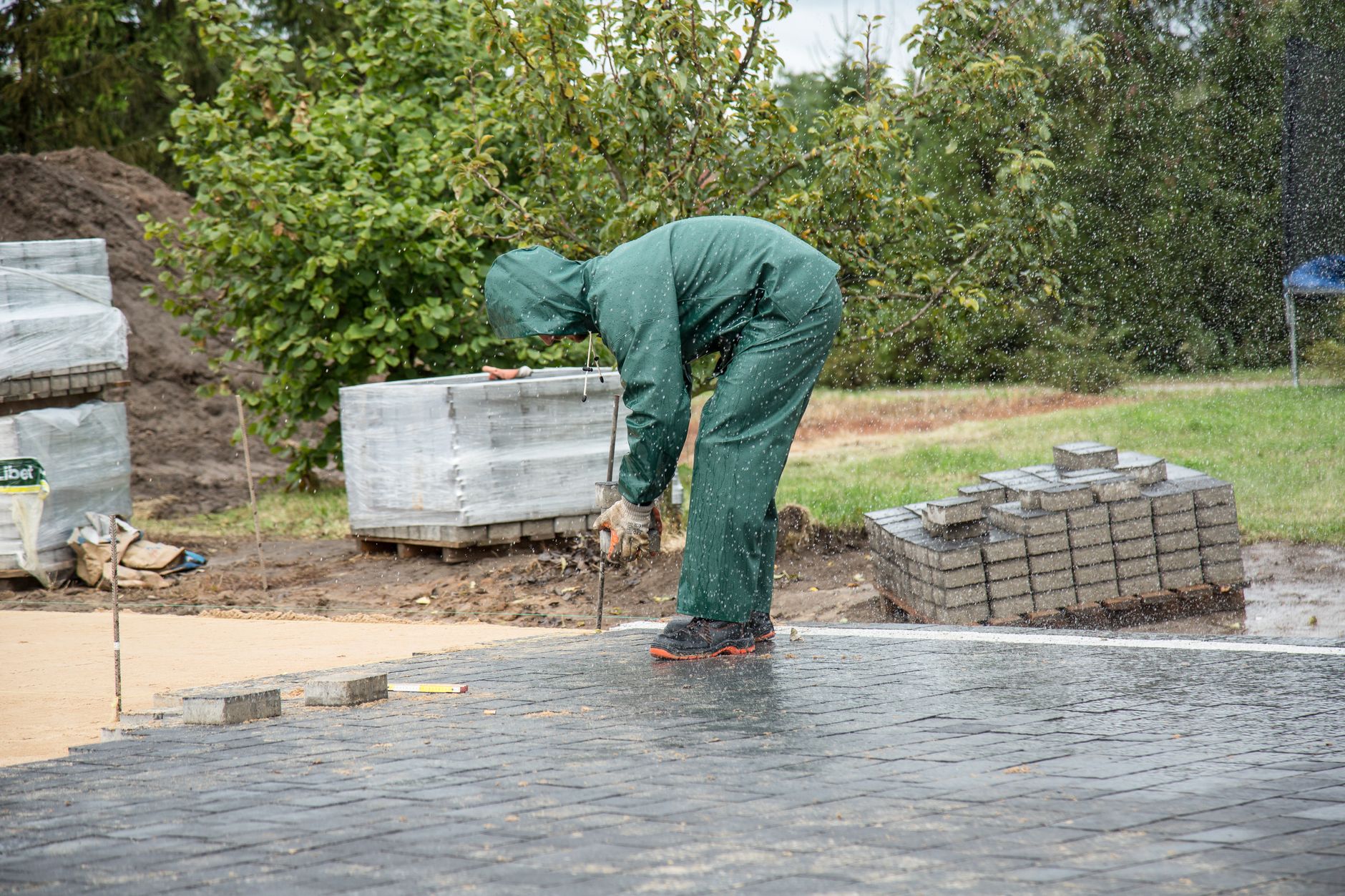
- Paver installation. The pavers are laid according to the chosen pattern, starting from a straight reference line. Skilled installers work carefully to keep joints consistent and the surface level.
- Cutting and fitting. Pavers are cut to fit along edges, around curves, and against the garage apron. This is where craftsmanship shows — clean cuts and tight fits make the difference between a professional result and a sloppy one.
- Joint sand and compaction. Sweep fine sand into the joints between pavers, then compact the entire surface with a plate compactor. This locks the pavers together and creates a solid, stable driving surface)Skip.
- Sealing (optional). Many homeowners choose to seal their paver driveway to enhance color, protect against stains, and make future cleaning easier. Sealing also helps lock in the joint sand.
What Does a Paver Driveway Cost?
Costs vary widely based on material, driveway size, site conditions, and design complexity. As a general rule, expect to pay more per square foot than you would for concrete or asphalt—but remember you’re buying a product that lasts decades longer and adds value to your home. Natural stone and porcelain sit at the higher end of the range, while concrete pavers offer the best balance of cost and performance. The best way to get an accurate number is to have a professional assess your site and provide a detailed quote.
Maintenance: Keeping Your Driveway Beautiful
One of the best things about pavers is how easy they are to maintain. Here’s a simple routine:
- Sweep or blow off debris regularly to keep the surface clean.
- Rinse with a garden hose to remove dust and light stains.
- Pull any weeds that sprout in the joints and top up joint sand as needed.
- Re-seal every few years, if you choose to, to refresh the color and protection.
- If a paver ever cracks or stains permanently, replace it individually — no need to redo the whole driveway.
DIY or Hire a Professional?
The DIY route is tempting, especially with online tutorials making everything look simple. But driveway paver installation is physically demanding and technically exacting. Proper excavation, base compaction, grading, and edge restraint installation require specialized equipment and experience. Base mistakes — the most common DIY error—lead to settling, uneven surfaces, and pavers that shift under vehicle weight. When that happens, the cost of fixing it usually exceeds what you would have paid a professional in the first place.
A professional installer brings the right tools, the knowledge of local soil and climate conditions, and the experience to handle curves, slopes, and drainage challenges. The result is a driveway that’s level, stable, and built to last — and most reputable contractors stand behind their work with warranties.
Ready to Transform Your Driveway?
Your driveway is more than a place to park — it’s a defining feature of your home’s exterior. With the right materials, a thoughtful design, and expert craftsmanship, a paver driveway delivers beauty, durability, and value for decades to come. Whether you’re replacing a worn-out surface or building a new home, the investment pays off every single day you pull into your driveway.
If you’re ready to explore your options)Skip, professional driveway paver installation is the smartest upgrade you can make to your home’s exterior. A skilled team will guide you through material selection, design, and installation — and handle every detail from excavation to the final sweep of joint sand. Contact a trusted local hardscape professional today to schedule a consultation and get a quote for your project. Your new driveway is closer than you think.