
How AI Is Transforming Source-to-Contract Procurement Workflows
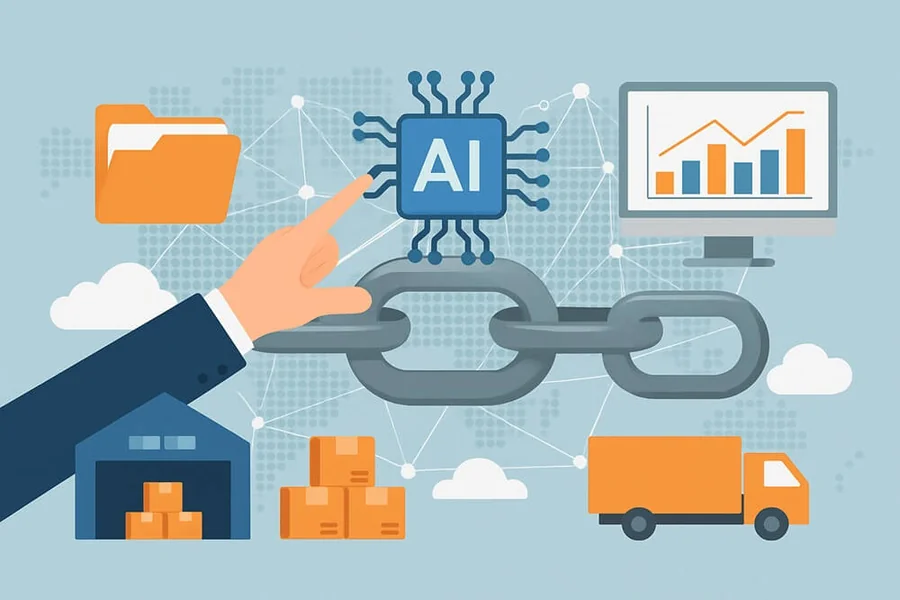
Procurement is an advanced process that has always been complicated with research of suppliers, contract negotiation, approvals, compliance checks, and continuing management of vendors. These activities were traditionally operated very closely and with the help of manual processes, spreadsheets, and emails. The landscape of AI procurement software is changing today by bringing automation, predictive analytics, and intelligent decision-making to procurement activities.
Since procurement teams are discovering new ways to streamline operations, minimize risks, and attain a higher level of efficiency with artificial intelligence that supports their supplier discovery in the concept of contract lifecycle management. Procurement teams are discovering new ways to streamline operations, minimize risks, and attain a higher level of efficiency with artificial intelligence. Companies that use AI-assisted procurement solutions can more and more make decisions more quickly, spend more efficiently, and have better relationships with their suppliers, at the same time decreasing the amount of administrative duties.
Understanding the Source-to-Contract Procurement Workflow
To discuss the effect of AI, one should be aware of the conventional procurement process. The source-to-contract process is a set of steps that bridges the gap between strategic sourcing and legally binding contracts.
The Major Processes in the Procurement Process:
| Stage | Description | Traditional Challenges |
| Supplier Discovery | Identifying and evaluating potential suppliers | Manual research and limited market visibility |
| Sourcing Events | RFQs, RFPs, and negotiations with vendors | Time-consuming comparison and analysis |
| Supplier Evaluation | Assessing risk, compliance, and capability | Data scattered across systems |
| Contract Negotiation | Drafting and reviewing contract terms | Legal review delays and document complexity |
| Contract Management | Monitoring performance and compliance | Manual tracking and missed deadlines |
These phases involve liaising between procurement, finance, legal, and operations teams. Delays, human error, and risks associated with compliance may easily take place in the absence of automation.
Why AI Is Becoming Essential in Procurement
Procurement systems have the ability to process enormous amounts of supplier data, contracts, and market trends in real time, due to artificial intelligence.
Machine learning and natural language processing are just a few examples of AI technologies that enable organizations to automate their routine and obtain insights into complicated materials. This enhances the efficiency of procurement and decision-making to a great extent.
Among the benefits, some are:
- Quick supplier identification and screenings.
- Shortened procurement cycle time.
- Better compliance and accuracy of contracts.
- Decisions in sourcing based on data.
- Improved supplier relationship management.
The improvement of productivity is also noted in organizations that rely on AI procurement software because automation minimizes administrative load and enables the teams to dedicate their efforts to strategizing.
AI-Driven Supplier Discovery and Evaluation
Supplier identification and evaluation is one of the most time-consuming procurement processes. The AI can be used to scan databases of suppliers worldwide, assess the vendor qualifications, and interpret the performance metrics automatically.
AI-based procurement systems are able to:
- Evaluate pricing, reliability, and certifications of suppliers.
- Instantly compare supplier offers.
- Find the other suppliers when there is a supply disruption.
- Forecast supplier risk based on past information.
Rather than reviewing dozens of profiles of suppliers manually, the procurement teams are presented with AI-generated suggestions, according to preset criteria. This greatly reduces the sourcing cycles and enhances the quality of suppliers.
Smart Spend Analysis and Cost Optimization
Procurement departments deal with huge volumes of financial information dealing with procurement, payment of suppliers, and contracts. With the help of AI, it is now possible to convert such data into actionable insights.
Important AI Spend Analysis Capabilities:
- Automated expenditure classification.
- Maverick or off-contract spending detected.
- Consolidation opportunities determination.
- Price trend forecasting and analysis.
Machine learning predictors look at the past buying behaviors and market data to indicate the cost-saving opportunities. By implementing AI procurement software, companies tend to realize manageable procurement cost savings by making smarter sourcing choices.
AI-Powered Contract Management
Procurement operations are based on contracts, and handling them manually may be time-consuming and error-prone. With the help of AI, it is easy to simplify the process of contract lifecycle management by having smart analysis of documents.
AI tools can automatically:
- Identify important terms and conditions of a contract.
- Identify abnormal or dangerous contract language.
- Oversee due dates on track renewals and compliance needs.
- Compare the terms of contracts with the company policies.
NLP enables AI to process large amounts of contracts in a short time and identify risks of deviation. This decreases the legal liability and increases levels of compliance in the procurement processes.
AI-Driven Risk Management in Procurement
Procurement is a serious task where risk management is concerned, especially when it comes to international procurement. The visibility of risks is increased with the help of AI that monitors the performance of suppliers and external market indicators continuously.
AI can identify:
- Supplier financial instability.
- Supply chain disruptions.
- Compliance violations.
- Fraudulent transactions.
Predictive analytics can assist the procurement department in preempting risks by diversifying the suppliers or renegotiating the contracts before the risks become elevated. This proactive strategy forms a strength in the supply chain and shields companies against unforeseen shocks.
AI Improves Procurement Productivity
Among the greatest benefits of AI in procurement, one can distinguish the possibility to automate routine processes.
Cases of Automated Procurement Tasks:
- Establishment and propagation of RFQ.
- Supplier bid comparisons.
- Purchase order processing.
- Contract data extraction.
- Compliance monitoring.
Automation eliminates human mistakes and shortens procurement processes. The tasks that required hours or days can now be fulfilled in a few minutes, and the procurement departments will now be able to focus on such strategic tasks as cooperation with suppliers and cost reduction.
Conclusion
It can be seen that artificial intelligence is fundamentally changing procurement operations to introduce automation, data-dependent information, and smart workflow handling. AI can assist procurement teams to work faster, reduce the risks as well as be more cost-efficient, beginning with supplier discovery and proceeding with contract management.
Adopting AI-based solutions will be the key aspect of establishing agile and resilient procurement ecosystems because organizations are continuing to digitalize their procurement operations. The approaches that have been devised by firms such as Procol exemplify how new procurement websites are assisting firms to streamline complicated processes. Such platforms make the procurement strategies more efficient and transparent by introducing automation and analytics into procurement activities.