
5 Costly Mistakes Companies Make When Launching Their First LMS (And How to Avoid Them)
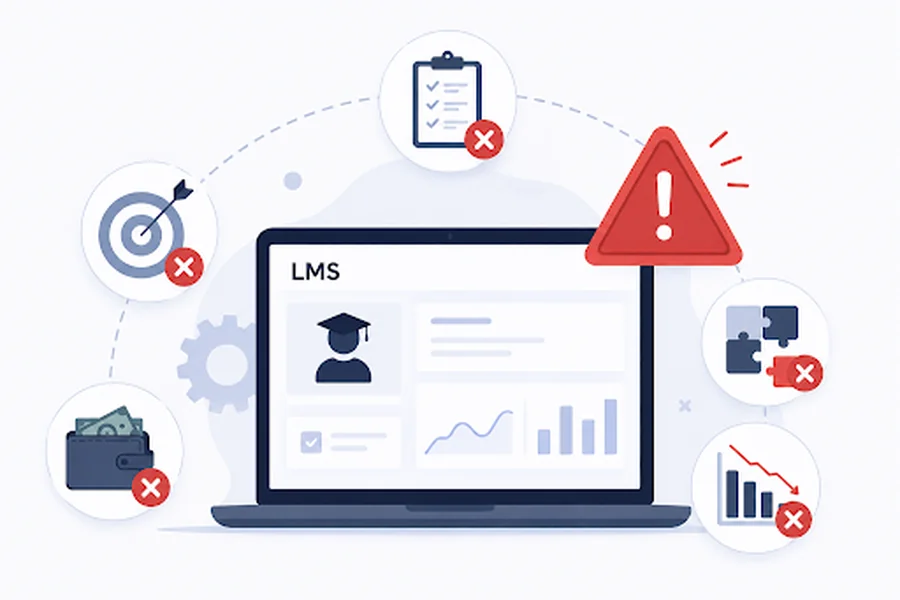
You’ve chosen an LMS, purchased the licenses, and completed the kickoff.
On paper, everything looks like progress.
But fast forward six months, and reality tells a different story. Half your employees haven’t logged in more than once. Courses sit incomplete. What was meant to modernize training quietly turns into just another underused tool.
This isn’t rare. It’s the default outcome for many first-time LMS launches.
And in most cases, the platform itself isn’t the real issue—whether you’re using an off-the-shelf LMS or investing in LearnDash custom development. The bigger challenge is getting employees to consistently engage with the system after launch.
It’s what happens before and around it—the early decisions, assumptions, and gaps that don’t seem critical at the time but compound quickly once the system goes live.
Companies don’t set out to fail their LMS rollout. But they often treat it like a software purchase instead of what it really is: a business initiative that touches people, processes, and performance.
That’s where things start to slip.
In this article, we’ll break down five costly mistakes companies make when launching their first LMS—and more importantly, how to avoid them before they derail your investment.
1. Treating the LMS as an IT project, not a business one
This is where most LMS rollouts start to go off track.
The responsibility often lands with the IT team. They evaluate platforms, handle the setup, and get everything technically ready. Once that’s done, the system is handed over to HR or L&D with the assumption that it’s ready to run.
But that handoff is exactly where things begin to break down.
Because while the system is live, accountability isn’t. No one is clearly driving results. Who decides what content gets created? Who tracks whether employees are actually completing courses? Who steps in when engagement drops?
Without a solution to this problem, the LMS will run—but not work effectively.
Why? Because the LMS is not just a tool to install, it is a business process that requires ongoing management from day one. Without someone being held accountable for results—with the power to set the strategy, manage budgets, and course correct if necessary—the technology alone will not deliver the desired results.
Fix it: Before you even sign the contract, assign clear accountability. Not just a project manager to implement the system, but a results manager who understands the link between learning and business objectives.
2. Choosing a platform based on a feature checklist
That lack of ownership often carries into the next decision—how the platform gets chosen.
Most companies rely heavily on feature comparison sheets. And on the surface, they’re convincing. Every vendor seems to offer the same things: gamification, certificates, integrations, and reporting. Side by side, the options start to look identical.
So the decision comes down to price.
That’s where the problem begins.
Because feature lists show what a platform can do—not how well it actually does it. Two tools may both offer “gamification,” but one might feel engaging and flexible, while the other is rigid and barely usable. The same goes for certificates, integrations, and reporting.
You only notice these gaps once you start using the system.
A couple of months in, the cracks begin to show. Customization is limited. Workflows feel clunky. Integrations don’t go as deep as expected. What looked like a safe choice turns into daily friction for both admins and learners.
Fix it: Don’t stop at demos. Build a small pilot course inside the platform. Assign it to a real group of users. Test the full experience—creation, assignment, completion, reporting. It’s the fastest way to uncover friction before you’re locked into a long-term contract.
3. Underestimating how long good content takes to build
Even with the right platform in place, another issue tends to surface quickly—content.
Most companies assume they already have what they need. Existing materials get repurposed: PDFs are turned into modules, PowerPoint decks into slide-based lessons, and long workshops into “self-paced” courses.
On paper, it feels efficient.
In practice, it rarely works.
Because content that works in a live setting doesn’t automatically translate to a digital one. Reading a PDF on a screen isn’t learning. Sitting through a long, one-way video isn’t engagement. What ends up inside the LMS often feels like a compromise—not something people actually want to complete.
And that’s where adoption starts to drop.
In fact, the content layer is what really makes or breaks the learning management system. In almost all cases, developing it takes longer than expected at first.
Fix it: Treat content development as a core workstream, not a last step. Plan for it early, allocate time and resources, and design specifically for how people learn online. If you don’t have instructional design expertise in-house, bring it in—even on a part-time basis for your first launch.
4. Skipping the people side of the launch
By this point, most teams have focused on the platform and the content. What often gets overlooked are the people who are expected to actually use it.
An LMS rollout is a change, and people don’t automatically embrace change. This is particularly challenging when the target group is mid-career professionals who already feel comfortable with their expertise.
Without engaging the management, the entire process becomes a top-down directive. Employees comply with the policy, but without managerial encouragement, participation remains low. Participation rates decrease. Within months, learning becomes more of a formality than a valuable experience.
That’s where adoption quietly breaks down.
Those who successfully manage this step view the launch in a different light. For them, it’s not merely a software deployment; it’s an internal marketing campaign that communicates the importance, changes, and personal benefits of the new technology.
Fix it: Plan your launch beyond just go-live. Build a 60-day rollout strategy that includes manager briefings, employee communication, and consistent follow-ups. Most importantly, answer one key question for everyone involved: What’s in it for me?
5. Picking the wrong implementation partner (or trying to do it alone)
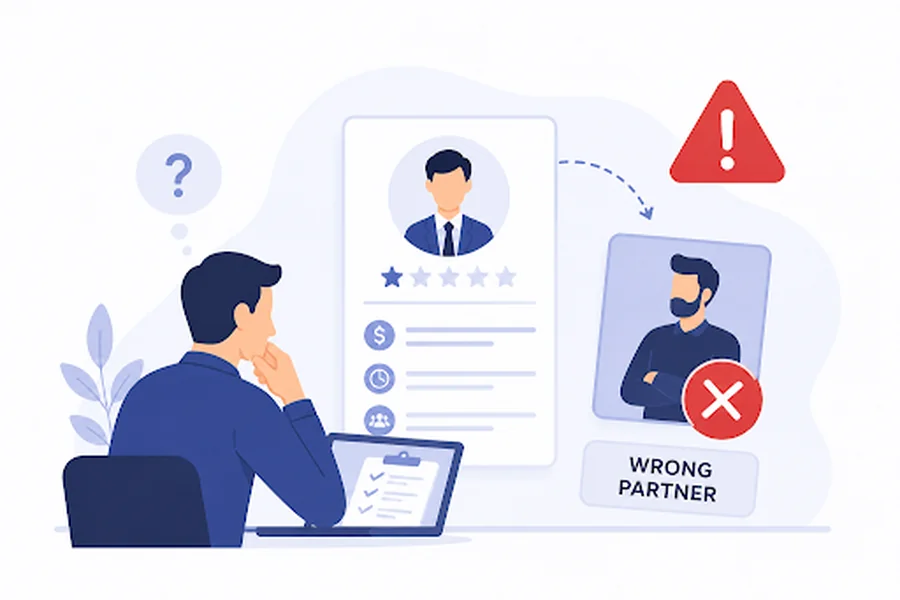
Even with the right platform and content in place, execution can still fall apart without the right support behind it.
The LMS space is crowded with vendors who will happily sell you the software—but stop there. They’ll set up your account, hand over the credentials, and leave you to figure out the rest. On the other end, there are full-service consultancies that charge heavily for work your internal team could manage with the right guidance.
Most companies end up stuck between these two extremes.
What you actually need is a partner who sits in the middle—someone who understands your business context, knows the platform inside out, and can help you build and configure the system without making you overly dependent on them long-term.
Because implementation isn’t just technical. It’s about shaping a program that works in the real world.
Whether you’re working with LearnDash or exploring a custom LMS build, having the right development support early on can save months of trial, error, and rework. In many cases, it pays for itself before you even go live.
Fix it: Treat your implementation partner like a key hire. Ask about projects similar to yours. Look at what they’ve actually delivered—not just what they claim. Speak to past clients if possible. And if the conversation stays focused only on the platform, not the program you’re trying to build, that’s a red flag.
Conclusion
Across all five mistakes, a clear pattern shows up: companies treat an LMS as a software purchase when it’s really a business initiative.
And that’s where things start to break.
In most cases, the platform works fine. What fails is everything around it—unclear accountability, weak content, limited manager involvement, and no real plan to drive adoption. Over time, these gaps turn the LMS into something employees use only when required, not something that actually supports learning or performance.
At the core of it all is one issue: no one is truly driving the program forward. When responsibility is diffused, decisions get delayed, progress isn’t tracked properly, and problems go unaddressed.
The companies that succeed focus on the fundamentals early. They define accountability, invest in content, involve managers, and treat the rollout as a change effort—not just a technical setup.
If you’re planning your first LMS, slow down just enough to get this right. Clarify who’s driving results, define success beyond basic metrics, and test with a small pilot before scaling.
Do that, and choosing the right platform becomes much simpler—because you know exactly what you need it to do.
Frequently asked questions
How long does a first corporate LMS launch actually take?
Most teams promise three months and end up at six. The platform setup itself is usually fast, a few weeks for a standard configuration. The rest of the time gets eaten by content production, integrations with HRIS or single sign-on, internal alignment, and getting managers actually engaged. Three to six months is the realistic range. If somebody’s promising six weeks, push hard on what they’re skipping.
Why do LMS rollouts fail even after a successful launch?
Because launch isn’t where success happens. Adoption is. The first 60 to 90 days after go-live decide whether the platform becomes part of how people work or just another underused tool. Most failures show up in this window. Usage flatlines, managers stop reinforcing, content gets stale, and nobody updates anything. Without active ownership during that period, the rollout dies quietly.
Should we build a custom LMS or start with an existing platform?
Default to an existing platform and customize where it matters. Build from scratch only if your needs are genuinely uncommon, things like highly regulated workflows, deep integrations with proprietary internal systems, or compliance requirements that nothing off-the-shelf handles. Going custom too early means you’re paying for complexity before you actually know what you need.
What’s the highest hidden cost in an LMS project?
Content. Companies obsess over license pricing and forget that the content sitting inside the platform is what actually drives adoption. Designing good digital learning takes time, money, and skills most internal teams don’t have on staff. Underbudget that piece, and your fancy platform turns into an expensive PDF library.
How should we measure LMS success beyond basic metrics?
Logins and completion rates are vanity metrics. They tell you the system is being used. They don’t tell you it’s working. Better signals: knowledge retention measured a few weeks after training, observable behavior change on the job, manager feedback on whether team performance shifted, and whatever business outcome you tied the training to upfront. If your sales onboarding got cut from six weeks to four, that’s a number worth tracking.
Can we run an LMS without a dedicated L&D team?
Yes, but only if one person clearly owns it. They don’t need to be a learning specialist. They do need authority, time, and accountability for outcomes. Plenty of mid-sized companies run successful programs with an HR or operations leader driving the platform, supported by external instructional design help and a good implementation partner. What kills these setups isn’t a lack of expertise. It’s a lack of ownership.