
Additive Manufacturing in Medtech: What’s Next After Prototyping
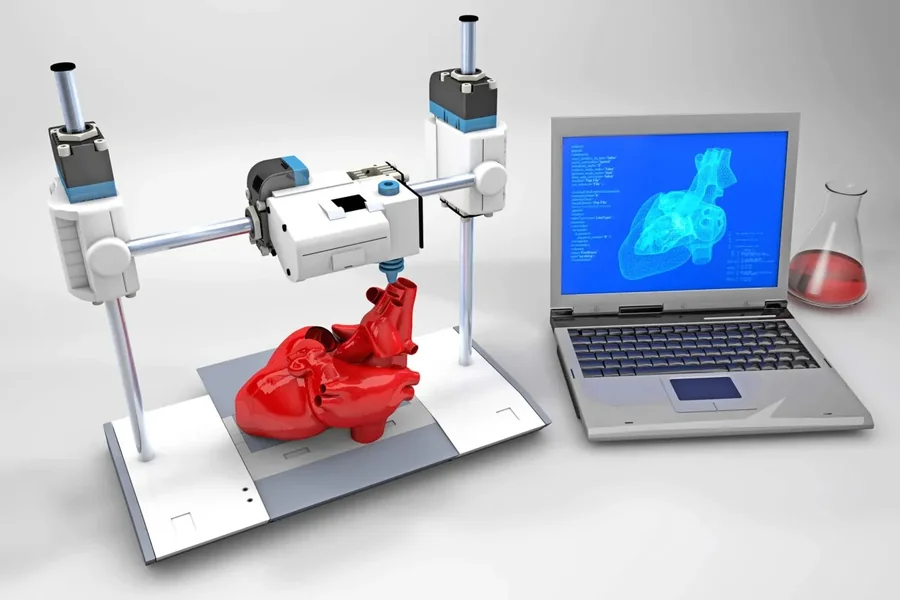
Once your team proves out a medical device prototype using additive manufacturing (AM), the natural question is: now what?
3D printing has become the go-to tool for rapid iteration, concept validation and functional prototyping in medtech. But as your design moves closer to regulatory submission and production, it’s easy to hit a wall. You may wonder if additive is still the right fit – or if it’s time to switch gears entirely.
Understanding the evolving role of AM beyond the prototype phase can help you unlock real strategic value. Whether you’re developing handheld diagnostic tools or implantable components, click here to learn more about how additive manufacturing services support medtech innovation at every stage.
More Than a Prototype Machine
Think of additive manufacturing not just as a rapid prototyping tool, but as a pathway to manufacturing strategies that weren’t previously possible. The freedom to build complex internal geometries, consolidate parts and tailor materials to the application opens doors for medtech that traditional subtractive methods often leave closed.
The best part? You can keep leveraging this freedom well beyond your prototype. You just need to understand where AM fits – and where it doesn’t – as your product advances. Teams looking to streamline downstream production planning often pair advanced manufacturing workflows with complementary digital tools such as the best dock scheduling software offered by DataDocks, which helps ensure smoother coordination as devices move from prototype into regulated supply-chain environments.
Pre-Production: Using AM to Refine Design-for-Manufacturing (DFM)
Before you invest in tooling or commit to full production, additive manufacturing allows you to iterate on manufacturing-readiness quickly. You can use it to:
- Validate geometry tolerances with real-world functional testing
- Test enclosure designs, mechanical locking mechanisms or hinge geometries
- Simulate final assembly interactions to identify any interference or fit issues
These quick-turn builds give you a low-risk, high-feedback way to adjust before committing to expensive molds or CNC machining runs. In this sense, AM becomes an enabler of better DFM – not just an ideation tool.
And for Class I and II devices, where lower volumes and regulatory constraints allow, you might find that AM isn’t just helping you prepare for production – it is your production method.
Ready for Launch: Limited Runs with Additive Methods
Medical startups and R&D teams often need to produce dozens or hundreds of pre-commercial units for pilot studies, clinical trials or early customer adoption. This is where additive shines again.
Without the lead times and costs associated with tooling, you can:
- Produce units on demand with little to no inventory risk
- Tailor design variations for multiple trial groups
- Implement quick design changes between batches if pilot data reveals improvement opportunities
If you’re navigating FDA submissions or ISO certifications, you’ll still need to ensure your materials, processes and documentation meet the required standards. But working with additive-capable partners who are already compliant with ISO 13485 can fast-track that path.
Beyond Early Access: Is Additive Viable for Full Production?
The answer: it depends. For lower-volume, high-value medtech products – particularly those that require patient-specific customization – additive manufacturing offers enormous potential.
Think about:
- Orthopedic implants tailored to individual anatomy
- Dental aligners or surgical guides
- Custom handheld instruments designed for ergonomic fit
Even in more standardized devices, 3D printing has shown value in producing surgical jigs, anatomical models for pre-op planning and functional housings for electronic monitoring systems.
However, for products requiring high-volume output at a consistent price point, you’ll likely need to transition to injection molding, CNC machining or other high-efficiency processes. But AM doesn’t get replaced – it stays in the loop as a companion technology.
You may continue using it to:
- Produce fixtures or test rigs for quality control
- Run limited edition device variations
- Create training models for hospital partners
So, even if you scale beyond AM as your primary method, it still adds value in the ecosystem.
What’s Changing: Regulatory Acceptance of AM Parts
One of the big shifts you’ll want to monitor is regulatory comfort with AM in final parts. Historically, additive was viewed as less reliable than “traditional” manufacturing in terms of process stability and material behavior. That perception is changing.
Regulators now recognize that repeatability can be achieved in AM when:
- Processes are tightly controlled and documented
- Post-processing steps (like heat treatment or surface finishing) are standardized
- Material traceability is robust
If you’re considering additive for final part production, it’s critical that your vendor can supply full quality documentation. That includes lot traceability, machine maintenance logs and certificates of conformance for each material batch.
These aren’t extras – they’re table stakes in medtech.
Materials That Are Unlocking New Possibilities
Another reason AM is gaining traction past the prototype phase is material innovation. Early 3D printing materials were often limited to brittle plastics or sintered powders. Not anymore.
Today, engineers can access:
- Biocompatible polymers like PEEK or Ultem
- FDA-cleared photopolymers for surgical guides and implants
- Medical-grade stainless steel, titanium and cobalt-chrome alloys
- Elastomers suitable for soft-tissue interfaces or flexible wearables
This growing list of validated materials expands what’s possible – and what’s allowed – for additive in commercial medtech applications.
You’re no longer limited to “close enough” substitutes. You can now specify functional, production-grade materials in many additive systems, especially with the right post-processing workflows in place.
AM Isn’t Just Hardware – It’s a Workflow Mindset
One of the most underrated benefits of additive is the shift it brings to your development mindset. Because 3D printing accelerates feedback loops, it fosters a culture of agility and experimentation. That’s a massive advantage in an industry where the stakes are high, but so is the pressure to innovate.
You can test variants. You can explore new geometries. You can revisit designs that were shelved due to machining limitations. In a way, AM doesn’t just unlock parts – it unlocks thinking.
Just make sure you’re set up to capture that value. That means establishing a clear bridge between your design team and manufacturing partner, aligning documentation workflows and treating additive like a serious production option – not just a stepping stone.
Integrating AM with Other Manufacturing Methods
Let’s say your product is now on the market and you’ve transitioned to a hybrid production model: injection molded housings, CNC machined metal parts and a few AM components used for small-batch personalization. This is where your supply chain strategy becomes critical.
You’ll need to think about:
- How to align quality standards across multiple methods
- Ensuring traceability from raw materials through final assembly
- Managing lead times and inventory across varied technologies
This is especially important in regulated environments. Your documentation and process controls should make it easy to switch between methods if needed or to bring AM back into the fold during redesign phases.
Keeping additive in your toolkit helps you stay flexible. Whether it’s for next-gen versions of your product or to support clinical customization, AM lets you move fast without sacrificing oversight.
A Final Thought: Scaling Smartly with Additive
As you think about next steps, don’t view additive as just a means to an end. Instead, treat it as a strategic capability that can support your medtech business at every stage – from whiteboard sketches to market-ready devices to post-launch evolution.
That’s not to say it replaces everything. But when used deliberately, it can enhance everything.
So ask yourself: What can’t you do with traditional methods? What’s slowing your path to market? Where would more flexibility, faster feedback or lower tooling risk make the biggest impact?
Chances are, additive manufacturing has a role to play. The key is figuring out where – and then executing with the same rigor you’d apply to any critical process.