
How Visibility and Lighting Affect Driver Behavior in Crashes
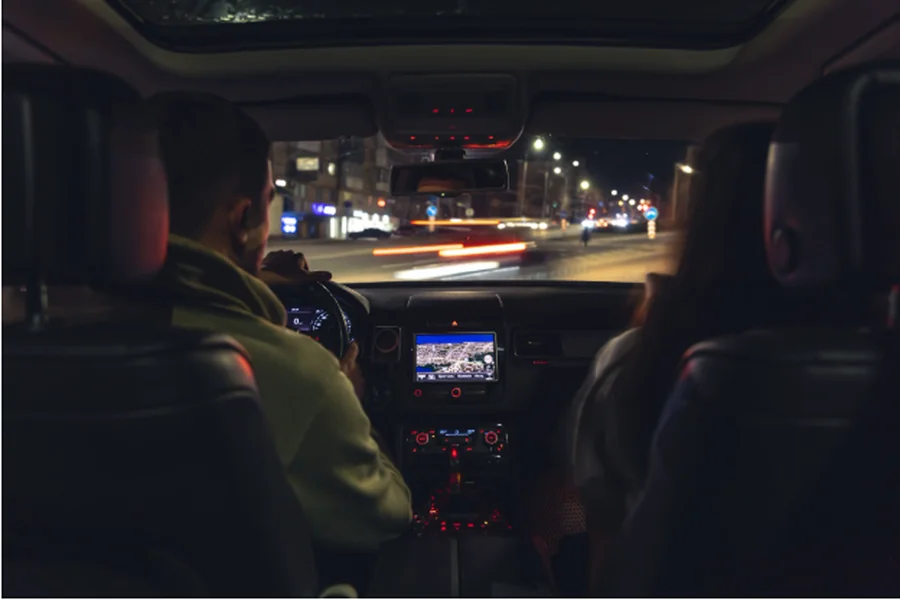
Visibility is one of the most important factors in understanding how drivers respond to hazards. A driver cannot react to something they cannot see, and seeing an object does not necessarily mean recognizing it as a hazard. Lighting conditions can affect when an object becomes visible, when it becomes recognizable, and when a driver has enough information to decide how to respond.
This distinction is particularly important in crash investigation and reconstruction. A driver’s response should not automatically be evaluated using assumptions about what was visible from a particular location. Instead, investigators may need to examine lighting, headlight performance, roadway illumination, object contrast, visibility distance, and the driver’s ability to recognize the hazard.
The Federal Highway Administration notes that driving is largely a visual task and that roadway lighting can improve sight distance and make obstacles more noticeable.
Understanding these factors can help explain why two drivers may respond differently to seemingly similar hazards, and why assumptions about driver behavior can sometimes lead investigators to incorrect conclusions.
Why Visibility Matters in Crash Analysis
Before a driver can respond to a hazard, several things have to happen.
The driver must:
- Detect something in the roadway or surrounding environment.
- Recognize what the object or event is.
- Determine whether it presents a potential danger.
- Decide what action is appropriate.
- Begin that response.
This sequence is commonly considered as part of perception-response time (PRT).
PRT is not simply the time it takes a driver to move their foot to the brake pedal. It encompasses the process of perceiving a hazard and responding to it. Driver Research Institute explains that PRT can vary depending on the situation, including the type of event and when the response measurement begins.
Visibility can influence the earliest stages of this process.
If an object is difficult to detect, a driver may not recognize it until it is closer. That can reduce the amount of time available for braking, steering, or another evasive maneuver.
This is why determining when a hazard became visible and when it became recognizable can be critical in a crash investigation.
Visibility Is More Than Simply Seeing an Object
One common misconception is that if an object was technically visible, the driver should have immediately recognized it and reacted.
Human vision doesn’t work that way.
An object can be physically present within a driver’s field of view without being immediately recognizable as a hazard. Contrast, illumination, background conditions, movement, distance, and the object’s characteristics can all influence detection and recognition.
Driver Research Institute’s nighttime visibility research specifically addresses this issue. Research from DRI notes that drivers and even post-crash investigators can overestimate how visible objects actually are at night.
For example, a dark-clothed pedestrian on an unlit roadway may technically be within a vehicle’s headlight field but remain difficult to recognize.
That difference matters.
Visibility does not automatically equal recognition.
How Lighting Changes What Drivers Can See
Lighting conditions can vary dramatically between daytime and nighttime driving.
During daylight, drivers generally have greater illumination and can often identify roadway users, vehicles, signs, and obstacles from greater distances.
At night, the driver may rely heavily on:
- Vehicle headlights
- Streetlights
- Traffic signals
- Other vehicles’ lights
- Reflective signs and pavement markings
- Ambient lighting
- Moonlight and surrounding environmental illumination
The amount and direction of available light can affect what becomes visible and when.
The FHWA reports that nighttime driving presents additional visibility challenges and notes that roadway lighting can improve the visibility of road features and decision points.
For crash investigators, the relevant question isn’t simply whether a roadway was “dark” or “light.”
The more useful question may be:
What could the driver reasonably see and recognize at the relevant point in time?
The Role of Vehicle Headlights
Headlights are particularly important during nighttime crash analysis.
A driver’s available visibility is affected by the characteristics of the vehicle’s headlights, including the beam pattern and where the light illuminates the roadway.
Driver Research Institute has conducted research examining when objects enter vehicle headlight beams and how illumination affects nighttime recognition.
Consider a pedestrian walking along an unlit roadway.
The pedestrian may initially be outside the effective illumination of the vehicle’s headlights. As the vehicle approaches, the pedestrian enters the illuminated area. But the point at which the pedestrian becomes visible may not be the same as the point at which the driver can confidently recognize the pedestrian as a person and potential hazard.
That distinction can change the analysis of whether the driver had sufficient time to respond.
Street Lighting Can Change the Driving Environment
Roadway lighting can provide illumination beyond what a vehicle’s headlights provide.
Streetlights may illuminate:
- Intersections
- Crosswalks
- Roadway edges
- Pedestrian areas
- Curves
- Roadside obstacles
- Traffic signs
- Other vehicles
The FHWA describes roadway lighting as a safety countermeasure because it can increase visibility and make obstacles more noticeable to drivers.
However, the presence of streetlights does not mean that everything on the roadway is equally visible.
The location, intensity, direction, and uniformity of illumination matter. Shadows and differences in brightness can also affect what a driver sees.
Therefore, simply documenting that a crash occurred on a “lighted roadway” may not provide enough information to determine what the driver could recognize at the relevant moment.
Glare Can Also Affect Driver Visibility
More light isn’t necessarily better.
Bright headlights from an approaching vehicle, illuminated signs, streetlights, or other sources can create glare that affects visual performance.
A driver moving from a brightly illuminated area into a darker environment may also need time for their vision to adapt.
Similarly, an oncoming vehicle with bright headlights can make it more difficult to see a poorly illuminated object near the roadway.
This can create a challenging visual environment where an object is technically present but difficult to distinguish from its background.
For crash reconstruction, understanding the actual lighting environment can therefore be more useful than simply classifying conditions as “day” or “night.”
Why Nighttime Crashes Require Special Attention
Nighttime driving presents a unique combination of visual and behavioral challenges.
The FHWA reports that although only about one-quarter of vehicle travel occurs after dark, approximately half of traffic fatalities occur at night.
This does not mean darkness alone causes crashes. Factors such as alcohol impairment, fatigue, speed, traffic conditions, and roadway design can also contribute.
However, reduced visibility can limit the distance at which hazards can be detected and recognized.
At higher speeds, that limitation becomes especially important.
A vehicle can cover substantial distance during the time between first recognizing a hazard and beginning an evasive maneuver. If the hazard becomes recognizable only when it is relatively close, the driver may have very little time to avoid the collision.
Visibility and Perception-Response Time
One of the most important connections between lighting and driver behavior is perception-response time.
PRT is influenced by the circumstances surrounding a particular event rather than being a universal number that applies to every driver and every crash.
DRI research emphasizes that driver response times can vary based on event type, event probability, and other factors.
Lighting and environmental conditions can also be relevant.
Research analyzing driver responses to slower or stopped vehicles found that lighting was among the environmental factors considered, with drivers responding faster during daylight in that dataset.
This illustrates why crash analysis should consider the actual circumstances surrounding an event rather than automatically assigning a generic response time.
Why the 1.5-Second Assumption Can Be Misleading
A commonly cited assumption in crash reconstruction is that drivers have a standard 1.5-second perception-response time.
But research shows that driver response is not fixed.
DRI’s scientific review explains that different crash scenarios produce different response times and that using a single average value can oversimplify the circumstances of an individual case.
Visibility is one reason context matters.
Imagine two hazards:
Scenario A: A brightly illuminated vehicle suddenly moves into the driver’s lane during daylight.
Scenario B: A dark pedestrian becomes recognizable on an unlit roadway at night.
Although both situations require the driver to respond to a hazard, the visual information available to the driver is very different.
Applying the same assumed response time to both situations may fail to account for the actual visual circumstances.
Visibility vs. Recognition
A critical distinction in nighttime crash analysis is the difference between visibility and recognition.
Visibility
Visibility generally concerns whether an object can be detected within the driver’s visual environment.
Recognition
Recognition involves identifying what that object is and understanding its significance.
A driver might notice something ahead without immediately determining whether it is:
- A pedestrian
- A bicycle
- A vehicle
- An animal
- Road debris
- A shadow
- A roadway feature
That additional processing can affect when the driver begins an appropriate response.
DRI’s nighttime recognition work specifically focuses on determining when objects can be recognized under different lighting conditions.
How Lighting Can Affect Driver Decisions
Lighting doesn’t only affect whether drivers see hazards. It can influence the information available when drivers decide what to do.
For example, a driver who sees an object clearly at a distance may have more time to:
- Reduce speed
- Change lanes
- Steer around an obstacle
- Apply the brakes
- Assess traffic conditions
- Determine whether the object represents an actual threat
A driver who recognizes the same hazard much later may have fewer options.
This is particularly important when analyzing emergency maneuvers.
The available response may depend on how much time and distance remain between recognition and the potential collision.
Other Environmental Factors Work With Lighting
Lighting should rarely be analyzed in isolation.
Other environmental factors can influence what drivers see and how they respond.
These can include:
- Rain
- Fog
- Snow
- Wet pavement
- Glare
- Road curvature
- Roadway grade
- Traffic density
- Vehicle headlights
- Pedestrian clothing
- Object contrast
- Roadside lighting
- Weather conditions
DRI research examining driver responses considers environmental factors such as lighting, weather, and road surface conditions alongside kinematic and traffic factors.
This reinforces an important principle:
Crash circumstances should be evaluated as a combination of factors rather than through a single variable.
How Investigators Can Evaluate Visibility
When visibility is relevant to a crash, investigators may need to reconstruct the visual environment as accurately as possible.
Depending on the case, this may involve examining:
Headlight performance
The vehicle’s headlight characteristics can help determine how the roadway was illuminated.
Roadway lighting
Investigators may document streetlights and other fixed sources of illumination.
Object characteristics
The color, size, reflectivity, and contrast of an object can affect its detectability.
Driver’s viewpoint
The driver’s position, vehicle orientation, lane location, and line of sight can influence what was visible.
Environmental conditions
Weather, pavement conditions, glare, and surrounding lighting can change the visual environment.
Time and distance
Investigators can determine where the vehicle and hazard were located at different points in time.
DRI identifies nighttime recognition, lighting and recognition thresholds, perception-response time, and time-and-distance calculations among the areas used in its human-factors work.
Why Post-Crash Visibility Can Be Misleading
Another important consideration is that the conditions investigators observe after a crash may not perfectly represent the conditions that existed immediately before it.
For example, a scene investigation conducted during daylight may make an object appear highly visible.
But the crash may have occurred at night.
Likewise, investigators may look at a roadway after additional lighting has been installed, vegetation has changed, vehicles have been moved, or other environmental conditions have changed.
That’s why recreating the original conditions can be important when determining what a driver could have seen.
Avoiding Misconceptions About Driver Behavior
Visibility analysis also connects directly to broader questions about how drivers behave during crashes.
It is easy to look at a collision after the fact and assume that the driver should have seen the hazard earlier or should have reacted differently.
But hindsight can make a hazard appear more obvious than it actually was.
This is where understanding common misconceptions about driver behavior in accidents becomes particularly important.
Driver behavior should be evaluated based on the information available to the driver at the relevant moment, not simply on what becomes obvious after the crash.
A scientifically grounded analysis considers the driver’s visual environment, the nature of the hazard, the available time and distance, and the driver’s likely response under those circumstances.
How Visibility Affects Crash Avoidability
Ultimately, visibility can affect one of the most important questions in crash reconstruction:
Could the driver have avoided the collision?
Answering that question requires more than determining whether the driver was looking toward the roadway.
Investigators may need to determine:
- When the hazard became visible
- When it became recognizable
- How much time remained before impact
- What actions were available
- How quickly a driver could reasonably respond
- How much distance was available for braking or steering
- Whether roadway or vehicle lighting affected detection
DRI’s human-factors work combines driver behavior with time-and-distance analysis and vehicle avoidance considerations to examine these types of questions.
The Importance of Evidence-Based Driver Behavior Analysis
Visibility and lighting are important pieces of the larger human-factors picture.
A crash is rarely explained by one variable alone. Driver behavior, roadway conditions, vehicle characteristics, hazard visibility, lighting, speed, traffic, and the timing of events can interact in complex ways.
That is why relying on a generic assumption about driver reaction may produce an incomplete analysis.
Research-based crash reconstruction instead seeks to understand what the driver could see, what the driver could reasonably recognize, and how drivers respond to comparable situations.
Conclusion
Visibility and lighting can fundamentally change the information available to a driver before a crash. An object may be present on the roadway without being immediately detectable, and an object that can be detected may not yet be recognizable as a hazard.
For that reason, crash investigators should look beyond simple questions such as whether the driver could technically see the roadway. A more complete analysis considers when the hazard became visible, when it became recognizable, what lighting conditions existed, how much time and distance were available, and what response would be expected under those circumstances.
Nighttime visibility, roadway lighting, vehicle headlights, glare, weather, and hazard characteristics can all contribute to the driver’s visual environment. Ultimately, understanding visibility and lighting can help provide a more accurate picture of what happened in the moments before a collision, and whether the driver’s response should be evaluated differently based on the conditions they actually faced.