
Best Practices for Parking Lot Maintenance and Safety
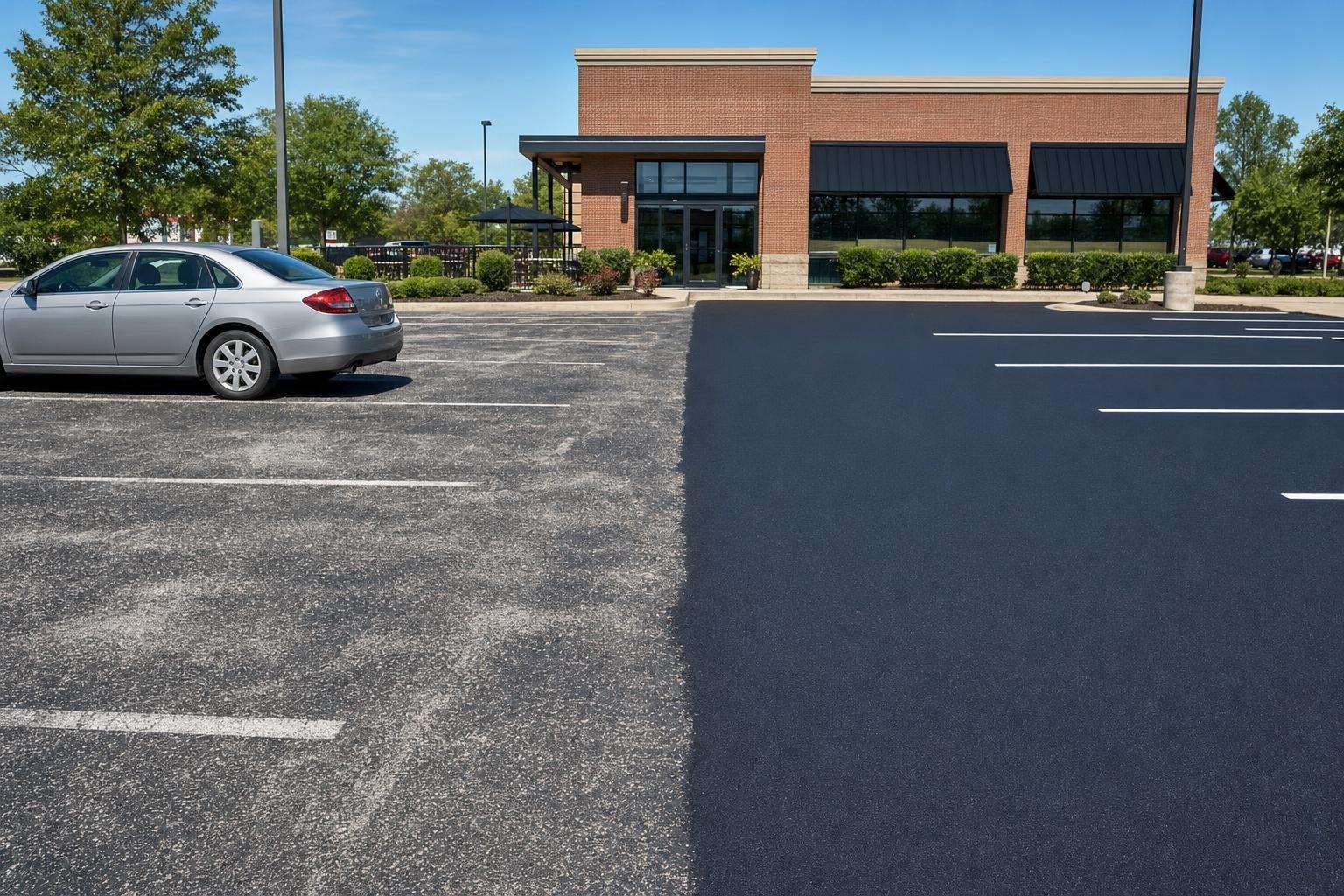
The Strategic Value of Commercial Parking Lot Maintenance
For restaurant parking lots, asphalt endures unique stressors beyond typical commercial properties. The constant flow of customer vehicles, heavy delivery trucks, and even grease drips from idling engines or kitchen exhaust contribute to accelerated degradation. Without proper protection, the asphalt surface begins to break down due to several factors:
- UV oxidation: The sun's ultraviolet rays break down the asphalt binder, causing the pavement to lose its flexibility and turn gray. This leads to surface raveling, where small aggregate particles loosen and wear away.
- Motor oil degradation: Spills from vehicles, particularly common in high-traffic restaurant lots, penetrate the asphalt, softening it and dissolving the binder. This creates weak spots prone to cracking and potholes.
- Moisture intrusion: Water is asphalt's worst enemy. Unsealed cracks allow water to seep into the subbase, weakening the foundation and leading to costly structural failures, especially during freeze-thaw cycles.
- Thermal expansion: Daily temperature fluctuations cause asphalt to expand and contract. Over time, this stress contributes to fatigue cracking.
- Surface raveling: As the binder weakens, the aggregate stones on the surface become exposed and dislodge, leading to a rough, pitted texture.
These issues not only detract from your restaurant's curb appeal but also significantly shorten the lifespan of your parking lot. A proactive maintenance strategy, centered around regular restaurant parking lot sealing, is not just about aesthetics; it's a critical investment in your property's longevity and safety.
Establishing a Proactive Parking Lot Maintenance Schedule
To combat these destructive forces, we advocate for a consistent, proactive maintenance schedule. This typically begins with bi-annual inspections. These inspections, ideally conducted in spring and fall, allow us to identify minor issues like hairline cracks or oil spots before they escalate into major problems.
For restaurant parking lots, sealcoating is the cornerstone of this maintenance plan. While general commercial lots might consider a 24-to-36 month sealing cycle, the unique demands of a restaurant lot often necessitate more frequent applications. High-traffic zones, such as drive-thru lanes or main entrances, experience greater wear and tear. In hot, sunny climates like Tampa, the National Asphalt Pavement Association recommends sealing every 2–4 years, but for busy restaurant lots with heavy oil exposure, we often advise every two years. This ensures maximum protection against the relentless sun, spills, and constant vehicle movement.
Seasonal freeze-thaw cycles in colder regions also play a significant role. Water that penetrates cracks freezes, expands, and then thaws, creating larger cracks and potholes. Regular sealcoating prevents this water intrusion. Effective traffic load management, through clear line striping and designated parking areas, can also help distribute wear evenly across the lot, extending the time between major repairs.
Cost-Benefit Analysis and Budgeting for Parking Lot Maintenance
Investing in regular restaurant parking lot sealing and maintenance is a strategic financial decision. It's a classic example of preventative preservation saving significant capital expenditure in the long run. Consider this: a properly sealed asphalt structure can last as much as double a similar area that is left untreated. This lifecycle extension directly translates to delaying the need for expensive repaving projects, which can cost five to ten times more than regular sealcoating.
For instance, sealcoating a 50,000 sq. ft. commercial parking lot in September 2026 typically costs between $11,000 – $19,000 (approximately $0.22–$0.38 per sq. ft.). This cost, while substantial, pales in comparison to the $100,000+ it could cost to mill and overlay or completely replace the same size lot.
Preventative maintenance isn't just about avoiding a large bill; it's about smart asset depreciation management and capital planning. By maintaining your parking lot, you preserve its value as a business asset. Neglected asphalt not only depreciates rapidly but can also lead to increased liability risks due to trip hazards.
Let's look at a simplified comparison:
Maintenance Action Frequency Typical Cost (50,000 sq ft lot) Lifespan Impact Routine Sealcoating Every 2-4 years $11,000 – $19,000 Extends lifespan by 50-100% (e.g., 10 to 20 years) Crack Sealing Only As needed $1,500 – $5,000 Prevents water damage, but no surface protection Asphalt Repairs (Patching) As needed (for isolated damage) $2,500 – $20,000+ Addresses existing damage, but not preventative Full Asphalt Replacement Every 15-20 years (if untreated) $100,000 – $250,000+ Complete overhaul, highest cost
This table clearly illustrates that while routine sealcoating has an upfront cost, it significantly reduces the likelihood and frequency of much more expensive interventions. It's an investment that pays dividends in both the longevity of your pavement and the financial health of your restaurant.
Essential Pavement Preservation and Surface Protection Methods
Before any restaurant parking lot sealing can commence, thorough preparation is paramount. Sealcoating is a protective layer, not a structural repair, so the underlying asphalt must be in suitable condition. Our process typically begins with a comprehensive structural inspection to identify any areas of concern, such as potholes, severe cracking, or subbase issues.
Once the inspection is complete, the surface undergoes meticulous cleaning. This usually involves power washing to remove dirt, debris, loose aggregate, and any chemical contaminants. For restaurant lots, oil spot priming is a crucial step. Oil and grease stains, common from vehicle leaks or spills, must be treated with a specialized primer to ensure the sealcoat adheres properly and doesn't lift or bubble in those areas. Neglecting this step can lead to premature failure of the sealcoat.
After cleaning and priming, hot-pour crack sealing is performed. This involves cleaning out cracks and filling them with a rubberized asphalt sealant. This step is vital because sealcoat itself is not a crack filler; it’s a surface membrane. Sealing cracks prevents water from penetrating the subbase, which is the leading cause of pavement deterioration. Only after these preparatory steps are completed can the sealcoating application begin, often followed by fresh line striping to restore visibility and order to the lot.
Sealcoating Formulations and Application Standards
The effectiveness and longevity of restaurant parking lot sealing depend heavily on the type of sealant used and the application standards followed. Modern sealcoating formulations typically fall into a few categories:
- Asphalt Emulsions: These are water-based sealers that contain asphalt, clay fillers, and other additives. They are widely used and offer good protection against UV and water.
- Coal-Tar Emulsions: Historically popular, these offer excellent resistance to oil and chemicals. However, due to environmental concerns, their use is becoming more regulated or replaced by asphalt emulsion alternatives.
- Bio-based Rejuvenators: An increasingly popular sustainable option, these sealers are derived from natural oils (like vegetable oils) and penetrate the asphalt to restore its flexibility and bind the aggregate. They are environmentally friendly and can extend pavement life effectively. Bio-based sealers often need to be applied every three to five years, with penetration of 0.75 to 1.25 inches deep, offering a longer interval between applications compared to traditional options.
Regardless of the base material, high-quality commercial sealants often include polymer additives for enhanced durability and flexibility, and silica aggregate (sand) for improved traction and wear resistance, especially important in busy restaurant lots where vehicles turn frequently.
For optimal performance, a two-coat application is standard for commercial sealcoating. This provides a thicker, more uniform protective layer. Crucially, proper curing temperature thresholds must be met. Sealcoating requires pavement temperatures above 50°F (10°C) and at least 48 hours without rain for proper curing. Applying sealer in unsuitable conditions can lead to poor adhesion, cracking, and premature failure.
Assessing Surface Damage: Sealcoating Versus Resurfacing
One of the most critical decisions in parking lot maintenance is determining whether sealcoating is the appropriate solution or if more extensive repairs are needed. Sealcoating is a preventative and protective measure for structurally sound asphalt. It is not a miracle cure for severely damaged pavement.
If your restaurant parking lot exhibits signs of alligator cracking (a pattern resembling alligator skin), widespread potholes, or significant areas of structural subbase failure, sealcoating alone will be a cosmetic, temporary fix at best. The underlying issues will quickly resurface, rendering the sealcoat ineffective.
A general rule of thumb is the "twenty-five percent threshold": if 25% or more of your lot requires repairs beyond minor crack filling, sealcoating may not offer a good return on investment. In such cases, alternatives like infrared patching for localized, deep repairs, or milling and overlay for widespread damage, should be considered. Milling involves grinding off the top layer of asphalt, followed by an overlay of new asphalt. For severely deteriorated lots, complete reconstruction might be necessary. It’s essential to have a professional assessment to determine the most cost-effective and long-lasting solution for your specific situation.
Safety Compliance, Markings, and Structural Repairs
Beyond the surface protection offered by restaurant parking lot sealing, a comprehensive maintenance plan must address safety compliance, clear markings, and structural repairs that impact the overall integrity and usability of the lot. Neglecting these areas can lead to trip hazards, vehicle damage, and significant liability for your restaurant.
Pothole remediation is a prime example. Potholes are not just an eyesore; they are dangerous trip hazards for pedestrians and can cause costly damage to vehicles. Prompt repair is essential. Similarly, catch basin deterioration can lead to standing water, which not only accelerates asphalt degradation but also creates slippery conditions and potential mosquito breeding grounds. Ensuring proper stormwater drainage is fundamental to both pavement longevity and public safety. Pedestrian pathways, crosswalks, and ramps must also be well-maintained and clearly marked to guide customers safely from their vehicles to your entrance.
ADA Compliance and Traffic Markings
Adherence to ADA (Americans with Disabilities Act) Standards is not just a legal requirement; it's a commitment to inclusivity and accessibility for all your customers. This includes clearly marked accessible stalls, ensuring the correct number of spaces, and providing adequately sized van access aisles. Faded or obscured markings can lead to confusion, frustration, and potential fines.
High-durability traffic paint is crucial for all markings in a busy restaurant lot. This includes directional arrows to guide traffic flow, fire lane demarcation for emergency access, and stop bars to enhance safety. After sealcoating, all existing lines are covered, necessitating a complete re-striping. This is an opportune time to ensure all markings are up to current codes and optimized for efficient and safe traffic management. Clear, crisp lines improve the aesthetic, reduce confusion, and enhance the overall customer experience.
Stormwater Drainage and Subsurface Integrity
Effective stormwater drainage is a silent hero in parking lot maintenance. Without it, water accumulates, leading to a cascade of problems. Standing water can infiltrate small cracks, softening the subbase and causing subbase erosion. This erosion undermines the asphalt, leading to grade settlement, depressions, and eventually, potholes and structural failure.
Catch basin collars, the concrete structures surrounding drains, are particularly vulnerable. If they deteriorate, water can seep underneath, washing away the supporting soil and causing the basin to sink. Repairing or replacing these before sealcoating is critical to prevent future problems. Similarly, transitions between asphalt and concrete aprons (e.g., at building entrances or driveways) must be seamless to prevent water from pooling and causing damage. A well-designed and maintained drainage system protects your entire parking lot structure, extending its life and preventing costly, recurring repairs.
Frequently Asked Questions About Parking Lot Care
We frequently encounter questions from restaurant owners looking to optimize their parking lot maintenance. Here are some of the most common inquiries, along with our expert insights.
How often should a commercial asphalt parking lot be sealcoated?
The ideal frequency for sealcoating a commercial asphalt parking lot, especially for a restaurant, depends on several factors: traffic volume, climate impact, and the current condition of the surface. For a typical commercial lot, sealcoating should ideally be performed every 24 to 26 months. However, for a busy restaurant lot, which experiences higher traffic volume, more frequent turning, and increased exposure to oil and grease, we often recommend a shorter interval.
In hot, sunny climates, like those found in the southern U.S., UV degradation is a significant factor. The National Asphalt Pavement Association recommends sealing every 2–4 years in such conditions. For a restaurant, we would lean towards the lower end of that range, perhaps every two years, to provide maximum protection. Regular inspections will help identify surface wear patterns and guide the precise timing, ensuring you sealcoat before significant damage occurs.
Can a commercial property remain open during asphalt sealing and striping?
Yes, absolutely. We understand that closing your restaurant for several days is not a viable option. Our approach to parking lot striping and sealing prioritizes phased execution and off-peak scheduling to minimize disruption. We work closely with restaurant owners to develop a plan that allows the business to remain open.
This often involves working in sections, sealing one portion of the lot while another remains open for customer access. We can schedule work during early mornings, late nights, or on slower weekdays to further reduce impact. Traffic barricades and clear signage are used to safely direct customers around active work zones. While the sealcoating process itself typically takes 2–4 days, the crucial factor is the cure time management. Foot traffic is usually permissible within 24 hours, but vehicles should ideally avoid the freshly sealed surface for 48–72 hours, depending on the thickness of the application and weather conditions. Careful planning ensures your customers can still access your restaurant with minimal inconvenience.
What is the difference between crack sealing and sealcoating?
This is a common point of confusion, but understanding the distinction is vital for effective asphalt maintenance.
Crack sealing is a targeted repair process. It involves cleaning out individual cracks in the asphalt and filling them with a hot-pour, rubberized asphalt filler. This material is designed to be flexible, expanding and contracting with the asphalt. The primary purpose of crack sealing is to prevent water from penetrating the cracks and reaching the subbase, which would otherwise lead to erosion, freeze-thaw damage, and eventually potholes. It's a structural protection measure for specific points of weakness.
Sealcoating, on the other hand, is a surface application. It involves applying a protective liquid membrane over the entire asphalt surface. Its purpose is multifaceted: to protect the asphalt binder from UV radiation and oxidation, to resist oil and chemical spills, to prevent water infiltration across the entire surface, and to restore the pavement's rich black appearance. Sealcoating is a preventative measure that extends the overall life and aesthetic of the parking lot.
Crack sealing addresses existing structural weaknesses, while sealcoating protects the entire surface from future wear and environmental damage. Both are essential, and crack sealing must always be performed before sealcoating, as the sealcoat itself is not designed to fill or bridge cracks.
Conclusion
Maintaining a restaurant parking lot goes far beyond simple aesthetics; it's an integral part of proactive asset management, risk mitigation, and upholding your brand's image. By embracing a comprehensive strategy that includes regular restaurant parking lot sealing, crack repairs, and diligent attention to markings and drainage, you are making a wise investment in your property's long-term durability.
A well-maintained parking lot ensures a positive first impression, enhances customer safety, reduces liability risks, and ultimately contributes to a welcoming and professional environment for your guests. Don't underestimate the power of a pristine parking lot – it's a silent ambassador for your restaurant's commitment to quality and care.