
A Quick Start Guide to Ductless AC Installation Costs in Apache Junction, AZ
How Ductless Mini-Split Systems Function in Desert Climates
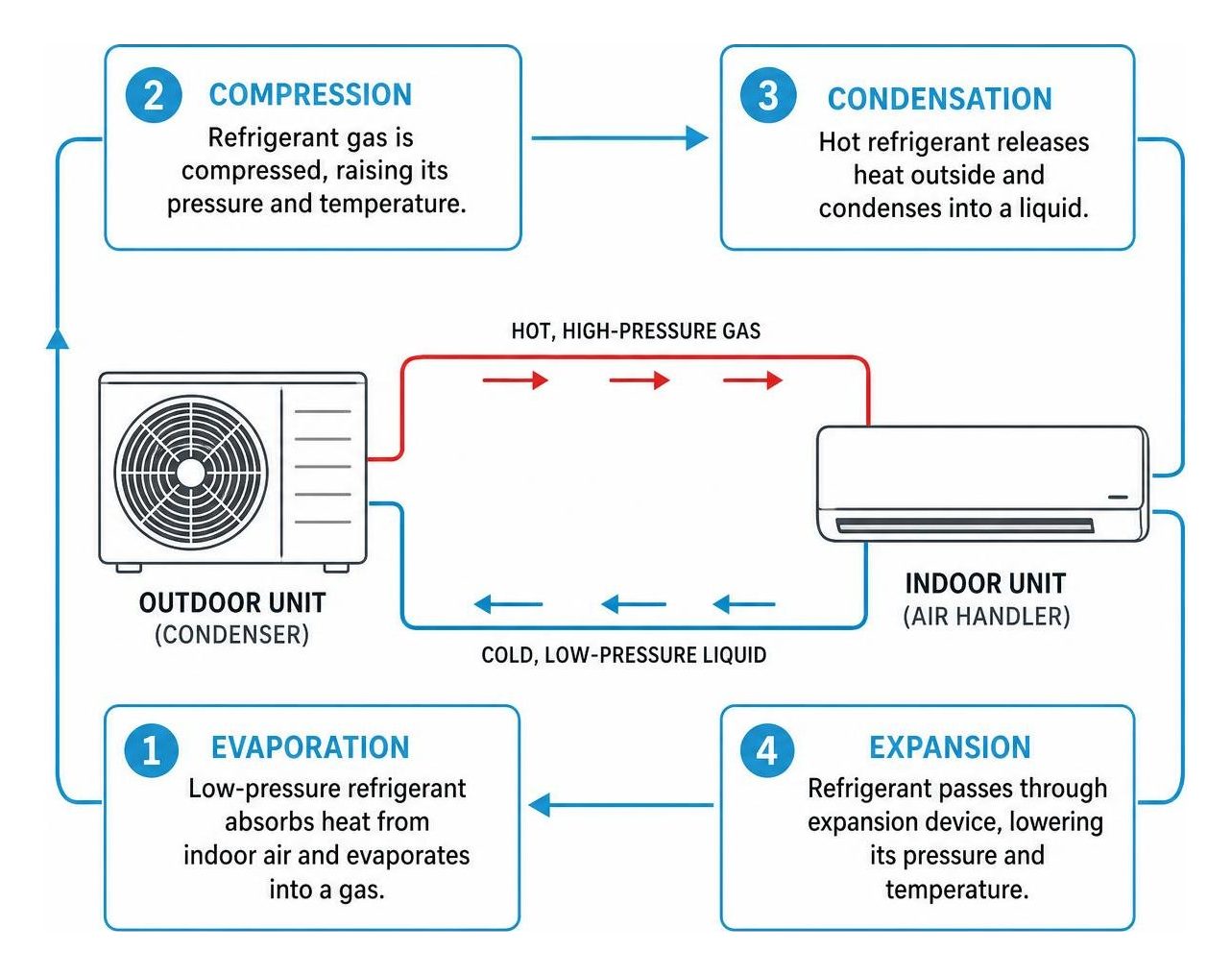
At its core, a ductless mini-split system operates as a heat pump, using the same refrigeration cycle as traditional units but without bulky air ducts. The system consists of two primary components: an outdoor condenser unit and one or more indoor air-handling units. These are connected via a slim conduit containing refrigerant lines, a power cable, and a condensate drain. During cooling mode, the system transfers heat collected inside the home to the outdoor unit, where it is released outside. Many ductless heat pumps can also reverse this process to provide efficient heating during cooler desert evenings and winter mornings.
In the intense heat of Apache Junction, these systems excel because of their inverter-driven compressors. Unlike traditional AC units that operate on a “start-stop” cycle—blasting cold air at full capacity until the thermostat is satisfied, then shutting off—inverter technology allows the compressor to adjust its speed dynamically. It runs at a lower, steady pace to maintain your desired temperature, which significantly reduces energy consumption and mechanical wear. This steadier operation can also help reduce noticeable temperature swings, creating a more consistent level of comfort throughout the day.
These systems are rated by their Seasonal Energy Efficiency Ratio (SEER). Many modern ductless units achieve SEER ratings of 20 or higher, which is a massive leap in efficiency compared to older central systems. Because they move heat rather than just blowing air through dusty, leaky ducts, they provide a much cleaner and more consistent cooling experience. Indoor heads also use washable filters that should be cleaned as needed, because unobstructed airflow helps the system maintain its intended performance.
Ductless vs. Traditional Central AC for Arizona Homes
For many Apache Junction residents, the primary issue with central air conditioning is the ductwork itself. In many homes, ducts are located in hot attics or crawl spaces. If these ducts have even minor leaks, they can lose up to 30% of your cooling energy before the air ever reaches your living room. Ducts located outside the conditioned portion of a home can also absorb heat from an attic before cooled air reaches the registers, increasing the strain on the central system.
Ductless systems eliminate this problem entirely. By delivering conditioned air directly into the room where the unit is mounted, you avoid the thermal loss associated with air traveling through long, uninsulated passages. Furthermore, ductless systems offer “zoning.” You can set different temperatures for different rooms, ensuring the home office stays cool while you don’t waste energy cooling the guest bedroom during the day. Zoning can be particularly useful for rooms with different sun exposure, such as west-facing bedrooms or additions that become warmer than the rest of the home.
Feature
- Energy Loss: Ductless Mini-Split — Minimal (No ducts); Traditional Central AC — Up to 30% via duct leaks.
- Zoning: Ductless Mini-Split — Independent per room; Traditional Central AC — Whole-home only.
- Installation: Ductless Mini-Split — Non-invasive (3-inch hole); Traditional Central AC — Extensive ductwork required.
- Air Quality: Ductless Mini-Split — Multi-stage filtration; Traditional Central AC — Standard filter in return.
Key Factors Influencing Ductless AC Installation Costs
When budgeting for a project, it is helpful to understand that costs are rarely “one size fits all.” The price of your system is dictated by several variables, starting with the cooling capacity required for your specific square footage.
To determine the right size, professionals use a Manual J load calculation. This process accounts for your home’s orientation, window size, insulation levels, and local climate data. Simply guessing the size can lead to a system that cycles too frequently or fails to remove humidity effectively. A careful load calculation can also account for the number of occupants, heat-producing appliances, ceiling height, and the amount of shade around the home. Beyond the unit itself, the complexity of the ductless AC installation depends on the distance between the indoor and outdoor units, your home’s electrical requirements, and whether you are installing a single-unit or multi-zone system.
Single-Zone vs. Multi-Zone Ductless AC Installation Costs
The choice between a single-zone and a multi-zone system is the most significant factor in your total investment. A single-zone system is ideal for a garage conversion, a home office, or a room addition that isn’t connected to the main HVAC system. It is the most cost-effective entry point.
Conversely, a multi-zone system allows you to connect up to eight indoor units to a single outdoor condenser. This is perfect for larger homes where you want total control over every room. While the upfront cost is higher due to the increased number of indoor units and more complex refrigerant piping, the long-term energy savings often justify the investment, especially when you consider that you are essentially replacing the need for a massive, inefficient central unit. A professional can help determine whether a multi-zone layout is appropriate or whether a combination of single-zone systems would better fit the home’s design and usage patterns.
Sizing and Placement Considerations for Desert Homes
In the desert, placement is everything. For indoor units, we recommend mounting them on an interior wall if possible, or an exterior wall that is well-insulated and shielded from direct afternoon sun. The goal is to ensure the unit can intake air easily and distribute it evenly across the room without obstruction from curtains or furniture.
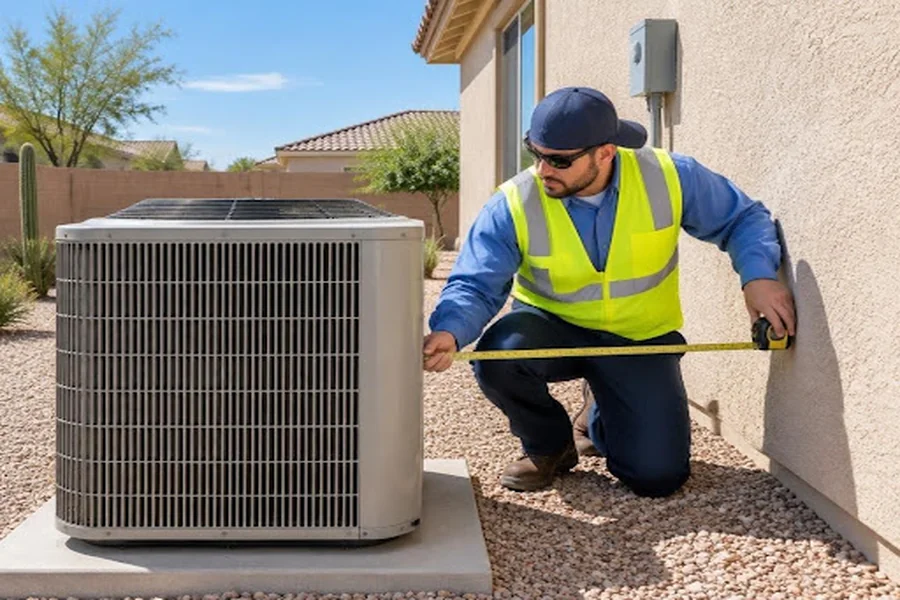
The outdoor condenser must be placed in a location with adequate airflow. In Arizona, this means keeping the unit away from heat-trapping corners and ensuring it is not sitting directly in the harsh, full sun all day. While these units are designed for high-ambient temperatures, providing them with some shade or clearance from hot masonry walls can improve their efficiency and lifespan. The installation location should also remain accessible for future maintenance, cleaning, and service.
Long-Term Energy Savings, Rebates, and Financial Incentives
The transition to a ductless system is an investment in your home’s future. Because these systems are so efficient, many homeowners see a 30% to 40% reduction in their cooling costs. When you pair these operational savings with potential federal energy tax credits and local utility rebates, the return on investment can be quite rapid. Actual savings depend on the home’s insulation, existing equipment, thermostat habits, system sizing, and how many rooms are regularly cooled.
We always encourage homeowners to check with their local utility providers in the Apache Junction area. Many offer incentives for high-efficiency HVAC upgrades. Furthermore, federal tax credits for energy-efficient home improvements can help offset the initial installation costs. When you combine these financial benefits with the extended lifespan of a well-maintained ductless system, the value proposition is clear. Incentives and eligibility rules can change, however: the federal Energy Efficient Home Improvement Credit was not available for qualifying property placed in service after December 31, 2025, so homeowners planning an installation should confirm current local utility programs and tax rules before relying on an incentive.
The Installation Process and Homeowner Preparation
One of the most attractive aspects of ductless systems is the speed of installation. Unlike central AC, which may require days of tearing into ceilings or walls to replace ductwork, a professional ductless AC installation can often be completed in a single day.
The process typically involves:
- Mounting the indoor air handler on the wall.
- Drilling a small, three-inch hole through the wall for the conduit.
- Securing the outdoor condenser on a level pad.
- Connecting the refrigerant lines and electrical wiring.
- Vacuuming the lines to ensure no moisture or debris remains in the system.
- Commissioning the system and testing the airflow.
Preparing Your Home for Ductless AC Installation Day
To ensure a smooth installation, we ask that homeowners clear the area where the indoor units will be mounted. Move any furniture or wall decor that might obstruct the technician. Additionally, ensure there is clear access to your electrical panel, as the technician will need to verify that your system can handle the new load. Because the installation is minimally invasive, you won’t need to worry about major renovations or drywall repairs. Once the units are mounted and the lines are connected, your home will be ready for immediate cooling.
Frequently Asked Questions About Mini-Splits in Apache Junction
How much does ductless mini-split installation typically cost in Apache Junction?
The cost varies based on the number of zones, the BTU capacity required for your space, and any necessary electrical upgrades. While we cannot provide a flat rate without assessing your home, we can help you understand the variables—such as labor, materials, and system complexity—that influence the final quote.
Can a ductless mini-split handle extreme Arizona summer temperatures?
Yes. Modern ductless systems are engineered with high-ambient cooling capabilities. They are specifically designed to operate efficiently even when outdoor temperatures soar well into the triple digits, thanks to their advanced inverter technology.
Do I need a permit for mini-split installation in Apache Junction, AZ?
Yes, most HVAC installations require a permit to ensure the work meets local building and safety codes. A reputable installer will handle the entire permitting process for you, including scheduling the necessary inspections to ensure your system is compliant with Pinal County regulations.
Conclusion
Choosing the right cooling solution for your Apache Junction home is about balancing comfort with efficiency. Ductless mini-split systems offer a modern, flexible, and highly efficient alternative to traditional cooling methods. By eliminating duct leakage and providing precise, room-by-room temperature control, these systems are perfectly suited for the unique demands of the Sonoran Desert. Whether you are looking to cool a single room or upgrade your entire home, a professional ductless AC installation provides a reliable path to year-round comfort and significant energy savings.