
Accelerating Hardware Innovation: The Strategic Role of Precision Prototyping in 2026
The Shift Towards Agile Hardware Development
In the highly competitive landscape of tech hardware, reducing time-to-market has become the most critical objective. Companies face immense pressure to innovate quickly while navigating the notoriously high costs associated with physical trial-and-error.
Traditionally, hardware development followed rigid, sequential phases that severely punished any late-stage design modifications. Today, the principles of agile manufacturing—methodologies once entirely exclusive to software engineering—are fundamentally reshaping how physical products are built.
This shift prioritizes rapid iterations, allowing engineering teams to test, fail, and improve designs in a matter of days rather than months. By shortening the feedback loop, organizations can validate assumptions early, dramatically reducing downstream financial risks.
When hardware startups transition from initial CAD designs to functional testing, minimizing turnaround times is critical without sacrificing mechanical integrity. Industry data indicates that utilizing agile manufacturing frameworks can significantly cut prototyping cycles.
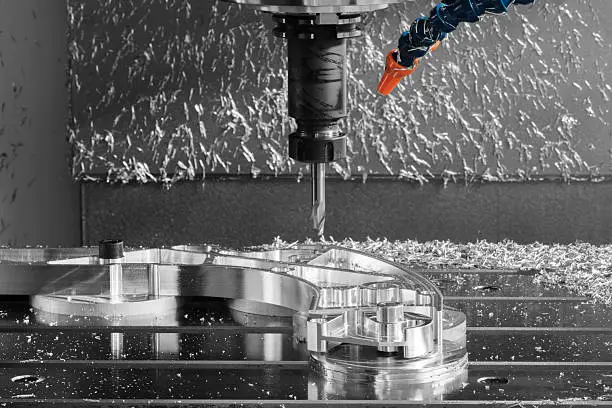
For instance, modern CNC milling typically achieves ultra-tight tolerances of up to +/- 0.005mm while delivering custom parts within days—a benchmark actively maintained by rapid manufacturing platforms like RapidDirect. This standard of precision allows R&D engineers to validate physical models and iterate quickly.
Core Technologies Driving Precision and Speed
The transition toward agile hardware is not merely a shift in management philosophy; it is deeply rooted in the evolution of advanced fabrication technologies.
Modern prototyping relies heavily on automated, data-driven machinery that translates complex digital models into physical reality with minimal human intervention.
Why CNC Milling Remains the Gold Standard for Prototypes
While additive manufacturing has revolutionized concept modeling, subtractive manufacturing remains the undisputed gold standard for functional validation.
Unlike most 3D printed components, which can suffer from anisotropic weaknesses due to layer-by-layer adhesion, CNC machined parts retain the native structural integrity of the raw material block.
- Mechanical Fidelity: Machined parts offer exact mechanical properties required for stress testing.
- Surface Finish: Cutting tools provide a pristine surface finish that closely mirrors end-use production parts.
- Dimensional Accuracy: Rigid machining centers maintain tolerances that additive technologies struggle to achieve reliably.
From an engineering perspective, validating high-stress components requires parts that behave exactly like the final commercial product, making CNC technology irreplaceable.
Material Versatility in Modern Machining
A critical advantage of contemporary machining centers is their unparalleled ability to work with an extensive spectrum of advanced industrial materials.
In high-stakes industries like aerospace and medical devices, material selection cannot be compromised during the prototyping phase.
- Aluminum 7075: Known for its excellent strength-to-weight ratio, this alloy is notoriously challenging to machine but vital for aerospace components.
- Titanium Alloys (Ti-6Al-4V): Highly prized for biocompatibility and high-temperature resistance, requiring specialized cutting tools and strict thermal management.
- Engineering Plastics (PEEK): Essential for chemical resistance and electrical insulation in demanding environments.
Mastering the precise machining parameters for these materials requires significant manufacturing expertise, ensuring that prototype performance metrics map directly to mass-produced units.
Navigating the Supply Chain Complexities in 2026
Moving from technical execution to macroeconomic strategy, hardware companies are facing increasingly volatile global logistics. The disruptions of recent years have proven that isolated, rigid supply chains are a massive liability for hardware brands.
Today, successful hardware startups mitigate these risks by partnering with digitally integrated manufacturing networks. These modern production partners utilize AI-driven quoting, real-time tracking, and automated capacity matching to guarantee lead times.
By leveraging cloud manufacturing ecosystems, B2B decision-makers can bypass traditional procurement bottlenecks. This on-demand approach allows companies to scale up or down instantly, optimizing cash flow and preventing excess inventory accumulation.
Key Takeaways
| Area | Key Takeaway | Impact/Data |
| Agile Hardware | Adopt rapid physical iteration frameworks | Cuts turnaround cycles to days |
| CNC Validation | Prioritize CNC over additive manufacturing | Delivers +/- 0.005mm precision |
| Material Integrity | Machine exact end-use industrial materials | Prevents anisotropic structural weaknesses |
| Cloud Production | Integrate AI-driven cloud manufacturing networks | Bypasses traditional procurement bottlenecks |
| Design Scaling | Enforce DFM rules from day one | Averts costly late-stage redesigns |
Future-Proofing Product Designs for Scalability
The ultimate goal of rapid prototyping is not just to build a functional unit, but to establish a seamless pathway to mass production.
This requires a rigorous commitment to Design for Manufacturing (DFM) principles from day one. By optimizing part geometries for easier machining or molding early in the cycle, companies prevent expensive redesigns during the manufacturing handover.
To remain competitive, companies must integrate scalability into their earliest design phases. A robust strategy is no longer optional in an era of unpredictable global markets.
As detailed in comprehensive analyses of global supply chain resilience, building adaptable and diversified production ecosystems allows businesses to mitigate risks, overcome component shortages, and transition smoothly from low-volume prototyping to full-scale commercialization.
By blending precision engineering with agile supply chain strategies, modern hardware innovators can secure their foothold in an increasingly complex global market.