
Building a Cozy Home Office on a Tight Budget
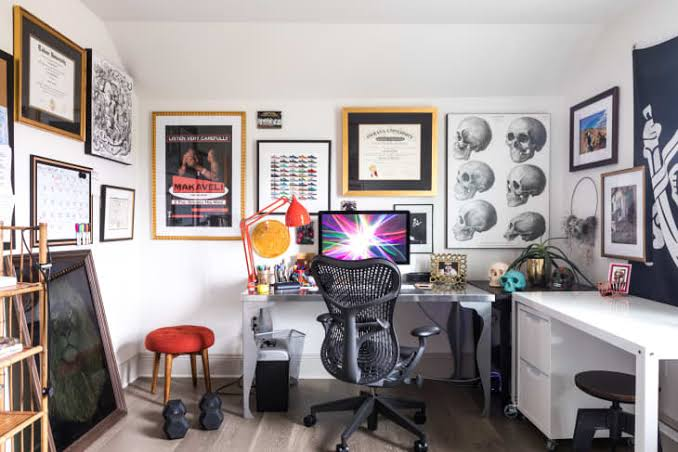
If you want to set up a nice, practical office at home, you can do it for 300 to 600 francs by spending your money only on those two things that really impact your body and your concentration, i.e. a good chair and lighting, and making a plan for everything else. The secret is not to buy cheap versions of everything. It is to spend well where it matters and almost nothing where it doesn't.
Unfortunately, that's not how most people do it. They splurge on a fancy desk and an extra monitor, and then use a kitchen chair that breaks their back by lunchtime and they have to squint under a single ceiling light. A comfortable office is mostly about how the space feels for you to be there for eight hours, and the feeling comes from ergonomics light sound, and a little bit of warmth, not from a price tag.
What to Spend On First When Money Is Tight
Begin with the chair since it is the only item that really affects your body negatively if it is not good. If you buy a secondhand ergonomic office chair of a well-known brand, you usually end up paying only 100 to 200 francs instead of 600 or more if you buy new, and a well-made chair will last for about 10 years or more. So, the secondhand market is full of good chairs that companies clearing their offices have thrown out. Make sure that the seat height is adjustable, that there is a tilt mechanism, and the lumbar support is something you can actually feel. Avoid buying anything where the foam is totally flattened or the gas lift sinks by itself.
Lighting comes second in the order of importance and it is also the easiest major improvement to make to exposure. If lighting is not properly arranged, the eyes get strained and by the time mid-afternoon comes, one is tired and has a dull feeling. Because of this, the solution is layers. A single warm desk lamp is aimed not at your screen but at the wall, in combination with the daylight you already have, it changes a room for less than 40 francs. Studies on work lighting have shown that more natural, less-glare spaces result in less fatigue and more stable concentration and also, you really do not need an expensive lighting fixture to do so.
The thing that you can literally almost forget about is the desk or make it at almost no cost. A solid door on two trestles, a repurposed dining table, or a 60 franc flat-pack top are perfect for holding a laptop and monitor without any problem. What is important, though, is the height. When typing, your elbows should be at an angle of around 90 degrees, and your eyes will be looking at the upper third of the screen. In addition, a free solution for raising the level of the screen if the desk is too low is a stack of books.
How to Make a Small or Shared Space Feel Like an Office
It is square metres rather than francs that are the hardest budget constraint. A corner of a bedroom or a stretch of living room wall can really turn into a workspace if you visually separate it because the brain needs a signal that this spot means work. A small rug, a shelf, or even a folding screen enhances the focus more than a gadget.
Sound is often the part that people living in shared flats underestimate. You do not need to have a soundproofed room. A bookshelf against a shared wall, a thick curtain, and a soft rug absorb enough echo to make video calls pretty comfortable, and a 30 to 60 franc pair of basic headphones takes care of the rest. If you have a lot of calls, place yourself so that a wall, not an open hallway, is behind you as this controls noise as well as what colleagues see.
Cable clutter silently destroys the cozy atmosphere. Just a few velcro ties, a power strip fixed under the desk with adhesive strips, and a single box for hiding the charging mess are practically free and totally transform how the whole corner looks. Keeping your desk tidy is a fantastic way to reduce the low-grade stress of getting ready to work, and that is free.
Where to Find Cheap Gear Without Buying Junk
Buying secondhand can really cut down expenses. For instance chairs monitors, and storage pieces are some of the products whose functionality doesn't really depend on their age. Just check your local classifieds, office liquidation sales, and community marketplaces, and you'll find nearly-new ergonomic chairs and 24-inch monitors at only one-third of the retail price. Besides, a monitor that is three years old would be just as efficient as a new one for doing spreadsheets and making calls. Before you make your payment, ensure that the screens can be powered on, have no dead pixels, and that the chair mechanisms can hold your weight.
For the new items you do want to buy fresh, like a lamp, a keyboard, or cable management bits, comparing a few options through a single online shop is usually cheaper and faster than chasing individual bargains across half a dozen sites. Buying the small accessories together also means one delivery instead of several, which keeps both the cost and the hassle down. Reserve the secondhand hunt for the big-ticket pieces where the savings are large and the risk is low.
Beware false economies. A 15 franc keyboard that causes your wrists to get sore, a desk that is constantly shaking and distracting you, or a chair with no adjustment will end up costing you more because of the discomfort than they saved in the first place. Budget building is more about sequencing than deprivation. You buy the cheap thing when cheap is genuinely fine, and you wait and save when it is not.
Adding Warmth Without Spending Much
The main word in the title is "cozy, " but it is the part that tends to be overlooked. A work environment that can be highly efficient while remaining sterile is a place you will most likely avoid. Because of this, little homey touches are actually worth much more than their cost. A plant or two, a warm-toned lamp, a textured throw on the chair, and one art piece that you really like will change the character of a corner for under 50 francs together. It is texture and colour that do the main job. If everything is hard surfaces and the lighting is cool white, it becomes obvious that it is a very cold office, whereas wood, fabric, and warm light very strongly indicate a home.
Really, you want a space where you feel good walking in on a Monday morning, not one that looks like a showroom. A secondhand wooden shelf with some books and a mug warmer depicts comfort more that any pricey accessory. Also, you can only add warmth per what kind of person you are. A freelancer, in fact, living in the place all the time, should make the place as pleasing as possible, as they are there every day by choice. A person working from home two days a week may well have a folding setup that can be put away on the off days. The right thing to do is to match the work to how big a part of your life the room actually is.
The one thing that really matters is to take a moment and evaluate how stable your situation is; only then consider buying anything. If you are renting and from what you understand you will be moving within a year, go for pieces that are easy to take with you and avoid anything that you can permanently attach to a wall. If this is your long-term arrangement, then go ahead and buy the chair and lighting without even thinking twice and then add the other things gradually, one secondhand find at a time, because a good working environment is something that you develop over several months rather than put together in a single weekend order.