
How Gutter Material Affects Durability and Performance
When homeowners think about new gutters, they may focus on appearance or cost, but material is the variable that affects nearly everything else – how long the gutters will last, how well they endure extreme weather conditions, how much maintenance they require, and how they hold up against physical wear. Choosing the wrong material for a certain climate or home type can lead to premature failure, while selecting the right one can mean decades of reliable performance with minimal upkeep.
Aluminum: Reliable and Versatile
Aluminum is the most commonly used material in residential gutter installations, and for good reason. It’s naturally resistant to rust, lightweight, and available in a wide variety of colors that can be matched to virtually any exterior. While it doesn’t require painting, it can be painted if a color change is ever desired.
From a performance standpoint, aluminum handles most climates well. It expands and contracts with temperature fluctuations without cracking, and when installed using heavier gauges (.032 or above), it withstands denting and deformation better than lighter options. Its primary vulnerabilities are physical impact and joint failure over time, both of which can be managed with routine maintenance. Aluminum gutters typically last 20 to 30 years, making them a practical choice for the majority of residential applications.
Galvanized Steel: Built for Heavy Loads
Galvanized steel gutters are heavier and more rigid than aluminum ones, which gives them the advantage in areas that experience heavy snow accumulation, ice loads, or strong winds. They hold their shape under excess weight better than aluminum and are less prone to sagging over time when properly supported.
On the downside, galvanized steel is more likely to rust. It is coated with zinc to resist corrosion, but once that coating is scratched, chipped, or eroded – which eventually happens in wet climates or wherever debris sits against the metal – rust can appear and spread. Regular inspection and prompt repairs to any surface damage significantly extends its service life, but this also means that galvanized steel requires more active maintenance than aluminum to reach the same 20 to 30 year lifespan.
Vinyl: Budget Friendly but Climate-Dependant
Vinyl gutters are the most affordable option and are easy to install, which makes them popular for DIY projects. They won’t rust, are lightweight, and come in a range of standard colors. However, vinyl has some limitations that make it a poor choice in certain environments:
- Cold Climates: Vinyl becomes brittle and is prone to cracking under ice loads or even just a hard impact during freezing temperatures.
- Hot Climates: In areas that receive a lot of sun, the prolonged exposure to UV rays causes fading and warping over time.
- Shorter Lifespan: Vinyl gutters have the shortest service life at just 10 to 20 years.
- Less Durable: Gutters made from vinyl are more susceptible to sagging than metal gutters when filled with standing water or debris.
For homeowners in mild climates with moderate rainfall and minimal freeze-thaw cycling, vinyl can be a cost-effective solution. However, for everyone else, the upfront savings tend to be cancelled out by the need for earlier replacement.
Copper and Zinc: Premium Performance with a Unique Appearance
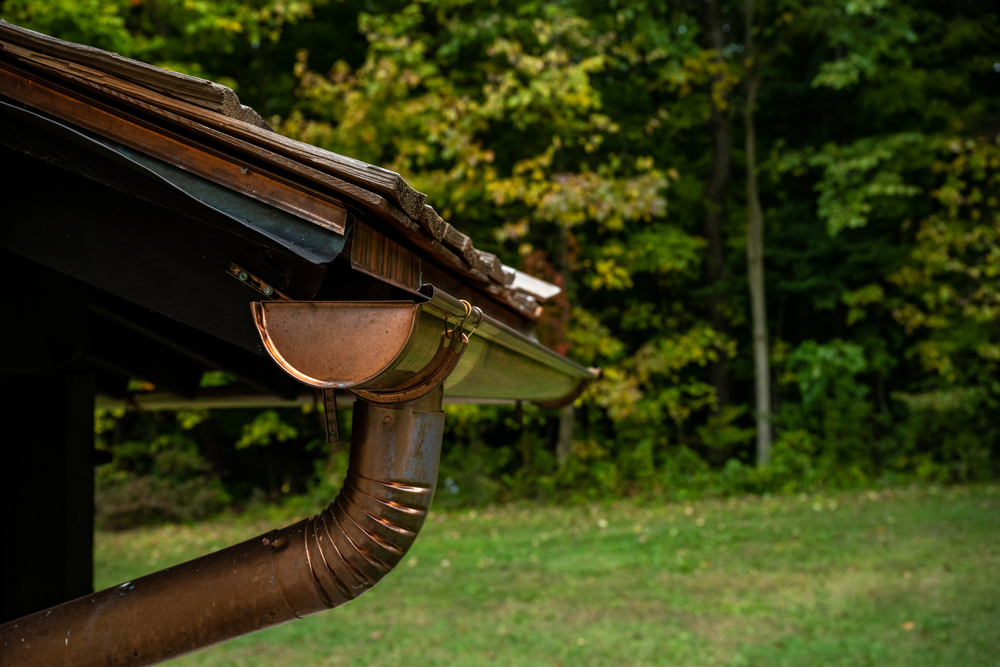
Zinc and copper gutters are on an entirely different level in terms of cost, longevity, and appearance. Both materials develop a protective patina over time (a green-blue finish on copper and a matte gray on zinc) that actually strengthens the surface against further corrosion. Neither rusts, and both can last 50 years or even longer with minimal maintenance.
These materials are typically chosen for high-end renovations, historic homes, or properties where the distinctive aesthetic of aged copper or zinc fits the architectural character. The installation of both of these materials requires specialized skill, and the material cost is significantly higher than aluminum or steel.
Matching Material to Your Home and Climate
The best gutter material for any home is the one that performs reliably in the local climate, fits the structural demands of the roof, and aligns with the homeowner’s maintenance expectations over time. A professional gutter company can take the guesswork out of the decision by considering rainfall volume, temperature ranges, tree coverage, and roof pitch to recommend the material most likely to perform well on your home for the long-term.