
Round Gold Framed Decorative LED Mirror Ideas for Modern Interiors
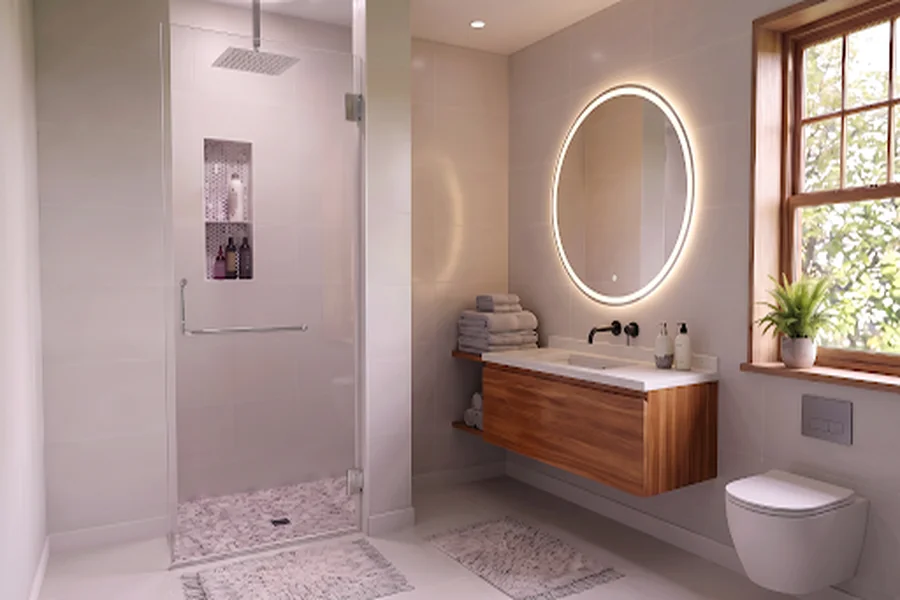
A round mirror can soften the straight lines commonly found in bathrooms, bedrooms, and entryways. Add a warm metallic finish and integrated LED lighting, and the mirror becomes both a practical fixture and a decorative focal point. Current retail listings commonly pair gold or brushed-gold frames with features such as adjustable color temperature, dimming, anti-fog functions, and wall mounting. But choosing round gold framed decorative led mirror is not simply a matter of picking the prettiest frame. The mirror’s diameter, lighting position, color temperature, mounting method, electrical requirements, and relationship to the vanity all affect whether it works well in the finished room.
Why Round Mirrors Work So Well in Interior Design
Round mirrors have a different visual effect from rectangular and square mirrors. Their curved perimeter breaks up hard horizontal and vertical lines, which can make a room feel softer and more balanced.
This is particularly useful above rectangular bathroom vanities. A circular mirror introduces contrast without requiring an elaborate architectural feature.
The shape also works beyond bathrooms. A round mirror can be used above a bedroom dresser, in a powder room, over a console table, or as a decorative element in an entryway.
The key is proportion. A round mirror that is too small can look disconnected from the furniture below it, while one that is oversized can overwhelm the surrounding wall.
What Makes a Gold-Framed LED Mirror Different?
A Round Gold Framed LED Mirror combines three visual elements: a circular mirror, a metallic frame, and integrated illumination.
The gold frame establishes the decorative character. Depending on the finish, it can appear warm and traditional or sleek and contemporary. Brushed gold generally produces a softer appearance than highly polished metallic finishes, while satin gold can provide a more understated look.
The LED lighting adds another layer of functionality. Unlike a conventional mirror that depends entirely on ceiling or vanity lighting, an illuminated mirror can provide light closer to the face. That can be useful for grooming, shaving, skincare, or makeup application.
Choosing the Right Mirror Size
Diameter is one of the easiest specifications to get wrong. For a bathroom vanity, start by measuring the vanity width and the available wall space. The mirror does not necessarily need to span the entire vanity. In many designs, a slightly narrower mirror creates a cleaner visual hierarchy.
For example, a 30- to 36-inch circular mirror can work well above a single-sink vanity, depending on the vanity’s dimensions and surrounding architecture. For a double vanity, two smaller round mirrors can create symmetry, while one larger mirror can produce a more unified appearance. The correct choice depends on more than the vanity width. Consider sconces, faucets, medicine cabinets, windows, shelving, and the distance between the countertop and ceiling.
How High Should a Round Mirror Be Mounted?
There is no universal mounting height that works for every bathroom. The mirror should be positioned according to the height of the people using it, the vanity height, ceiling height, and the mirror’s diameter. A common mistake is to center the mirror based solely on the wall. The more useful approach is to center it around the vanity and intended viewing position.
Also consider the faucet and backsplash. If the mirror sits too close to the countertop, it can make the area feel cramped and increase the likelihood of water spots. If electrical wiring is required, the mounting location should be established before the wall is finished.
Understanding LED Color Temperature
Color temperature affects how the room looks and how accurately the mirror lighting represents colors. Warm light generally creates a softer, more relaxing atmosphere. Neutral or cooler light can feel brighter and more task-oriented.
Some modern LED mirrors provide selectable color temperatures. Current U.S. products commonly advertise options around 3000K, 4500K, and 6000K, allowing users to change the appearance of the light depending on the situation.
For a bathroom used for makeup or grooming, adjustable lighting can be more practical than a fixed color temperature.
However, color temperature should not be confused with color-rendering quality. CRI, or Color Rendering Index, describes how accurately a light source reveals colors compared with a reference source. Higher CRI can be particularly useful for applications where accurate skin tones and makeup colors matter. Some current round LED mirrors advertise CRI values of 90 or higher.
Are Anti-Fog Features Worth Considering?
For bathroom applications, anti-fog technology can be more than a convenience. Hot showers increase humidity and can cause condensation on a cold mirror surface. An integrated defogging system uses controlled heat to reduce condensation over part of the mirror.
However, anti-fog technology does not eliminate the need for proper bathroom ventilation. An exhaust fan and appropriate moisture management remain important for controlling humidity throughout the room. When evaluating an anti-fog mirror, check how the feature operates, whether it has a timer or automatic shutoff, and whether the manufacturer’s installation instructions specify any bathroom-zone or electrical requirements.
Gold Finish: Matching the Rest of the Room
Gold works best when it relates to other design elements rather than appearing as an isolated accent. Look at the faucet, cabinet hardware, shower hardware, lighting fixtures, towel bars, and other metallic components.
The finishes do not have to be identical. In fact, mixing metals can work well when there is a deliberate visual hierarchy. But random combinations can make a bathroom feel unfinished.
A brushed-gold finished mirror paired with warm wood cabinetry can create a softer contemporary look. Gold combined with marble, white tile, and simple black accents can produce a more transitional appearance. The frame itself should therefore be considered part of the room’s material palette.
Round Gold LED Mirrors Beyond the Bathroom
Although bathroom vanity applications are the most obvious use, illuminated round mirrors can work in several other spaces.
In A Bedroom:
The mirror can sit above a dresser or serve as part of a dressing area. In an entryway, a circular mirror can provide a practical last-look station while visually expanding the wall.
In A Powder Room:
A decorative frame can become one of the primary design features because the smaller space gives statement elements greater visual impact.
For Living Areas:
However, lighting requirements should be considered carefully. A bathroom-oriented mirror may provide more functionality than is actually needed in a decorative hallway or living room.
Installation and Electrical Considerations
An illuminated mirror is not simply a heavier version of a traditional mirror. It may include electrical components, LED drivers, switches, heating elements, and mounting hardware.
Before installation, determine whether the model is plug-in or designed for hardwiring. If hardwiring is required, electrical work should follow applicable local codes and manufacturer instructions.
The wall must also be capable of supporting the mirror and mounting system. Drywall, tile, masonry, and stud locations can require different fastening approaches.
For heavier mirrors, relying on a generic drywall anchor without confirming the load rating is a bad shortcut. Always follow the manufacturer’s installation instructions, particularly in wet locations.
Common Buying Mistakes to Avoid
The biggest mistake is choosing based only on appearance.
- A beautiful gold frame cannot compensate for poor lighting, an unsuitable diameter, inadequate wall support, or incompatible electrical requirements.
- Another common mistake is ignoring the depth of the mirror. Framed and illuminated models can project farther from the wall than a conventional frameless mirror.
- Buyers should also verify whether the listed dimensions refer to the complete outside dimensions or the reflective glass area.
- Finally, don’t assume that every LED mirror provides the same quality of illumination. Dimming range, color temperature, brightness, CRI, diffuser design, and LED placement can vary considerably between models.
Is a Round Gold LED Mirror a Good Long-Term Design Choice?
A well-designed circular illuminated mirror can remain useful even as interior trends change because its appeal comes from a combination of simple geometry and practical functionality.
Gold finishes have also moved beyond their association with highly traditional interiors. Contemporary brushed and satin gold finishes can work with minimalist, transitional, modern, and eclectic spaces.
The more important consideration is avoiding an overly trend-dependent design. Choose the diameter and lighting characteristics based on the room’s actual requirements first, then use the gold frame as the decorative layer.
Final Considerations
The best illuminated mirror is not necessarily the largest, brightest, or most expensive option. It is the one whose proportions, lighting, finish, installation requirements, and functionality make sense for the space.
For bathrooms, pay particular attention to anti-fog performance, color temperature, CRI, electrical installation, and wall support. For bedrooms and entryways, decorative proportion and ambient lighting may matter more.
A circular gold frame can provide warmth and contrast, while integrated LED lighting adds useful illumination. When those elements are selected according to the room rather than simply following a trend, the result can be both visually distinctive and practical for years to come.