
The Insider’s Guide to San Miguel de Allende Neighborhoods: Where to Buy a Luxury Home
San Miguel de Allende looks compact on a map, yet the city changes quickly from one block to the next. A house ten minutes from the Jardín may feel central during the day and unexpectedly remote after a steep walk home. Neighborhood choice shapes daily life here more than an extra guest room ever will.
Luxury is not one recognizable property type. The research for this guide drew on local observations from DreamProHomesLuxury, alongside official heritage information and material from other San Miguel market sources. Historic courtyard houses compete with contemporary hillside homes, and neither is automatically the better purchase.
Buyers who want to walk to dinner may have to accept older construction or limited parking. Those who care more about quiet evenings and open views will probably use a car more often. The useful comparison is not which neighborhood has the highest profile. It is which compromise will remain acceptable after the excitement of buying has passed.
Compare Centro and Obraje
Centro places daily life close to the Jardín, restaurants, galleries, and the events that regularly fill the historic district. A well-positioned house can make a car feel unnecessary for much of the week. That convenience carries practical limits. Street noise varies sharply, and parking can be difficult. Some homes have narrow stairs or rooms arranged around several levels because the original structure was never designed for modern expectations.
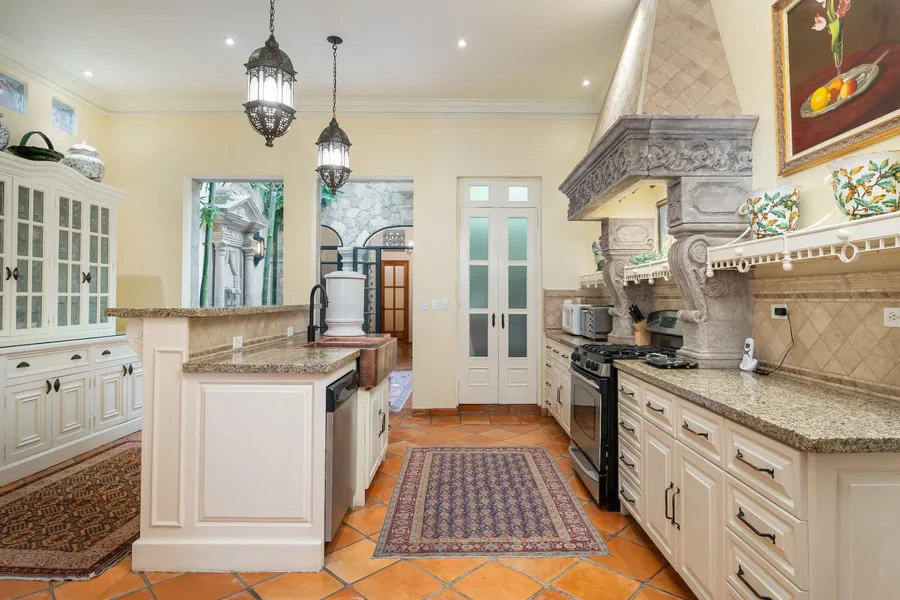
Renovation also requires patience. San Miguel’s historic core has formal heritage protection, and work affecting protected buildings may need authorization from the National Institute of Anthropology and History. A recently updated kitchen does not confirm that earlier construction was approved. Buyers considering a major remodel should investigate the property’s permit history before treating expansion plans as certain.
Current homes for sale in Obraje, San Miguel de Allende, show a different side of central living. The neighborhood lies near Centro and Fábrica La Aurora, but much of its residential stock is newer. Contemporary Mexican design is more common here, and some elevated properties have strong views toward the historic center. Street conditions are less uniform than in a finished master-planned community, so the immediate block deserves as much attention as the house.
Consider Guadiana for Quiet Walkability
Guadiana appeals to buyers who want access to central San Miguel without living inside its busiest streets. The neighborhood is close to Parque Juárez and the commercial activity along Ancha de San Antonio. Parts of the walk into Centro are relatively level, which becomes more valuable after a few weeks of dealing with San Miguel’s hills and stone paving.
Homes here tend to feel settled rather than showy. Mature planting and established streets give the area a residential tone, while central lots often favor courtyards over large lawns. Buyers expecting a vast estate may find more space in Atascadero or outside the urban core. Guadiana is stronger when the priority is a polished home that remains connected to ordinary city life.
Look to Balcones or Atascadero for Views and Space
Balcones is one of the first places buyers consider when a rooftop view becomes part of the brief. Its hillside position opens sightlines across the city, sometimes from several rooms rather than one terrace. The tradeoff is visible on the approach. Streets can be steep, and the lower edge of the neighborhood is easier to reach on foot than the higher sections.
A dramatic view needs to be examined at different times of day. Afternoon glare can make a west-facing terrace less comfortable than the listing photographs suggest. New construction nearby may also affect a sightline that currently appears permanent. Before paying a premium for the view, buyers should ask what can legally be built on adjoining land.
Atascadero feels greener and more spacious. The neighborhood developed as a residential area rather than an extension of the dense historic center, so many homes have larger plots and a greater sense of separation. Established trees soften the streets, and the higher elevation can feel cooler during warm periods. Most residents will still rely on a car for frequent trips into Centro. That is a reasonable exchange for space, but only when driving fits the buyer’s routine.
Evaluate San Antonio and Guadalupe Block by Block
San Antonio is large enough that broad descriptions are not very helpful. Some parts are an easy walk from Centro and Instituto Allende. Other streets feel more residential and less polished. The housing stock is equally varied. A carefully restored home may stand near an unfinished building or a small neighborhood business.
That mixed character is part of the appeal for buyers who want a neighborhood with regular local activity rather than a uniformly designed luxury enclave. It also makes street research essential. Visit in the morning and return after dark. Delivery traffic or a nearby workshop may matter more to daily comfort than the quality of the interior finishes.
Guadalupe has a stronger visual identity because of its murals and proximity to Fábrica La Aurora. It attracts buyers who value the arts district and want quick access to Centro without paying solely for a historic-core address. Renovated homes can be impressive, though lot sizes and street conditions vary. A beautiful façade is not enough reason to skip a careful look at the surrounding block.
Decide Whether Gated Living Fits
Malanquín and Ventanas offer a different relationship with San Miguel. Both are associated with golf-oriented residential living, and buyers are more likely to find controlled access or contemporary homes with dedicated parking. The streets are generally easier for cars than the narrow approaches found near Centro.
The decision is less about prestige than routine. A gated property may provide privacy and a quieter setting, but spontaneous walks into the historic center become less practical. Dinner usually involves driving. Visiting friends across town requires planning around traffic. Buyers who already expect to use a car may consider that a minor issue. Someone drawn to San Miguel for its walkable social life may feel the distance more than anticipated.
Community rules also deserve attention. Building standards can protect the appearance of a development, while monthly fees pay for shared services. Those same rules may restrict exterior alterations or rental activity. The governing documents need to match the intended use of the home, especially when the property will operate as a seasonal residence.
Complete Legal and Property Due Diligence
San Miguel de Allende is outside Mexico’s restricted coastal and border zones. Foreign buyers can therefore acquire direct title, subject to the applicable federal process. The purchase still requires formal legal work. A Mexican notary verifies the transaction and prepares the public deed. Registration then establishes the transfer in the public property record.
The notary’s role does not replace independent review on the buyer’s side. Ownership should match the seller named in the contract. Any lien needs to be identified before closing. Property boundaries should agree with the deed and the physical site. For a condominium or gated home, unpaid fees can become another source of delay.
Older houses need a physical inspection suited to local construction. Roof waterproofing deserves close attention before the rainy season. Water storage and pressure should be tested rather than assumed. On a hillside property, drainage and retaining work may matter more than decorative finishes. A general inspection report from another country may not cover the issues common to San Miguel homes.
There is no single neighborhood that represents luxury living in San Miguel de Allende. Centro is compelling for cultural access. Guadiana offers a calmer version of central life. The hills provide views and larger homes, while gated communities suit buyers who prefer privacy and easier vehicle access. A strong purchase begins when the buyer stops looking for the universally best address and starts testing how each location works on an ordinary Tuesday.