
What Is a Deepfake? How AI Red Teaming Can Detect the Risks
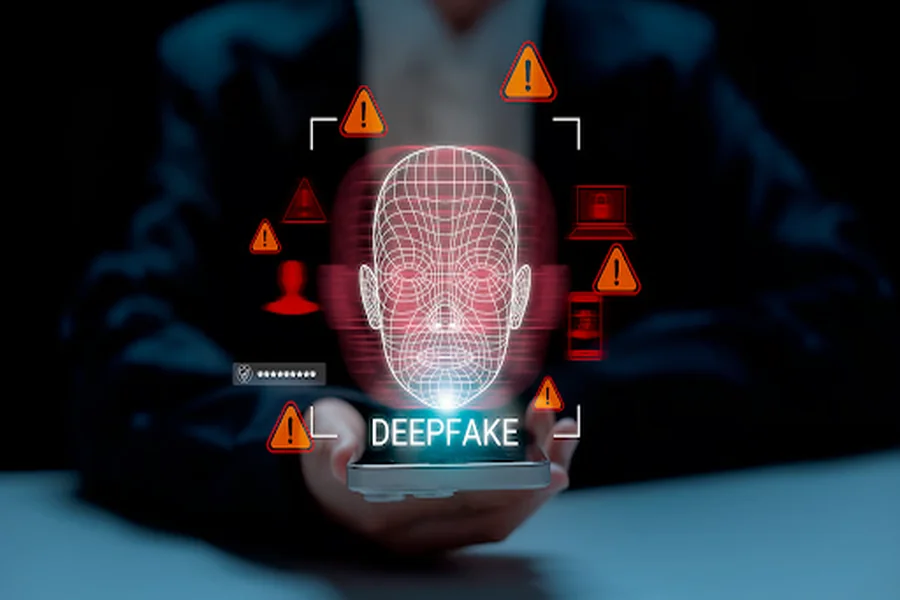
A deepfake is synthetic media generated by artificial intelligence that convincingly imitates a real person, whether in video, audio, or still image form. Understanding what is a deep fake has moved from a curiosity topic to a live enterprise risk. The tools required to produce a convincing fake now sit inside consumer applications, and threat actors are already using them for fraud, extortion, and reputational attack.
How deepfakes actually get made
Modern deepfake generation uses machine learning models trained on real footage of the target. Audio clones can be produced from as little as thirty seconds of clean speech. Video face swaps and full-body reenactments rely on more data, but public figures with hours of recorded footage online are easy targets. Real-time face-swap tools now run on standard consumer laptops, which puts live video deepfakes into the reach of anyone willing to install a few open-source packages.
Text-to-video models close the last gap. An attacker can generate an entirely synthetic clip of a real person saying words they never said, in a setting they were never in, all from a text prompt. Detection based on visual artifacts alone is increasingly unreliable as generation quality improves.
The enterprise threat picture
Group-IB analysts see deepfake abuse across three main categories. First, executive impersonation for financial fraud. A finance team receives what appears to be a video call from the chief executive authorizing an urgent wire transfer, and the money moves before verification catches the fake. Second, customer-facing scams. Deepfake audio calls impersonate bank support agents, telecom representatives, or law enforcement to extract credentials or push victims to move money. Third, reputational attack. Synthetic content depicting an executive or public figure spreads across social platforms during a sensitive news window, and the correction never catches up with the original clip.
Financial services, government, media, and any brand tied to a recognizable public face is exposed. The cost of a single successful deepfake incident routinely exceeds the annual budget for anti-fraud technology at midsize organizations.
Where AI Red Teaming fits
Group-IB AI Red Teaming tests how well an organization detects and responds to synthetic media attacks under realistic conditions. That includes probing the models used to detect deepfakes, the workflows that trigger human verification, and the awareness of frontline staff who might receive a synthetic voice call or video message.
The engagement follows an adversary emulation model. Group-IB analysts build synthetic content targeted at named executives or customer-facing scenarios, deliver it through the same channels a real attacker would use, and measure how far it gets before someone or something catches it. The report identifies which controls held, which failed, and what specific improvements move the needle.
What good detection looks like
Signature-based deepfake detection is losing ground fast because generation models improve faster than detectors can be retrained. What holds up better is a layered approach combining content analysis, behavioral verification, and process control.
Content analysis includes multi-modal detection that looks at facial micro-movements, lip-audio synchronization, biometric consistency, and generation artifacts across the full clip. Behavioral verification adds out-of-band confirmation for any high-value action triggered by video or voice. Process control enforces callback procedures on defined phone numbers, dual approval on wire transfers above threshold, and mandatory verification for any request that arrives through a new channel.
The organizations that combine all three see the strongest results. The ones relying on a single detection tool consistently get caught out by the next generation model release.
How Group-IB extends beyond the red team
Group-IB Fraud Protection watches for the downstream signals of deepfake-enabled fraud. Impossible travel between video call location and transaction location, sudden changes in payment beneficiary details after a call from a familiar number, and behavioral anomalies during authenticated banking sessions all get flagged in real time.
Group-IB Threat Intelligence Platform tracks the underground markets and forums where deepfake services are sold and deepfake campaigns get organized. Alerts when a customer executive appears in a target list, or when a specific voice sample gets requested on a criminal service, give security teams lead time to raise defenses before the campaign lands.
Group-IB Digital Risk Protection monitors social platforms, video hosting sites, and messaging channels for synthetic content depicting the organization, its executives, or its customers. Takedowns move through CERT-GIB relationships when hostile content needs to come down quickly, and the same infrastructure catches impersonation applications and lookalike domains that often accompany deepfake campaigns.
Practical steps for the next quarter
Publish a clear internal policy on how executive requests for money movement or sensitive action get verified. Employees need explicit permission to pause a video call and confirm through a separate channel, and executives need to reinforce that expectation in their own communications. Culture matters more than tooling on this specific risk.
Enforce callback verification on defined phone numbers for any wire transfer, beneficiary change, or credential reset triggered by voice or video. The verification step is deliberately slow, because slowing an attacker is the point.
Invest in employee education focused on the deepfake threat specifically. Generic awareness training will not cover it. Show real examples of synthetic content, walk through the specific lures that target the industry, and rehearse the response steps. Teams that have seen a deepfake in a controlled setting recognize the next one faster than teams that have only read about the risk.
Test your defenses. Group-IB AI Red Teaming, Penetration Testing, and Red Teaming engagements include deepfake and synthetic media scenarios that reflect current adversary tradecraft. The output tells the executive team, the fraud team, and the security operations center exactly where they need to invest to keep pace.
Deepfake risk is not a future problem. It is a present operational reality, and it is compounding faster than most enterprise risk registers are updated. The organizations that name it, test against it, and instrument controls specifically for it are the ones that keep their footing when the first serious incident lands.