
How to Spot a Genuine Leather Sofa (and Avoid Fakes)
Leather sofas are meant to last a decade or more, which is why discovering a fake after you’ve paid for it hurts so much. Walk into a showroom or scroll through a product page and nearly everything is labeled “leather,” yet the material can range from a premium hide to a thin plastic coating on a fabric base. If you want genuine leather sofas that age beautifully instead of peeling after two years, you need to know what to look for. This guide covers simple tests, label decoding, and smart buying tips so you can shop with confidence.
Why Fake Leather Is So Common
Real leather costs more to source, tan, and finish, so manufacturers have created cheaper imitations that look convincing at first glance. The most common are PU (polyurethane) leather, vinyl, and bonded leather, which is made from leather scraps glued together and coated in polyurethane. These materials aren’t always sold dishonestly, but vague labels like “leather-look” or “leather match” often leave buyers assuming they’re getting the real thing.
7 Ways to Spot a Genuine Leather Sofa
- Examine the Grain
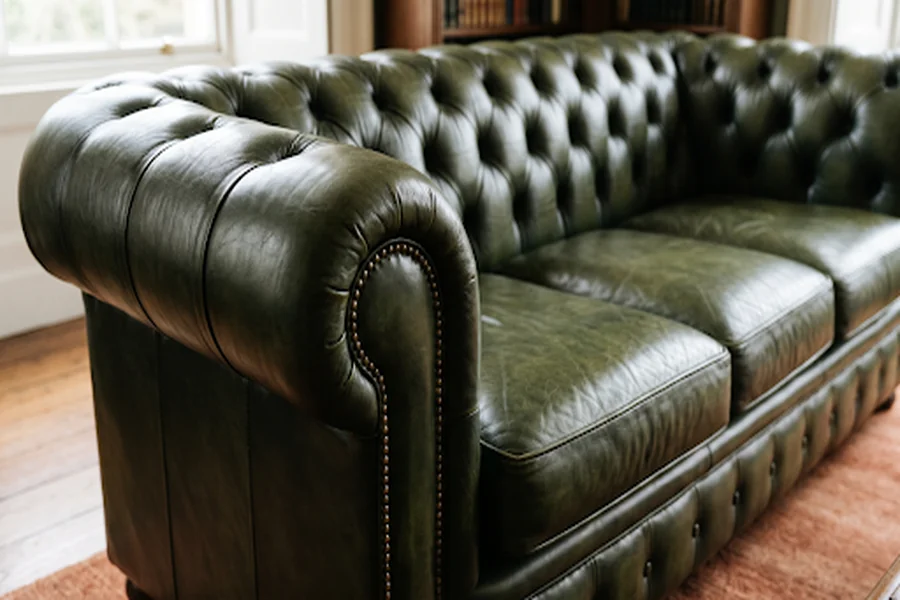
Genuine leather has a natural, slightly irregular grain, with tiny pores, fine lines, and the occasional healed scar. No two areas look identical. Fake leather usually shows a uniform, repeating pattern pressed into the surface by a machine.
- Do the Touch Test
Real leather feels soft and warm, and it warms further under your hand. Faux leather tends to feel cool, smooth, and slightly plasticky or rubbery.
- Press and Watch the Surface
Press a finger into the leather. Genuine hide wrinkles and creases like skin, then slowly relaxes. Synthetic material stretches evenly or springs straight back without natural wrinkling.
- Trust Your Nose
Real leather has a rich, earthy smell. A sharp chemical or plastic odor is a strong sign of synthetic material.
- Check the Edges and Underside
The back of genuine leather has a fibrous, suede-like texture. Faux leather usually reveals a fabric or foam backing, and its cut edges look uniform and layered. If you’re shopping in person, look at an unfinished edge or the underside of a cushion.
- Try the Water Drop Test
Place a tiny drop of water on a hidden area. Unprotected leather, such as aniline, absorbs it slowly and darkens slightly, while many synthetics make the water bead on the surface. Pigmented leather has a protective coating that may repel water, so use this test alongside the others rather than on its own.
- Read the Label Closely
Wording matters. “Genuine leather” sounds premium but is actually a lower grade of real leather. “Bonded leather” is mostly reconstituted fiber. “Leather match” means real leather on the seating surface with vinyl on the sides and back. Always ask: is the entire sofa leather, or only the parts you touch?
Understanding Leather Grades
Knowing the grades helps you compare options and avoid overpaying:
| Grade | What It Is | Durability |
| Full-grain | Top layer of the hide, natural markings intact | Excellent, develops a rich patina |
| Top-grain | Top layer sanded for a smoother, uniform look | Very good |
| Genuine / split | Lower layers of the hide, often heavily coated | Moderate |
| Bonded | Scraps and fiber held together with polyurethane | Poor, prone to peeling |
If you’re searching for the best leather sofas, look for full-grain or top-grain hides.
Red Flags to Watch Out For
- A price that seems too good to be true. Quality hides are expensive.
- Vague product descriptions that avoid naming the leather type or grade.
- No details on construction, such as the frame, springs, and cushion filling.
- A very short warranty, often a sign the maker doesn’t expect the material to last.
- Sample swatches that feel plasticky or already show surface flaking.
Tips for Buying Leather Sofas Online
Shopping for leather sofas online is convenient, but you can’t touch the material, so do your homework:
- Request a swatch. Reputable retailers send free samples so you can run the tests above at home.
- Read the specifications. Look for specific terms like “full-grain” or “top-grain” rather than just “leather.”
- Check the return policy. A fair policy is a sign the seller stands behind the product.
- Look for customer photos. Reviews with real images show how the leather wears over time.
- Compare warranties. Strong coverage on the frame and leather signals confidence.
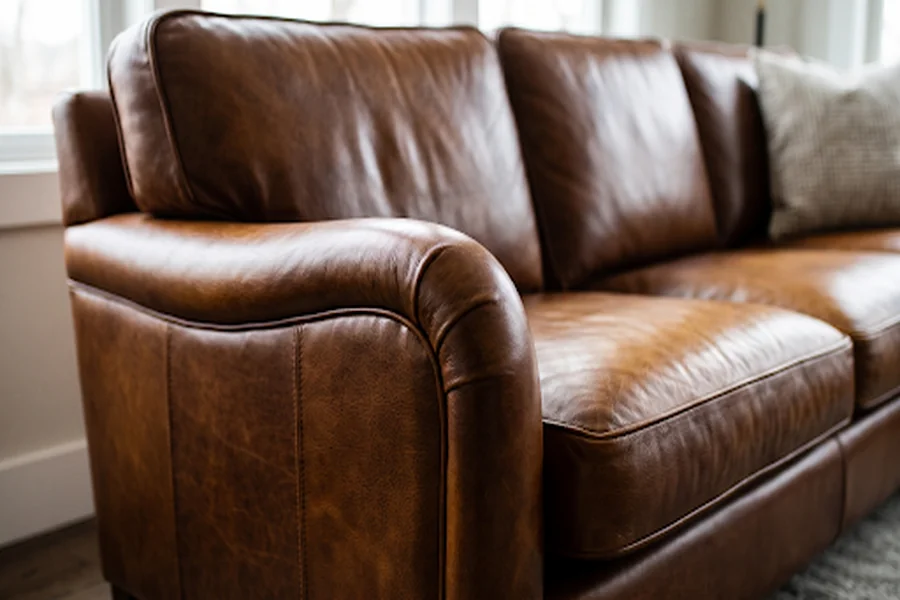
If you’re buying leather sofa sets, confirm that the sofa, armchair, and ottoman use the same hide and finish, so the color and texture match as they age.
What Makes the Best Leather Sofas Worth the Price
The best leather sofas combine quality hide with solid construction. Look for a kiln-dried hardwood frame, a supportive spring system such as eight-way hand-tied or sinuous springs, and high-density foam cushions. A genuine leather cover on a weak frame will still sag, so check what’s beneath the surface as carefully as the upholstery itself. Good construction paired with proper care can keep a leather sofa looking great for well over a decade.
Final Thoughts
Spotting genuine leather sofas comes down to using your senses, reading labels carefully, and asking the right questions before you buy. Check the grain, feel the texture, inspect the underside, and never rely on the word “leather” alone. Whether you’re browsing a showroom or comparing leather sofas online, a little skepticism today saves you from replacing a peeling sofa tomorrow. Keep this checklist handy, and you’ll be well on your way to a sofa that looks better with every passing year.