
Supporting Utilities and Energy Providers with Predictive Maintenance Tools
Are You Ready for the Future of Energy Management?
Utilities and energy providers face a unique set of challenges. Aging infrastructure, increasing demand, and the pressure to maintain uninterrupted service require more than traditional maintenance approaches. What if these companies could anticipate equipment failures before they happen? What if they could prevent costly outages and extend the lifespan of critical assets? Predictive maintenance tools are emerging as a game-changer, helping energy providers stay one step ahead while improving efficiency and safety.
Understanding Predictive Maintenance in the Energy Sector
Predictive maintenance uses real-time data, advanced analytics, and machine learning algorithms to forecast potential failures in equipment before they occur. Unlike reactive maintenance, which addresses issues only after they happen, or preventive maintenance, which follows a scheduled routine, predictive maintenance optimizes maintenance schedules based on actual equipment conditions. This proactive approach is particularly valuable for utilities and energy providers, where downtime can result in significant financial losses and public safety concerns.
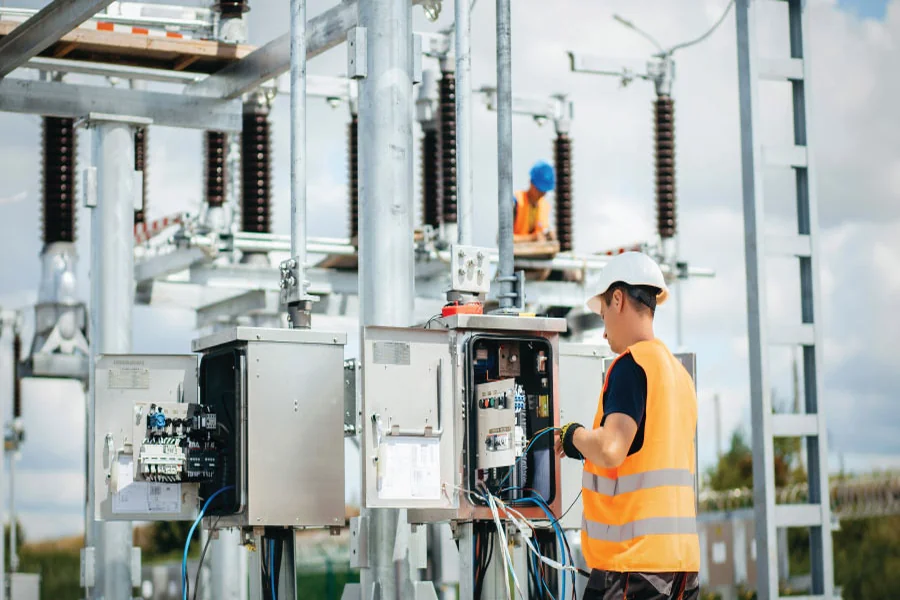
For example, wind turbines, power transformers, and gas turbines are critical assets that can experience wear over time. Predictive maintenance tools monitor vibrations, temperature, pressure, and other operational parameters to detect early signs of degradation. By doing so, energy providers can schedule repairs strategically, avoiding unnecessary downtime and costly emergency interventions. Utilities can benefit even further by implementing software like eWorkOrders, which simplifies asset tracking and maintenance planning while integrating predictive insights seamlessly.
Reducing Operational Costs with Data-Driven Insights
One of the most compelling advantages of predictive maintenance is its ability to reduce operational costs. Traditional maintenance practices often involve replacing parts or servicing equipment on a fixed schedule, regardless of actual wear and tear. This approach can lead to unnecessary maintenance, wasted labor, and inflated costs.
Predictive maintenance relies on accurate data to pinpoint exactly when an asset needs attention. Utilities can avoid premature part replacements and focus their resources on equipment that truly requires intervention. Over time, this data-driven approach results in lower maintenance expenses, improved equipment longevity, and a more predictable budget.
Enhancing Reliability and Minimizing Downtime
Energy providers are expected to deliver consistent and reliable service. Unplanned outages not only disrupt consumers but can also damage the provider’s reputation. Predictive maintenance tools help prevent unexpected failures by identifying potential risks early.
For example, in a power distribution network, monitoring transformers for abnormal temperature spikes or insulation degradation can prevent cascading failures that affect thousands of customers. Similarly, in renewable energy setups, predictive monitoring of wind turbines or solar panel inverters ensures maximum uptime and energy output. By minimizing downtime, utilities can maintain consistent service levels while protecting both their assets and their customers — many of whom are actively seeking a light company with no deposit as a more accessible entry point to reliable energy service.
Safety and Compliance Benefits
Safety is a top priority for utilities and energy providers, as equipment failures can pose serious risks to personnel and the public. Predictive maintenance tools enhance safety by reducing the likelihood of catastrophic failures.
Additionally, many regulatory bodies require detailed maintenance records and risk assessments. Predictive maintenance systems automatically log performance metrics and maintenance activities, simplifying compliance reporting. This not only ensures adherence to industry standards but also provides a clear audit trail in case of inspections or investigations.
Integrating Advanced Technologies
Modern predictive maintenance solutions often integrate IoT sensors, cloud computing, and AI-powered analytics. These technologies collect and analyze massive amounts of data in real-time, offering actionable insights to maintenance teams. For utilities, this means equipment such as gas turbines, boilers, or distribution transformers can be continuously monitored from a central control room.
Some advanced systems also incorporate automated alerts and recommendations. For instance, when a sensor detects a vibration anomaly in a critical pump, the system can automatically notify technicians and suggest corrective actions. This seamless integration allows energy providers to respond quickly and efficiently, avoiding costly interruptions.
Planning for a Sustainable Future
The energy sector is under increasing pressure to adopt sustainable and efficient practices. Predictive maintenance contributes to sustainability by optimizing asset utilization and reducing energy waste. Proactively maintaining equipment ensures that energy generation and distribution systems operate at peak efficiency, lowering emissions and conserving resources.
Furthermore, predictive insights can guide long-term investment decisions. By understanding equipment performance trends, utilities can prioritize upgrades and replacements that offer the best return on investment, supporting a more sustainable energy infrastructure.
Conclusion
Predictive maintenance tools are transforming how utilities and energy providers manage their operations. By leveraging data-driven insights, advanced analytics, and AI technologies, these tools enable proactive maintenance, cost reduction, improved reliability, and enhanced safety. For utilities ready to embrace this technology, the result is not just improved operational efficiency, but a smarter, safer, and more resilient energy future.