
Learning Strategy Through Play: Why Games Still Matter in a Complex World

In a world defined by rapid change, layered systems, and constant decision-making, the ability to think strategically has never been more valuable. From navigating professional environments to managing personal responsibilities, individuals are required to process information, anticipate outcomes, and make choices under varying degrees of uncertainty.
What is often overlooked, however, is where these skills begin. Strategy is rarely developed in high-stakes moments alone. It is built gradually, through repeated exposure to structured thinking, pattern recognition, and decision-making frameworks. One of the most accessible and enduring environments for this kind of development is play.
Games, particularly traditional board games, offer more than entertainment. They create contained systems where decisions have consequences, where rules shape behavior, and where outcomes are influenced by both planning and adaptation. In many ways, they mirror the complexity of real life, but in a form that is easier to engage with and understand.
Play as a Training Ground for Thinking
At first glance, games may appear simple. A board, a set of rules, a clear objective. But within that structure lies a layered system of choices. Every move interacts with previous decisions and shapes future possibilities.
This is where strategic thinking begins to take form. Players learn to evaluate options, consider trade-offs, and anticipate responses. They begin to recognize patterns, what works, what doesn’t, and under what conditions.
Unlike theoretical learning, this process is experiential. It requires participation, not observation. The feedback is immediate. Decisions lead to visible outcomes, reinforcing learning in a way that is both practical and memorable.
Over time, this builds a mindset that extends beyond the game itself. Individuals become more comfortable with complexity, more deliberate in their choices, and more aware of how small decisions can influence larger outcomes.
The Role of Rules in Shaping Behavior
One of the defining characteristics of games is their reliance on rules. These rules create boundaries, establish expectations, and define what is possible within the system.
In real-world environments, similar structures exist, policies, regulations, social norms. Understanding how to operate within these frameworks is a key aspect of strategic thinking.
Games provide a simplified version of this dynamic. They allow players to explore how rules can be followed, interpreted, or leveraged. In doing so, they highlight an important principle: constraints do not necessarily limit strategy, they shape it. A useful example can be found in how players approach specific situations in familiar games. Questions around monopoly jail rules, for instance, often reveal deeper layers of strategy. Being “in jail” may initially seem like a disadvantage, but under certain conditions, it can actually become a tactical position. Players who understand these nuances are better equipped to adapt their approach rather than react at face value.
This kind of thinking, seeing beyond the obvious interpretation of a situation, is directly applicable to real-world decision-making.
Balancing Control and Uncertainty
Another key lesson that games provide is the balance between control and chance. Few environments offer complete predictability. Outcomes are influenced by a combination of planning, timing, and external factors.
Games replicate this balance in a controlled setting. Players must make decisions without full information, adjust to unexpected developments, and remain flexible in their approach.
This builds resilience. Instead of seeking perfect certainty, individuals learn to operate effectively within uncertainty. They develop the ability to make informed decisions even when conditions are not ideal.
This is particularly relevant in modern contexts, where variables are constantly shifting and adaptability is essential.
The Importance of Long-Term Thinking
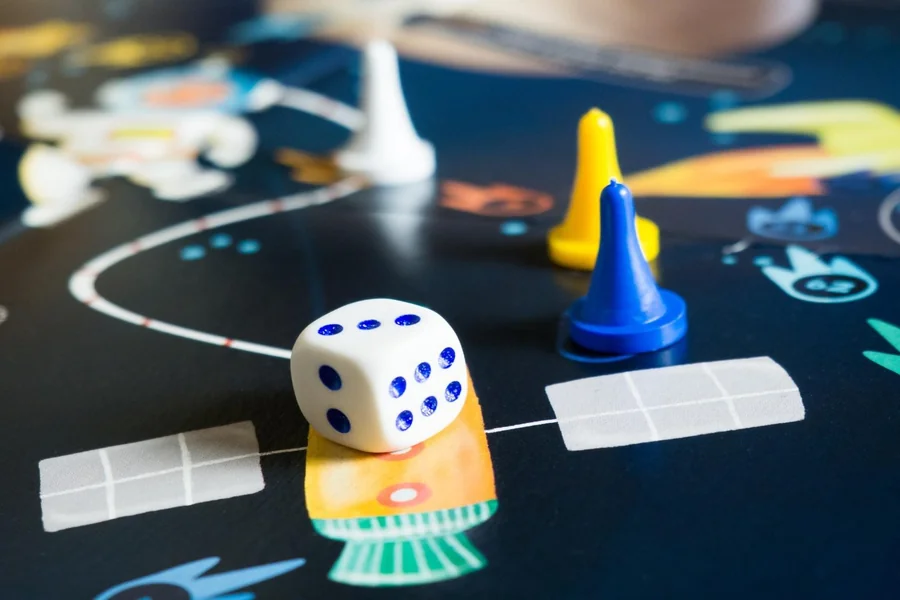
In many aspects of life, the pressure to achieve immediate results can overshadow long-term considerations. Decisions are often made based on short-term gains, without fully accounting for future implications.
Games challenge this tendency. Success often depends on planning several steps ahead, balancing immediate opportunities with longer-term positioning. A move that appears beneficial in the moment may create vulnerabilities later, while a more conservative decision may lead to greater advantage over time.
This encourages a shift in perspective. Players begin to think in sequences rather than isolated actions. They learn to connect decisions across time, understanding how each choice contributes to a broader strategy.
Social Dynamics and Negotiation
Beyond individual decision-making, games also introduce social elements. Interaction with other players adds complexity, requiring communication, negotiation, and interpretation of behavior.
These dynamics are not abstract. They reflect real-world interactions, where outcomes are influenced not only by individual choices but by the actions and responses of others.
Through play, individuals gain experience in reading situations, adjusting strategies, and navigating different personalities. This develops a level of social awareness that is difficult to replicate through theory alone.
Why Games Remain Relevant
Despite advances in technology and the increasing complexity of modern life, the core value of games remains unchanged. They provide a space where individuals can engage with complexity in a manageable way.
According to insights from UNESCO, play continues to play a significant role in cognitive development, cultural exchange, and lifelong learning. It supports critical thinking, creativity, and social interaction, skills that are essential across different contexts.
This reinforces the idea that games are not just recreational. They are educational in a broader sense, contributing to the development of capabilities that extend far beyond the game itself.
From Play to Practice
The transition from game-based learning to real-world application is not always direct, but the underlying principles carry over. Pattern recognition, structured thinking, adaptability, and strategic planning are all transferable skills.
The key is not to treat games as isolated activities, but as opportunities for developing habits of thought. Each decision, each adjustment, and each outcome contributes to a deeper understanding of how systems work.
Over time, this shapes how individuals approach challenges outside of play. They become more intentional, more analytical, and more capable of navigating complexity with confidence.
A Practical Way to Build Strategic Thinking
In a complex world, the ability to think strategically is no longer optional. It is a foundational skill that influences outcomes across personal, professional, and social domains.
Games offer a practical, accessible way to develop this skill. They simplify complexity without removing it, providing a structured environment for experimentation and learning.
The lessons they offer are not confined to the board. They extend into everyday decision-making, shaping how individuals interpret situations, evaluate options, and act with intention. In that sense, play is not separate from reality, it is preparation for it.