
Can a Security Guard Use Pepper Spray in California?
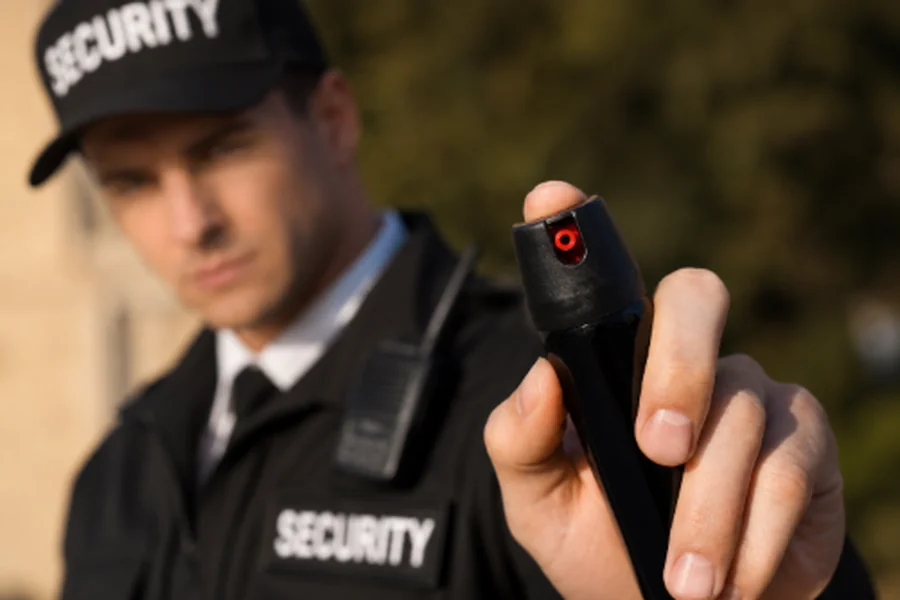
Quick Answer: Yes, a security guard can use pepper spray in California, but only if they are licensed by the Bureau of Security and Investigative Services and employed by a Private Patrol Operator under Penal Code Section 22835. The use must be reasonable, proportionate, and limited to lawful self-defense or defense of others. Proprietary security officers, who work directly for a property owner rather than through a licensed PPO, are prohibited from carrying pepper spray under Business and Professions Code Section 7574.39(b).
The answer to whether a security guard can use pepper spray in California is more nuanced than most articles make it sound. California law distinguishes between contracted security guards working for a Private Patrol Operator and proprietary security officers who work directly for a single employer. The legal authority to carry pepper spray applies only to the first group, and even then only under specific conditions involving training, licensing, and proper use.
This guide breaks down the actual California Penal Code, BSIS regulations, and use-of-force standards that govern pepper spray for security guards. The information here is grounded in the relevant legal sources rather than general assumptions, so guards, employers, and property owners can make informed decisions.
The Legal Framework: California Penal Code Section 22835
California Penal Code Section 22835 specifically authorizes licensed security guards employed by a Private Patrol Operator to possess and carry tear gas weapons, including pepper spray, while on duty. This is the primary statute that grants pepper spray authority to the contracted security industry.
Three conditions must all be true for a security guard to legally carry pepper spray under PC 22835:
- The guard must hold a valid Guard Card issued by the California Bureau of Security and Investigative Services
- The guard must be employed by a licensed Private Patrol Operator (PPO)
- The guard must be on duty at an authorized post
The authority does not extend off duty. A security guard cannot legally carry company-issued pepper spray to a personal location after their shift ends. Off-duty civilian carry falls under different rules described later in this guide.
Are Proprietary Security Officers Allowed to Carry Pepper Spray in California?
Proprietary security officers in California are explicitly prohibited from carrying pepper spray, batons, stun guns, or any other deadly weapon under California Business and Professions Code Section 7574.39(b). This is one of the most commonly misunderstood distinctions in California security law.
The difference between a contracted security guard and a proprietary security officer is fundamental:
- Contracted security guards work for a licensed Private Patrol Operator that contracts out their services to client properties. They fall under PC 22835 and may carry pepper spray with proper training and authorization.
- Proprietary security officers are employed directly by the entity whose property they protect. They are not employed by a PPO. Under BPC 7574.39(b), they may not carry pepper spray, batons, firearms, or any chemical agent.
A property that wants pepper spray on site has only one legal path: contract with a licensed PPO. Hiring proprietary officers and arming them with pepper spray would expose the property and the officers to criminal and civil liability, regardless of any internal company policy.
What Training Is Required Before a Security Guard Can Carry Pepper Spray?
California requires every security guard to complete the BSIS-approved Powers to Arrest and Appropriate Use of Force training before they can be deployed. The current curriculum runs 40 hours and covers de-escalation, citizen’s arrest authority, the use-of-force continuum, and chemical agent handling. The BSIS training manual is the authoritative source for this curriculum.
Additional training requirements specific to pepper spray include:
- Product-specific instruction on the chemical composition and effects of oleoresin capsicum
- Proper deployment distance and technique
- Decontamination and medical response procedures after deployment
- Documentation requirements for any deployment incident
- Employer-specific use-of-force policy training
Most reputable Private Patrol Operators require ongoing refresher training every 12 months, even though state law does not specifically mandate it. The training history matters because every pepper spray deployment can become a court matter, and gaps in documented training are one of the first things plaintiff’s attorneys probe in civil suits.
When Can a Security Guard Legally Use Pepper Spray?
A security guard in California can legally use pepper spray only when the use meets the legal standard for reasonable force in self-defense or defense of others. The standard comes from California Penal Code Section 692, which authorizes lawful resistance to a public offense, and from Penal Code Section 693, which sets the proportionality requirement.
The use must satisfy four conditions:
- Imminent threat. The threat of harm must be immediate, not speculative or anticipated.
- Reasonable belief. A reasonable person in the same situation would have perceived the threat the same way.
- Proportionality. The level of force used must match the level of threat. Pepper spray is generally considered intermediate force.
- Lawful purpose. The deployment must be in defense of self, others, or in the course of a lawful citizen’s arrest under California Penal Code Section 837.
Pepper spray cannot be used as a punishment, an intimidation tool, or a method to gain compliance from someone who is not actively threatening harm. Deploying pepper spray on a person who is verbally rude, who has refused to leave property, or who is fleeing without posing a threat falls outside the legal use standard and creates both criminal exposure under Penal Code Section 22810 and civil liability for assault or battery.
The Civilian Pepper Spray Rules That Also Apply to Off-Duty Guards
When a security guard is off duty, they are subject to the same pepper spray rules as any other California civilian under Penal Code Section 22810. These civilian rules are separate from the on-duty authority granted by PC 22835.
California civilian pepper spray rules include:
- Must be 18 or older (or 16-17 with parental consent)
- Maximum container size of 2.5 ounces net weight
- Cannot be possessed by individuals with felony or assault convictions
- Cannot be possessed by individuals previously convicted of misusing pepper spray
- Use is limited to self-defense in response to immediate threat
- Cannot be carried in airports, schools, or certain government buildings
Misuse penalties under PC 22810 include fines up to $1,000 and imprisonment up to three years. The penalties are higher when the spray is used during the commission of another crime or against a peace officer.
Documentation Requirements After a Pepper Spray Deployment
Every pepper spray deployment by a security guard in California must be documented in detail. The documentation protects the guard, the employing PPO, and the property where the deployment occurred. Inadequate documentation is one of the primary factors that turn a justified deployment into a successful civil claim against the security company.
A complete deployment report should include:
- Date, time, and exact location of the incident
- Identity and description of the subject
- The specific behavior and threat that justified deployment
- Distance and angle of deployment
- Witness names and statements
- Medical response provided to the subject after deployment
- Law enforcement notification and case number
- Photographic evidence where appropriate
- The guard’s training record and authorization documentation
The report should be completed within hours of the incident, while details are fresh. Reports drafted days later or after consultation with attorneys carry less evidentiary weight in subsequent civil or criminal proceedings.
Civil and Criminal Liability for Improper Use
A security guard who deploys pepper spray outside the legal use standard faces both criminal exposure and civil liability. The criminal charges typically fall under Penal Code Section 22810 (unlawful use of tear gas), Penal Code Section 240 and 242 (assault and battery), and depending on circumstances, Penal Code Section 245 (assault with a deadly weapon).
Civil claims commonly include:
- Battery and assault
- Negligence and negligent training
- False imprisonment
- Intentional infliction of emotional distress
- Vicarious liability against the employing PPO
- Negligent supervision or hiring claims against the property owner
The PPO that employs the guard typically becomes a co-defendant in any civil action because California recognizes the employer’s vicarious liability for actions of guards within the scope of employment. This is one of the reasons reputable PPOs invest heavily in training, supervision, and ongoing certification.
How Property Owners Should Think About Pepper Spray on Their Site
Property owners who hire contracted security in California should understand whether their guards are authorized and trained to carry pepper spray, and whether that authorization fits the property’s risk profile. A high-traffic commercial property with a documented history of confrontational incidents may benefit from guards with full intermediate-force training. A quiet residential property may be better served by unarmed guards focused on access control and documentation.
Questions a property owner should ask the PPO before signing a contract:
- Are the guards assigned to this property authorized to carry pepper spray?
- What training have they completed beyond the BSIS minimum?
- How often is refresher training conducted?
- What is the company’s documentation protocol after a deployment incident?
- What insurance coverage is in place for use-of-force claims?
- What is the company’s history of deployment incidents and outcomes?
The answers separate established Private Patrol Operators from companies that treat pepper spray as a checkbox rather than a serious responsibility.
The Bottom Line on California Pepper Spray Law for Security Guards
California law allows security guards to use pepper spray, but only within a tight framework: the guard must be BSIS-licensed, employed by a Private Patrol Operator under Penal Code Section 22835, properly trained, on duty at an authorized post, and using the chemical agent only in lawful self-defense or defense of others. Proprietary security officers, civilians, and off-duty guards are governed by different rules entirely.
The rules exist because pepper spray, while less than lethal, is genuinely capable of serious harm when misused. California has built a layered system of licensing, training, and accountability around the tool, and the system works only when employers, guards, and property owners all understand and respect the framework.
Guardian National Security is a fully licensed California Private Patrol Operator, holding California PPO License #120268, providing BSIS-licensed security services across Southern California since 1997. For property owners researching California security law, our team is available to discuss what coverage and authorization fit your specific property at our Los Angeles security guard services page.