
How Wheel and Tire Packages Support Larger Tire Fitment After a Lift
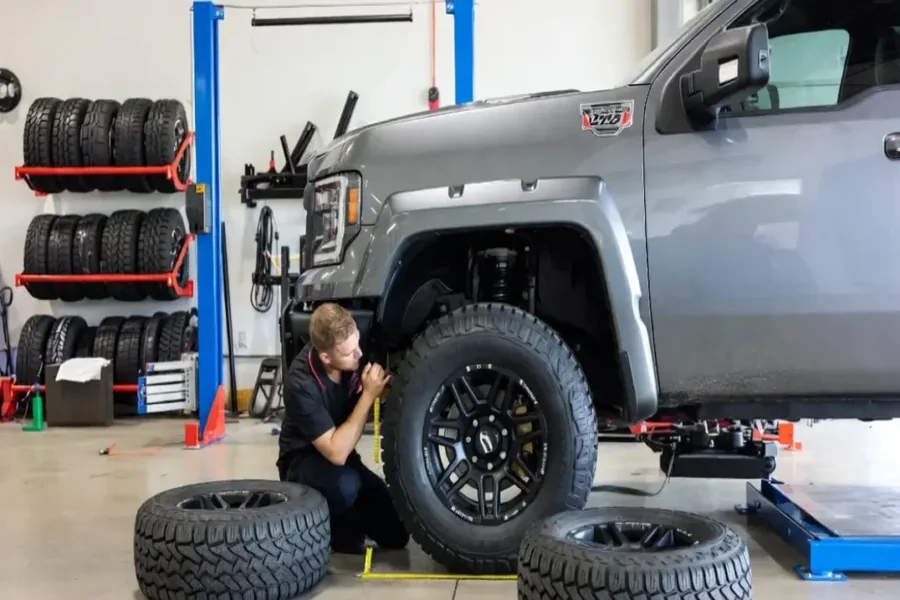
Installing a suspension lift or leveling kit is often the first step toward giving a truck, Jeep, or SUV a more capable stance. However, additional ride height alone does not guarantee that a larger tire will fit correctly. Wheel width, offset, backspacing, suspension travel, steering clearance, and vehicle-specific geometry all influence the final setup.
Properly selected wheel and tire packages can simplify the process by pairing compatible wheels and tires for a particular vehicle and modification level. Instead of treating wheels, tires, and suspension as unrelated upgrades, owners can plan them as parts of one complete system.
This coordinated approach is especially important when moving from factory tires to popular 33-inch, 35-inch, or 37-inch off-road tires. A correctly matched combination can provide the desired appearance and trail performance while helping reduce rubbing, unwanted steering changes, and premature component wear.
Clearance Gains That Allow 33”, 35”, and 37” Tire Options
A lift increases the distance between the vehicle’s body and axles, creating additional room within the wheel wells. That extra space can help accommodate a tire with a larger overall diameter, but lift height is only one part of tire clearance.
Thirty-three-inch tires are a common starting point for owners who want a more aggressive look and better off-road traction without making extreme changes. Depending on the vehicle, factory suspension design, and wheel specifications, 33-inch tires may fit with a modest leveling kit or suspension lift. They can deliver increased ground clearance while remaining manageable for a daily-driven truck or Jeep.
Moving to 35-inch tires generally requires more careful planning. The added diameter and width can bring the tire closer to fender liners, control arms, sway bar components, and body mounts. Clearance should be checked at full steering lock and throughout the suspension’s range of travel. A tire may appear to fit while the vehicle is parked but rub when turning, braking, or articulating on uneven terrain.
Thirty-seven-inch tires are frequently chosen for more specialized off-road builds. Their larger footprint can improve obstacle clearance and traction, but they also add rotating mass and place greater demands on the suspension, steering, brakes, axles, and drivetrain. Depending on the application, supporting upgrades such as axle gearing, stronger steering components, extended brake lines, or modified fenders may be appropriate.
Wheel selection helps determine where the tire sits in relation to the suspension and body. Wheel diameter and width must suit the tire manufacturer’s approved specifications, while offset and backspacing affect the tire’s inboard and outboard position. Options such as method wheels give off-road enthusiasts choices in wheel size, construction, load rating, offset, and design for different vehicle builds.
Too much positive offset may position a wide tire close to suspension parts. Excessively negative offset can push it beyond the fender and increase contact with the outer wheel opening during turns or suspension compression. Moving the tire farther outward can also change steering feel and increase leverage on wheel bearings and related components. The most aggressive-looking fitment is not always the most functional one.
Terrain should also guide tire selection. An all-terrain tire may be well suited to highway driving, gravel roads, and occasional trail use, while a mud-terrain tire can provide a more aggressive tread pattern for loose dirt, mud, and rocky surfaces. Tire weight, sidewall construction, tread design, and load rating should be evaluated alongside size.
Suspension Geometry Considerations That Maintain Safe Handling
Raising a vehicle changes more than its appearance. A suspension lift can alter control-arm angles, caster, camber, toe, axle position, track-bar geometry, and driveshaft angles. If these changes are not addressed, the vehicle may develop vague steering, pulling, vibration, bump steer, or uneven tire wear.
A vehicle-specific bilstein leveling kit may be suitable for owners seeking a more level stance and room for a moderately larger tire. As with any suspension modification, the correct application should be chosen based on the vehicle’s year, make, model, drivetrain, and intended use.
For taller lifts, additional parts may be required to restore suspension and steering geometry. Adjustable control arms can help correct axle position and caster, while track bars or relocation brackets can recenter an axle under the vehicle. Longer shocks, extended sway bar links, and bump-stop adjustments may be needed to maintain controlled suspension travel.
Alignment is essential after installing a lift or leveling system. Toe and caster settings influence straight-line tracking, steering return, and tire wear. Even if a vehicle feels acceptable immediately after installation, incorrect alignment can gradually damage an expensive set of larger tires.
Owners should also consider how the added tire weight affects braking and acceleration. Heavier wheels and tires take more energy to start and stop. Maintaining proper tire pressure, choosing an appropriate load range, and verifying adequate brake performance can support predictable handling.
Final fitment should be checked dynamically rather than judged only by parked clearance. The steering should be turned fully in both directions while the suspension is inspected for possible contact. Off-road vehicles should also be checked under compression and articulation because the tire follows a changing path through the wheel opening as the suspension moves.
The best lifted setup balances clearance, wheel position, suspension geometry, tire performance, and everyday drivability. By selecting wheels and tires together and accounting for the effects of the lift, owners can create a cohesive build that supports larger tire fitment without overlooking safe handling or long-term reliability.