
Five Components Every Classic Car Restoration Project Will Need
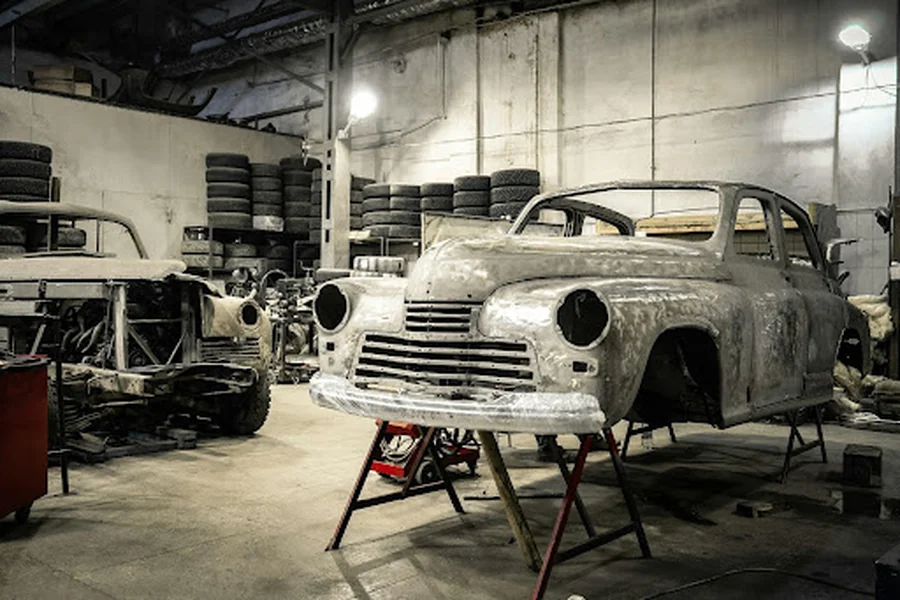
There is a particular kind of daydream that ends with a classic car parked on your driveway. Maybe it is a rumbling old MGB, a squared-off Mercedes W123, a Series Land Rover with a wild personality. Whatever the shape of the fantasy, the appeal is the same. Cars from the sixties, seventies and eighties have character that modern vehicles rarely match, and prices for well-kept examples have held up remarkably well.
The problem starts when you actually buy one. Even a car that looks tidy in the photos is almost certainly hiding tired components underneath, and the difference between a running restoration and a full nut and bolt rebuild often comes down to what you find in the first month of ownership. If you are eyeing up a classic for next spring, here are five things you should assume will need work, whatever the seller tells you.
1. Engine mounts and rubber bushes
Rubber does not like time. It does not particularly like heat, oil, ozone or ultraviolet light either, and a classic car engine bay serves up all of the above on a daily basis. Engine mounts, gearbox mounts, suspension bushes and steering rack bushes are almost always the first components to quietly give up on a restored car, and their condition rarely correlates with mileage. A car that has covered five hundred miles a year for two decades will often have worse rubber than one that has been driven regularly, because the rubber has had two decades of dry rot rather than two decades of exercise.
The symptoms are easy to feel once you know what you are looking for. A clunk on the drivetrain when you lift off the throttle, a low-frequency vibration through the pedals at idle, a steering wheel that feels vague on turn-in. All of these usually trace back to perished rubber somewhere in the chassis. Owners of common British and European classics can often source pattern parts from specialist parts houses, but if your project is anything more unusual you will probably want to talk to a specialist engine mount manufacturer who can make replacements to the original pattern. It is a job that is easy to put off and immediately noticeable once it is done.
2. The brake system
Brakes on a classic are almost never as good as you hope. Even a car with recent service history will usually have flexible hoses that have hardened, master and slave cylinders with weeping seals, and brake fluid that has quietly absorbed water from the atmosphere for the last five years. Fluid is hygroscopic, which is a polite way of saying it turns into a slow-motion corrosion problem inside your brake lines.
The good news is that the parts are cheap. The bad news is that “just refresh the brakes” tends to become a full overhaul once you have the wheels off. Budget for hoses, cylinders, pads, discs or shoes, plus a full fluid flush at minimum. On drum-braked cars, do not be surprised if the wheel cylinders need replacing outright. Modern DOT 4 fluid and stainless braided hoses are the sensible upgrades if the purists in your life will let you get away with it.
3. Fuel system
Older fuel tanks rust from the inside out. This is usually invisible until a flake of rust makes its way into a carburettor float bowl and the engine starts hesitating on a warm afternoon. Fuel lines harden, gaskets weep, and the ethanol content in modern unleaded petrol is enthusiastically unkind to older rubber and brass components that were never designed for it.
If the car has sat for more than a year, plan on dropping the tank to inspect it, replacing all the rubber lines and rebuilding the carburettors with a kit that includes ethanol-resistant seals. Fuel pumps on older cars are often mechanical and easy to overhaul, but electric pumps of a certain vintage are worth replacing outright. It is one of the least glamorous jobs in a restoration and one of the most rewarding once the engine starts pulling cleanly again.
4. Wiring and electrics
Every classic car owner has a wiring story. Insulation on old looms cracks, earths corrode into a chalky mess, and Lucas electrics on British cars have earned their reputation for a reason. Dynamos struggle to keep up with the demands of modern driving, alternators of a certain age just fail, and the switches on the dashboard develop personalities of their own.
Do not underestimate this one. It is often the most boring job in a restoration, the hardest to price up in advance, and the one that quietly becomes a fire risk if you ignore it. If the loom looks tired, you have three sensible options. Rewire section by section as things fail, source a reproduction loom for common models or hand the whole thing to an auto electrician for a full replacement. All three are valid. Living with dodgy wiring is not.
5. Bodywork and structural rust
Rust is the great classifier of classic cars. Surface rust on a bonnet is a paint job. Bubbling around a wheel arch is a welding job. Rot in the sills, floor pans, inner wings, chassis rails or suspension mounting points is a full restoration project, and this is where a lot of bargain classics reveal themselves to be very expensive projects in disguise.
A pre-purchase inspection with a torch, a magnet and a screwdriver will tell you most of what you need to know. Ask the seller’s permission first, then check the underside carefully. Fresh underseal on an older car is worth investigating rather than admiring. It is often hiding something the seller would rather you did not find. If you are buying at auction or unseen, factor in a structural survey as part of the purchase cost.
A last piece of advice
The unifying theme across these five components is that mechanical honesty matters more than cosmetic tidiness. A shabby car with sound underpinnings is almost always a better project than a shiny car with mystery underneath. Budget for at least twenty percent more than your headline restoration estimate. Prioritise safety and structure over paint and chrome, and find specialist suppliers for each system rather than trying to source everything from a single generic parts catalogue.
Do all of that, and the daydream on the driveway starts looking a lot more like the daydream you had in the first place.