
How To Choose A Gold Detector For Your Terrain, Targets, And Skill Level
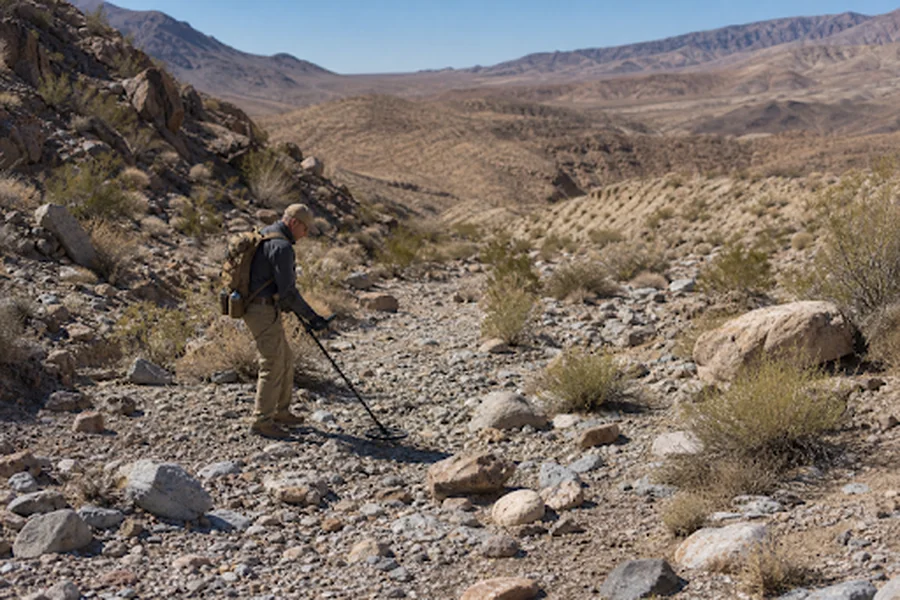
Choosing a gold detector is easier when you begin with the places you expect to search rather than a list of advertised features. A detector that performs well in mild soil and open washes may become noisy or difficult to use on hot, iron-rich ground.
The best setup also depends on the size of gold you expect to find, how much ground you need to cover, and how comfortable you are adjusting controls in the field. No detector can guarantee a find, but a sensible match between technology, coil, terrain, and user skill can make each outing more productive.
Why Detector Choice Matters
Natural gold is hard to find because it occurs as tiny flakes, irregular pieces, or small nuggets, often mixed with mineralized soil, hot rocks, iron trash, and black sand. Small gold produces weak signals, and difficult ground can cause signals that mimic targets. Knowing the differences between placer and hard-rock deposits helps narrow search areas, as prospecting methods vary by deposit type. A general detector can find some gold, especially larger pieces near the surface, but a dedicated gold detector offers better sensitivity, ground-balance, and coil options for small targets or tough soil.
Start With The Terrain
Terrain should guide the purchase. Dry desert washes can be open and easy to sweep, but they may contain mineralized gravels. Rocky slopes require a coil that can work close to uneven ground. Creek edges, old tailings, and exposed bedrock often reward slow, controlled searching instead of broad coverage.
Questions To Ask Before Choosing A Detector
- Is the soil mild, iron-rich, or heavily mineralized?
- Are hot rocks common in the area?
- Will you search near water or in wet ground?
- Is the terrain open, brushy, rocky, steep, or littered with metal trash?
- Are you seeking fine flakes, small nuggets, or potentially deeper pieces?
Compare Detector Technologies
High-Frequency VLF
Very low frequency, or VLF, detectors are commonly chosen for sensitivity to small, shallow, low-conductivity targets. Many are approachable for newer prospectors because their controls and target responses can be easier to understand. In strongly mineralized ground, though, a VLF detector may require more frequent ground balancing and sensitivity adjustments. A smaller coil can sometimes help reduce the amount of difficult ground seen at once.
Pulse Induction
Pulse-induction detectors are widely used in areas of severe mineralization because they remain more stable where VLF machines struggle. They can also be a strong option when larger or deeper gold is possible. The trade-offs may include higher cost, more weight, less ability to reject unwanted metal, and a greater need to learn subtle audio responses.
Multi-Frequency Systems
Multi-frequency systems offer flexibility for users who want a single detector for both gold prospecting and general detecting. They are not automatically the best answer for every goldfield, but adjustable modes and ground settings can make them practical for varied conditions.
Match The Detector To Target Size
- Fine gold and tiny flakes: Prioritize high sensitivity, stable ground balance, and a small coil. The trade-off can be less depth on larger targets.
- Small nuggets: Look for dependable sensitivity, adjustable ground balance, and careful coil control.
- Larger or deeper nuggets: Consider pulse-induction performance, suitable larger-coil options, and clear audio response. Expect a higher price or learning curve.
- Mixed targets: Flexible modes and useful target information can help, although a general-purpose machine may not match a dedicated gold detector in extreme soil conditions.
Choose The Right Search Coil
A smaller coil can improve target separation in rocky ground, brush, and trashy patches while remaining sensitive to very small targets near the surface. A larger coil covers more ground with each sweep and may improve response to larger targets when soil conditions allow. Elliptical coils can be useful where space is tight or bedrock is uneven. A second coil is often more valuable than chasing a single do-everything coil.
Consider Skill Level And Comfort
New prospectors should prioritize clear instructions, simple controls, automatic ground balance, and manageable weight. Practice on known targets before exploring unfamiliar ground. Experienced users might use manual ground balance, threshold control, recovery speed, and specialized coils, but adjustments are only helpful if addressing a specific problem. Comfort is vital; a balanced, lightweight detector you can sweep for hours often outperforms heavier, more advanced models that cause fatigue or stay in the vehicle.
Build A Simple Field Plan
- Research the geology, land ownership, and access status before traveling.
- Check the rules that apply to the specific land manager and location.
- Test the detector over clean ground, then ground-balance whenever soil conditions change.
- Sweep slowly, keep the coil level, and keep it close to the surface.
- Search in a pattern, mark productive patches, and revisit them from another direction.
- Record settings, soil conditions, target types, and recovery results for future trips.
Land rules are location-specific. On some BLM-managed land, recreational collecting with hand tools and metal detectors may be allowed when it causes only minor disturbance, but closures, claims, local restrictions, and private mineral rights can change what is permitted. Review the applicable guidance before you go, including the Bureau of Land Management’s information on collecting gold and mineral specimens.
Pack The Right Recovery Tools
- A pinpointer for locating targets in loose soil.
- A hand pick or digging tool for compact ground.
- A scoop for dry wash material and gravel.
- A gold pan and classifier for checking and sorting sediment.
- Magnets, sample containers, gloves, water, sun protection, first-aid supplies, and reliable communication.
A detector and a gold pan serve different jobs. The detector helps locate buried metal targets, while panning helps test loose sediment and recover fine material from it.
Avoid Common Buying Mistakes
- Buying only on maximum-depth claims.
- Ignoring mineralization and hot rocks.
- Choosing a coil that is too large for tight, uneven, or trashy ground.
- Assuming a higher price guarantees more finds.
- Overlooking weight, balance, warranty, service, and accessory compatibility.
- Expecting every signal to be gold instead of practicing careful recovery.
Common Questions
What Type Of Detector Is Best For Small Gold?
A sensitive high-frequency VLF detector can be a practical option for small, shallow gold in manageable soil. In harsher ground, stable operation and effective ground balance may matter more than frequency alone.
Is Pulse Induction Better Than VLF?
Neither is best in every setting. VLF can be excellent for small gold, while pulse induction is often favored for severe mineralization and deeper targets.
Does A Larger Coil Detect Deeper Gold?
It may improve coverage and response on larger targets in suitable ground, but it can also increase ground noise and make tiny targets harder to isolate.
Conclusion
The right gold detector is the one that fits your terrain, expected target size, budget, and ability to use it well. Begin with the ground, choose a sensible coil, learn the controls, follow access rules, and work promising areas carefully. Preparation and patient field habits remain essential parts of every successful prospecting setup.