
Warehouse Safety Depends on Knowing Exactly Where Your Lone Workers Are
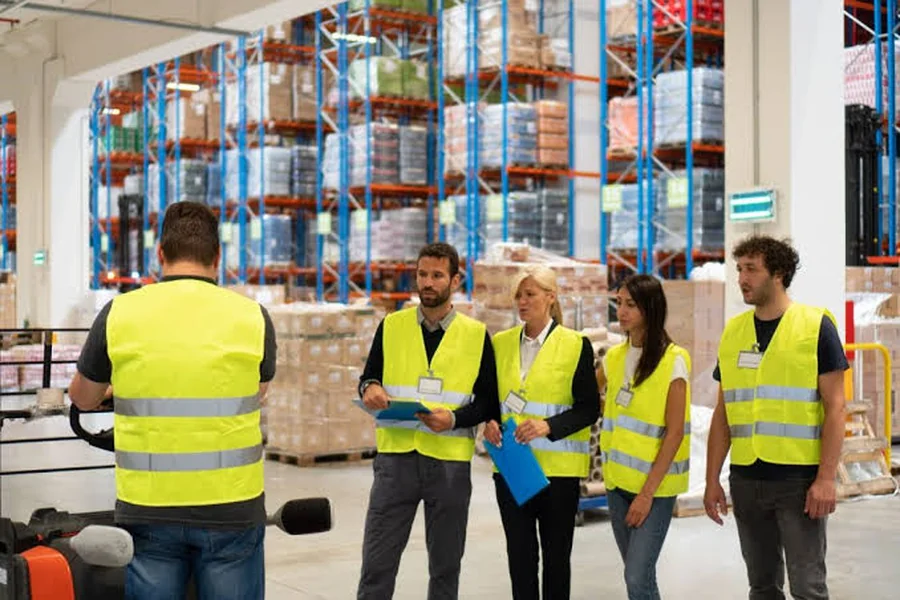
Industrial sites rarely fail in obvious places rather they fail in the quiet corners: the roof access corridor, the sub-basement pump room, the far end of the overflow warehouse, or the aisle where radio coverage fades behind steel.
On a normal day, that separation looks like efficiency. During an incident, it becomes the gap between a fast response and a preventable escalation. Effective lone worker safety is not a compliance slogan. It is the discipline of removing uncertainty when a worker is out of sight, out of earshot, or unable to call for help.
That is why modern industrial operations cannot rely on manual check-ins, memory-based protocols, and radios that behave differently from one zone to the next. If you do not know where people are when something goes wrong, you are not managing safety. You are hoping the system holds.
The Real Cost of the Places Your Safety Program Cannot See
Every facility has zones that receive less attention than the production line. Some are visited only during maintenance. Others are crossed briefly by operators, cleaners, contractors, or technicians working through a shift plan.
The problem is not that these areas exist. The problem is that many safety programs treat them as if supervision, radio contact, and line-of-sight awareness still apply. In practice, they often do not.
Once a worker is down or unresponsive, time becomes the most expensive variable in the building. Injuries worsen, response teams lose precision, production pauses, and the investigation begins with the same uncomfortable question: how long were they alone before anyone knew?
Why Check-Ins and Radios No Longer Carry the Risk
For years, the answer was simple: send two people instead of one. That approach may reduce exposure, but it also consumes scarce labor and slows teams that are already stretched across maintenance, operations, and compliance demands.
Manual check-ins create a similar weakness. They depend on the worker remembering, the supervisor noticing, the radio connecting, and the absence being treated as urgent. That is too many assumptions for the moment when the system is supposed to be strongest and this is where RTLS Digital Twin steps in.
What Happens When Communication Fails
Picture a maintenance technician inspecting equipment on a roof, in a utility corridor, or beside a chiller far from the main floor. The task is routine. The location is not.
If that worker slips, experiences a medical event, or becomes trapped, the radio may not be within reach. Even if it is, the worker may not be able to use it. In that moment, the safety process has to work without waiting for a voice call.
Legacy protocols usually discover the problem late: after a missed check-in, a delayed escalation, or a supervisor walking the route manually. By then, the organization is not responding to an alert. It is reconstructing what already happened.
Real-Time Alerts Only Matter If They Lead to Real-World Action
Control rooms already carry a heavy information burden. Managers watch production, equipment health, staffing, alarms, and exceptions across multiple screens. Adding another dashboard is not the same as improving response.
The goal is not more data. The goal is cleaner signal. A lone worker alert should identify who needs help, where they are, what triggered the alert, and which response path gets assistance there fastest.
The strongest systems convert location into action. A man-down event should surface exact coordinates, map the worker to a known zone, and route the nearest responder to the right aisle, stairwell, roof hatch, or catwalk without a search party guessing where to start.
How to Choose RTLS Without Creating Another Closed System
The technology decision is where many safety upgrades lose momentum. Vendors promise visibility, then ask teams to rebuild their infrastructure around one proprietary stack, one tag type, or one narrow deployment model.
Operations leaders know how this ends: short tag battery life, patchy coverage, unreliable performance around metal, and a growing list of exceptions that require more hardware than the original business case allowed.
A safety system should not become another lock-in problem. It should fit the facility, the interference profile, the risk zones, the response process, and the technologies already working on the floor.
For isolated teams, that means choosing sensors, tags, and infrastructure that can hold up under industrial conditions while integrating cleanly with existing systems. The foundation is a reliable, properly designed Real-Time Location System that turns location data into operational confidence.
From Worker Visibility to Safer, Smarter Floor Operations
LocaXion approaches RTLS as an operational system, not a tracking feature. As a pure-play RTLS and Digital Twin systems integrator, the focus is on engineering visibility around business outcomes: safer response, cleaner workflows, and faster time-to-value.
Because the solution is not locked to one technology stack, teams can design around the realities of the site instead of forcing the site to adapt to a vendor’s limits. That flexibility matters when coverage, interference, integrations, and scale determine whether the system becomes useful or ignored.
RTLS can track assets and people. The bigger opportunity is to use that visibility to change how the operation responds, prioritizes, and protects the people moving through it.
That is the difference between installing another dashboard and building a safety layer the floor can actually trust.
If your lone worker program still depends on delayed check-ins and uncertain coverage, it is time to engineer a more dependable outcome with LocaXion: https://locaxion.com/