
Can AI Replace Human Jobs Completely? A Realistic View
Introduction
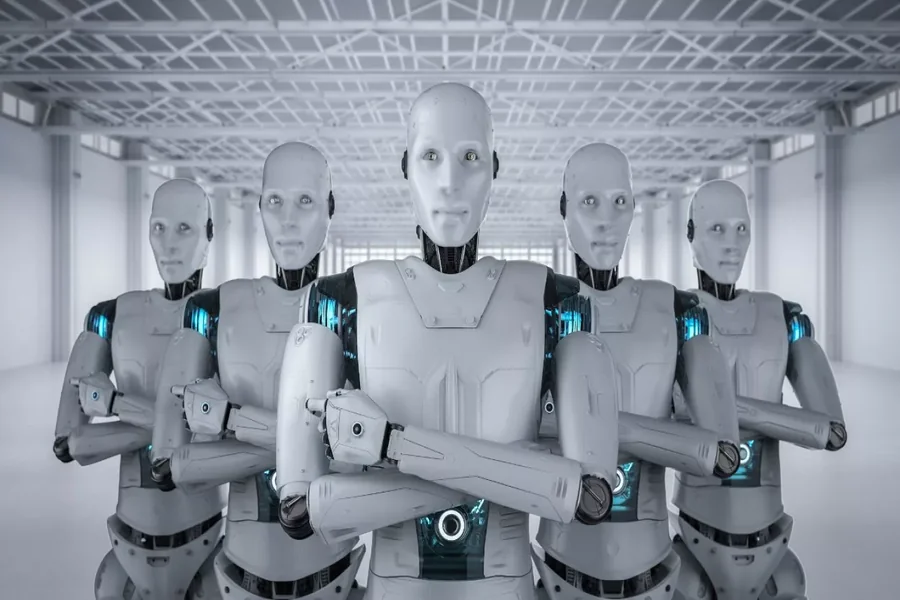
Can AI replace human jobs completely? This question has become increasingly common as artificial intelligence continues to reshape industries, automate tasks, and redefine how work gets done. From chatbots handling customer service to algorithms diagnosing diseases, AI seems to be everywhere. But while the pace of innovation is impressive, the idea of machines fully replacing humans in the workforce is far more complex than it appears.
Rather than a simple yes or no, the reality lies somewhere in between. AI is transforming jobs, not eliminating humanity’s role altogether. To understand this better, we need to explore what AI can do, where it falls short, and how humans still bring unique value to the table.
The Rise of AI in the Workplace
Artificial intelligence has grown rapidly over the past decade. Businesses are adopting AI tools to increase efficiency, reduce costs, and improve accuracy. Tasks that once required hours of manual effort can now be completed in seconds.
For example, AI can analyze massive datasets, detect patterns, and make predictions with remarkable precision. In manufacturing, robots assemble products faster than humans. In finance, algorithms can detect fraud instantly. Even creative fields like writing and design are seeing AI-assisted tools becoming mainstream.
This rise has naturally sparked concerns about job loss. When machines can perform tasks faster and cheaper, it raises the question: what happens to human workers?
However, it’s important to note that technological advancement has always disrupted jobs. The industrial revolution replaced many manual labor roles but also created entirely new industries. Similarly, AI is not just removing jobs—it is reshaping them. For more information you can visit techpora.
Jobs Most Likely to Be Affected by AI
Not all jobs are equally vulnerable to automation. AI tends to excel in tasks that are repetitive, predictable, and data-driven.
Roles that involve routine activities are the most at risk. For instance, data entry, basic customer support, and assembly line work can be automated with relative ease. These tasks follow clear rules and require minimal human judgment, making them ideal for AI systems.
In contrast, jobs that require emotional intelligence, creativity, and complex decision-making are much harder to automate. Professions like teaching, counseling, leadership roles, and artistic work rely heavily on human qualities that AI struggles to replicate.
Even within a single profession, AI may only replace certain tasks rather than the entire job. For example, in healthcare, AI can assist doctors by analyzing medical images, but it cannot replace the human connection and ethical judgment required in patient care.
Why AI Cannot Fully Replace Humans
Despite its capabilities, AI has significant limitations that prevent it from completely replacing human jobs.
One major limitation is the lack of true understanding. AI can process information and generate responses, but it does not genuinely “understand” context the way humans do. It relies on patterns and data rather than lived experience.
Another key factor is emotional intelligence. Humans can empathize, build relationships, and navigate complex social situations. These skills are essential in many professions, from management to healthcare. AI, on the other hand, can simulate empathy but cannot truly feel or connect.
Creativity is another area where humans still have the edge. While AI can generate content, it often lacks originality and deeper meaning. Human creativity is influenced by culture, emotions, and personal experiences—elements that machines cannot replicate.
Ethical judgment is also critical. Many decisions in the workplace involve moral considerations that go beyond data. Humans can weigh consequences, consider fairness, and make nuanced choices, whereas AI operates within predefined rules.
The Shift Toward Human-AI Collaboration
Instead of viewing AI as a replacement, it is more accurate to see it as a collaborator. The future of work is likely to involve humans and AI working together, each complementing the other’s strengths.
AI can handle repetitive and data-heavy tasks, freeing humans to focus on more meaningful work. This shift allows employees to engage in problem-solving, innovation, and interpersonal activities.
For example, in marketing, AI can analyze customer behavior and suggest strategies, but humans create the messaging and build brand identity. In journalism, AI can generate basic reports, while human writers add depth, context, and storytelling.
This collaboration can lead to increased productivity and job satisfaction. Instead of replacing workers, AI can enhance their capabilities and open new opportunities.
New Jobs Created by AI
While AI may eliminate certain roles, it is also creating new ones. The demand for AI specialists, data scientists, and machine learning engineers has surged in recent years.
Beyond technical roles, new opportunities are emerging in areas like AI ethics, training AI systems, and managing human-AI interactions. Businesses need professionals who can ensure that AI is used responsibly and effectively.
Additionally, as industries evolve, entirely new job categories will appear. Just as the internet created roles like social media managers and digital marketers, AI will give rise to careers we cannot yet fully imagine.
This highlights an important point: job transformation is not the same as job loss. The workforce adapts over time, and new opportunities often replace outdated roles. Keeping your skills current is equally important, and that includes making sure your resume reflects the changing demands of the job market. Updating your resume using one of Monster’s professional resume templates with relevant AI, digital, or transferable skills can help you stay competitive as new career opportunities continue to emerge.
How Workers Can Adapt to the AI Era
To thrive in an AI-driven world, individuals need to adapt and develop new skills. The key is not to compete with AI but to complement it.
One of the most valuable skills is continuous learning. Technology is evolving rapidly, and staying updated is essential. Learning how to use AI tools can give workers a significant advantage.
Soft skills are becoming increasingly important. Communication, creativity, critical thinking, and emotional intelligence are qualities that AI cannot easily replicate. These skills will remain in high demand across industries.
Flexibility is another crucial factor. Workers who are open to change and willing to explore new roles will be better positioned to succeed. Career paths may become less linear, requiring individuals to adapt and reinvent themselves over time.
Education systems and organizations also play a role in this transition. By focusing on skill development and lifelong learning, they can prepare people for the future of work.
Final Thought
The idea that AI will completely replace human jobs is more of a myth than a reality. While artificial intelligence is undoubtedly transforming the workplace, it cannot fully replicate the depth of human intelligence, emotion, and creativity.
Instead of a world where machines take over entirely, we are moving toward a future where humans and AI coexist. This partnership has the potential to enhance productivity, create new opportunities, and redefine how we work.
The real challenge is not whether AI will replace us, but how we choose to adapt. By embracing change, developing new skills, and focusing on what makes us uniquely human, we can ensure that technology works for us—not against us.