
Cut Development Time With Fast Prototype CNC Machining Services
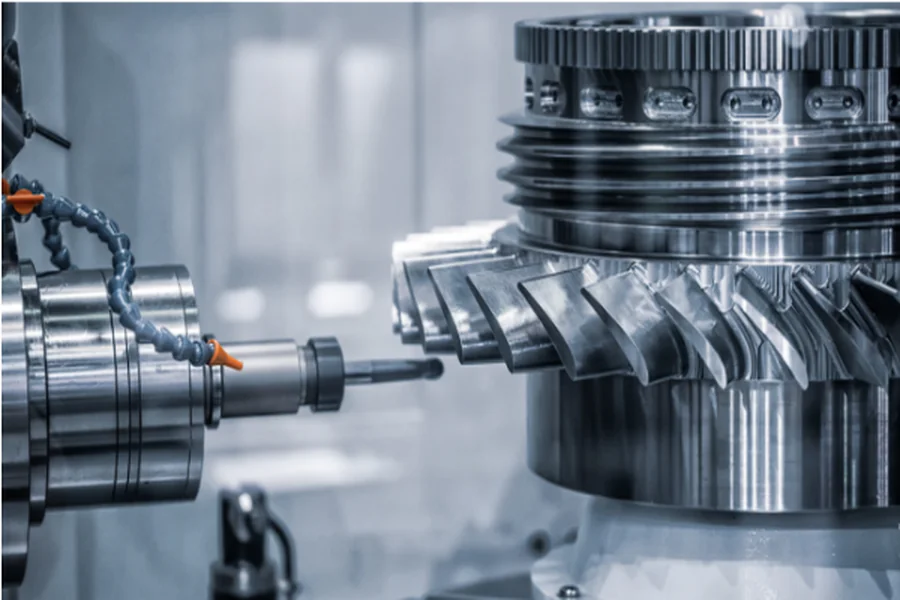
Product development is not a linear process. Designs change as a result of testing; dimensions must be refined, and functional components often must be rebuilt prior to production. Each physical iteration can take weeks, delaying engineering decisions and launch schedules. Fast CNC machining is a good solution to produce physical parts accurately without the need to make production tooling first. Rapid machining can be very efficient in prototype development when the requirements of speed and dimensional accuracy are both equal.
1. Turn CAD Designs Into Functional Prototypes Faster
A CNC prototype starts with a digital design, instead of a specific mould or specialized production tool. Engineers can provide a 3D CAD model and technical drawings, dimensions, tolerances, material, and finishing. The manufacturing team then translates the design into instructions for the machine and decides on appropriate cutting strategies.
This workflow can help to bridge the gap between design and physical validation. Machined parts can simulate material properties, interfaces, holes, threads, and mechanical elements that are necessary for realistic testing, but cannot be conveyed in the purely visual prototype. Simple components may qualify for turnaround times of only a few business days, although actual timing depends on geometry, material, quantity, and inspection requirements.
2. Use CNC Prototypes to Find Design Problems Earlier
A prototype is more valuable if it identifies issues prior to production. With CNC machining, the parts are manufactured to a precise size so that engineers can test the fit of the parts under actual assembly scenarios. Clearances, mounting points, fastening locations, moving interfaces, and other important features can be inspected by designers.
This makes every instance more informative. A new version of the CAD model can fix the issues identified in the prototype before making another prototype. The process evolves as a controlled design loop: manufacture, inspect, test, modify, manufacture, etc. Development teams can make smaller decisions at each stage rather than making a huge investment in an unconfirmed design.
3. Why Rapid CNC Is Effective for Engineering Validation
The benefits of prototype CNC machining services go beyond rapid part production. CNC machining can be used with engineering-grade metals and plastics, enabling prototypes to be very similar to the material to be used in the final application.
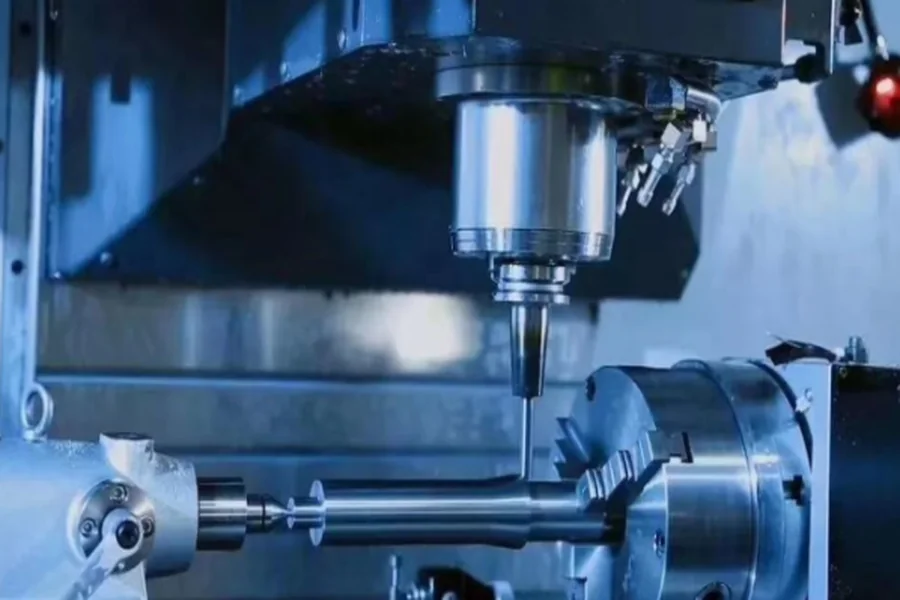
Different testing requirements can be met with the use of aluminum, stainless steel, brass, titanium, POM, nylon, ABS, PC, PEEK, and other materials. Based on the intended use of the prototype, it can then be tested for strength, fit, thermal properties, wear, weight, and/or ease of assembly.
Multi-axis machining also opens up the range of what can be produced efficiently. Three-axis machines accommodate many of the traditional shapes and features, and four- and five-axis equipment can also access many complex surfaces and features, with fewer setups. Turning is useful for manufacturing cylindrical parts like shafts and bushings, and EDM can be used to handle complex parts that are conductive and hard to machine.
4. Accelerate Iterations Through Engineering-Focused DFM
Speed starts before the machine begins cutting. Design for manufacturing review can help to identify features that could lead to higher machining times, costs, or production challenges. Wall thicknesses, cavity depths, internal radii, hole sizes, tolerances, and accessibility of tools can all be checked by the engineers prior to design approval.
Useful DFM considerations include:
- Keep internal fillets sufficiently large for practical cutting tools.
- Avoid unnecessarily thin walls that can vibrate or deform.
- Use standard hole and thread sizes where possible.
- Limit excessive cavity depth to reduce tool deflection and chatter.
- Align features to minimize additional machining setups.
- Specify tight tolerances only where functional performance requires them.
Addressing these issues during quotation can reduce rework and help the prototype arrive closer to its intended specification.
5. Maintain Precision While Shortening the Production Cycle
Quick production does not imply sloppy production. When making prototype parts, dimensional accuracy can be a critical requirement as very slight variations can impact assembly or test outcomes. Precision CNC processes can be used to produce very tight tolerances, depending on the material, geometry, machine, and feature.
There is an additional level of control provided by inspection equipment. Coordinate measuring machines will be used to check key dimensions against engineering requirements and material certifications, and dimensional inspection reports will be provided for additional traceability if needed. A manufacturing process certified to ISO 9001:2015 also ensures quality-control processes throughout the manufacturing process.
Precision grinding can be used to polish surfaces and dimensions after other machining operations for a project that has specific requirements. Surface finishes like anodizing, powder coating, polishing, passivation, or plating can further prepare prototypes for functional or presentation purposes.
6. Move Smoothly From Prototype to Low-Volume Production
A successful prototype process should not end at the validation stage. As soon as the design is tested, the same manufacturing partner may be able to assist with the next step. This will establish continuity between prototype quantities and small production quantities.
Low-volume CNC manufacturing can help to fill the gap between one-off validation and larger volume production. For some projects, depending on geometry and manufacturing requirements, quantities of about 100 to 1,000 parts may be practical. This can be used for pilot runs, prelaunch inventory, market testing, and other engineering verification prior to investing in costly tooling.
Projects with larger quantities can be scaled up with CNC production by increasing the machine capacity and synchronizing the manufacturing resources. 3ERP facilitates this transition from prototype to production parts, and provides access to CNC machining, finishing, inspection, and manufacturing-related capabilities.
7. Build a Faster CNC Prototyping Workflow
A streamlined ordering process can eliminate unnecessary delays from engineering to manufacturing. Firstly, ensure that the complete CAD file, drawings, tolerances, material specifications, and finishing requirements are prepared. Good documentation provides information to the manufacturing engineer for a proper evaluation of the part.
Once the design is submitted, it is reviewed for DFM and quoted. After the specifications and price are approved, production is started, going through the necessary machining and quality inspection. Once finished, the completed parts can then go through inspection and then global delivery as per the shipping method chosen.
Every project does not necessarily complete in the same time frame, despite the fast delivery. Complex geometry, challenging materials, large size, close tolerances, extra finishing, and increased quantity can lengthen lead times. Rapid prototyping remains efficient and technically solid with realistic expectations.
Conclusion
Fast CNC prototyping turns physical iterations into a controlled engineering process. Properly manufactured components enable teams to test with actual materials, validate interfaces, uncover design flaws, and finalize products prior to larger investments. Development cycles can be further shortened with the use of DFM support, multi-axis capabilities, material flexibility, inspection, and rapid delivery.
The goal is not just to produce a prototype quicker. It is to establish a trusted route from CAD concept to validated component with reduced non-value-added delays. Strategic application of rapid CNC machining can help engineering teams to speed up the iteration cycles, minimize unnecessary rework, and proceed with validated designs toward production with confidence.