
Six Milestones That Tell You Toddler Swim Instruction Is Working
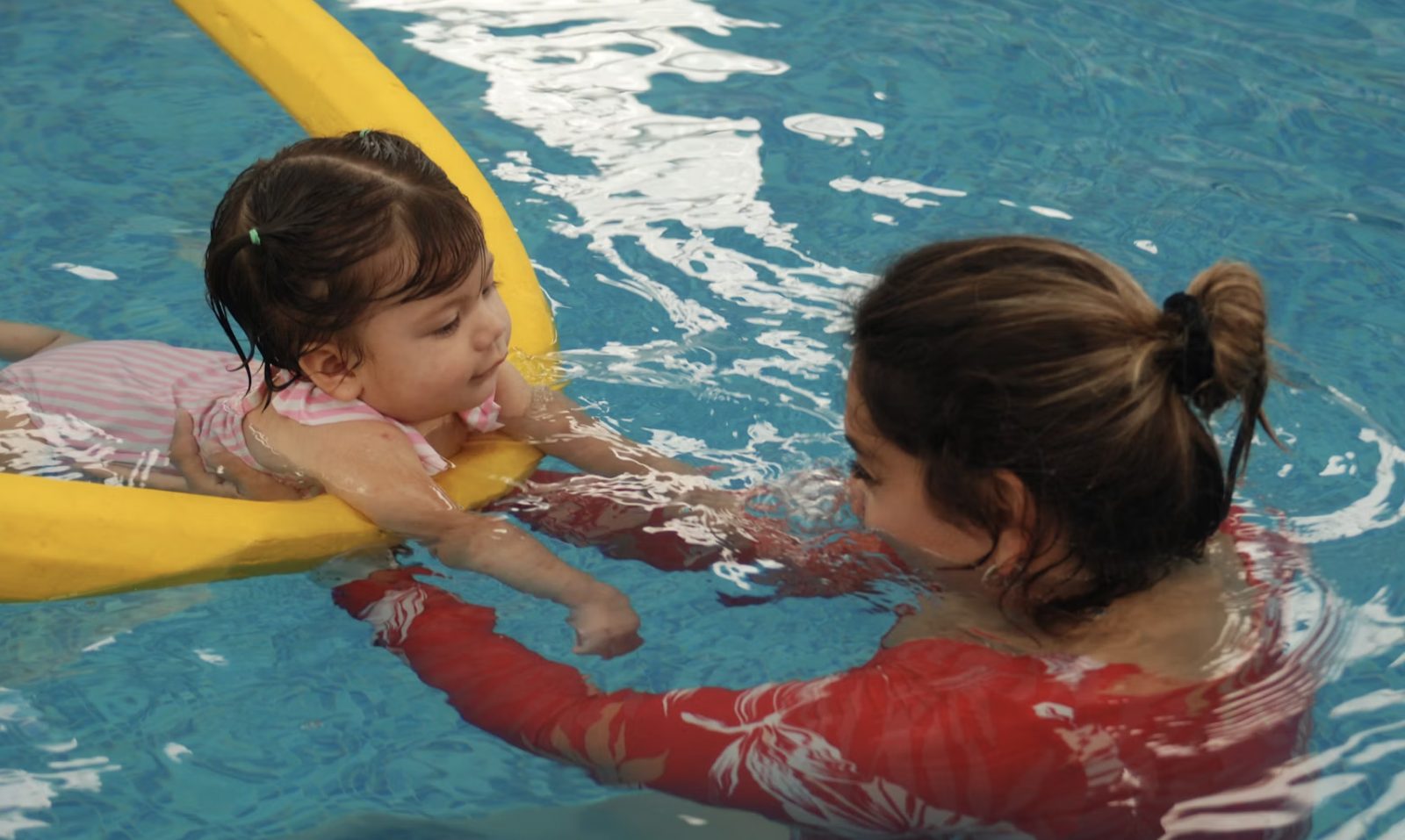
Most parents evaluate their toddler’s swim lesson progress against one criterion: is the child swimming yet? This is the wrong question for the age group, and asking it produces two outcomes that both undermine the instruction. Parents who expect swimming too early withdraw their child before the foundation is built. Parents who do not know what to watch for miss genuine progress happening in front of them.
Toddler swim progress should not be measured only by whether a child can swim alone. Children ages 1 to 4 have the highest drowning risk of any age group, and most drowning deaths in this age range happen in swimming pools. The CDC also lists formal swimming lessons as one way to help reduce drowning risk, although lessons never replace close supervision.
That makes smaller skills important. A toddler who learns to put their face in the water, float, follow a safety cue, or move toward the pool wall is making real progress, even if they cannot swim across the pool yet. Swimming lessons for babies and toddlers Denver CO should therefore be judged by these developing water-safety skills as well as independent swimming.
Milestone 1: Environmental Calm (Months 1 to 2)
A toddler who enters the water in session one with visible distress and enters in session eight without distress has made the most important developmental step in the entire aquatic sequence.
This looks like nothing to an observer expecting swimming. It is the prerequisite for everything that follows. An anxious nervous system cannot simultaneously manage emotional regulation in an unfamiliar environment and acquire coordinated motor skills. The calm entry is the foundation, not the warm-up.
The AAP’s guidance notes that the quality of a child’s emotional experience in early aquatic instruction predicts subsequent skill acquisition better than any specific technique measured at early ages.
Milestone 2: Reliable Breath Hold on Verbal Cue (Months 2 to 4)
The verbal cue protocol teaches the toddler to associate a specific word with upcoming water contact and close their lips before submersion occurs. The milestone is not that the child holds their breath underwater. The milestone is that the breath hold precedes the water contact consistently.
This is a conditioned response, not a decision. Its reliability is what makes it function in an unintended water entry situation, where the child cannot think through a response but can execute a pattern that is deeply rehearsed.
Observable sign: the child closes their lips and sets their face when the cue word is spoken, before any contact with water.
Milestone 3: Accepted Back Float Position (Months 3 to 5)
Back float developed in a supported, calm context is the single highest-value survival skill in the toddler aquatic sequence. A child in a face-up floating position has time for rescue to occur.
The progression moves from full support at head and hips, to hip support only, to fingertip contact, to momentary independence. The milestone at this stage is not full independence. The milestone is decreasing support requirements.
Observable sign: the child accepts the back float position without arching or rolling toward the side, allows ears to submerge without head lifting, and holds the position for five or more seconds with decreasing instructor contact.
Milestone 4: Roll to Back After Submersion (Months 5 to 8)
Roll-to-back after an uncontrolled water entry is the survival behavior the entire curriculum builds toward. Back float in a supported context is the skill. Roll-to-back after unintended submersion is the behavior. The difference is that the behavior must be automatic, not decided.
Practice at this stage uses repeated entry exercises from the pool edge: the child enters, goes briefly below the surface, and executes the roll to back float. Repetition builds the automatic character of the response.
Pediatrics study identified roll-to-float entry response behaviors as the specific skills most directly associated with drowning risk reduction in children aged one to four, not directed swimming toward a target.
Milestone 5: Wall Reach and Exit (Months 6 to 10)
Wall reach is the conditioned response of moving toward the pool wall and reaching for it after water entry. Combined with back float, it gives the toddler two sequential strategies after unintended entry: orient face-up, then move toward safety.
Exit skill includes the arm-hook-and-push-up motion at the wall and the ability to climb out at steps. Both require upper body strength that develops through this period.
Observable sign: after water entry, the child orients toward the nearest wall without prompting and reaches for it.
Milestone 6: Directed Propulsion (Month 10 and Beyond)
Directed movement through water, where the toddler chooses a direction and moves toward it, begins developing during the second half of the second year and establishes for most children by age three to four with consistent instruction.
This is what most people visualize when they think of swimming. It is the last milestone in the sequence, not the first goal of the program.
What Regression Means in This Context
Regression during major developmental transitions is predictable and temporary. Language acquisition acceleration around 18 to 24 months redirects neural resources away from recently consolidated motor skills. A toddler who floated with minimal support at 20 months and requires full support again at 22 months is doing exactly what developmental neuroscience predicts.
The regression is temporary. The neural pathway was established. It requires consolidation rather than reconstruction. The skill returns faster after the developmental reorganization completes than it was originally acquired.
Key Takeaways
- Environmental calm in the water is the prerequisite for all subsequent motor skill acquisition, not a warm-up phase
- Conditioned breath hold on verbal cue precedes submersion reliably once established and functions in unintended entry situations
- The 2019 Pediatrics study identified roll-to-float entry response, not directed swimming, as the skill most directly associated with drowning risk reduction in ages one to four
- Directed swimming is the final milestone in the developmental sequence, appearing around months 10 and beyond with consistent weekly instruction
- Regression during language acquisition acceleration around 18 to 24 months is predictable; the neural pathway requires consolidation rather than reconstruction
The milestones are sequential for developmental reasons. Rushing toward the later ones before the earlier ones are established produces instruction that looks active and feels productive without building the foundation the safety skills require.